


Posts by The Hanseatic
Inese Muzikante becomes Riga Business School director

The leadership of Riga Technical University announced on 4 February that Inese Muzikante will become director of the Riga Business School.
Inese Muzikante had been serving as the school’s interim director since 3 August. Previously, she had been responsible for the management and development of the faculty of all academic programs and was a lecturer in the Executive MBA Leadership Development Practicum course.
Tālis Juhna, the rector of Riga Technical University, said: “RBS is an important part of the RTU ecosystem. For more than 30 years, RBS has focused on developing high-level business leadership education. Business and innovation management and digitalisation play an increasingly important role in today’s business environment, so they are already and will continue to be the leading directions at RBS. I am confident that Inese Muzikante’s strategic vision and experience will inspire the RBS team and students to grow purposefully.”
Connect with Inese on LinkedIn
Read MoreBaltic states switch to European power grid, ending Russia ties
The Baltic states of Estonia, Latvia and Lithuania completed a switch from Russia’s electricity grid to the EU’s system on Sunday, severing Soviet-era ties amid heightened security after the suspected sabotage of several subsea cables and pipelines.
Ursula von der Leyen, the president of the European Commission, hailed the move, years in the planning, as marking a new era of freedom for the region, in a speech at a ceremony in Vilnius alongside the leaders of the three countries and the Polish president.
Debated for many years, the complex switch away from the grid of their former Soviet imperial overlord gained momentum following Moscow’s annexation of Crimea in 2014 and its invasion of Ukraine in 2022.
It is designed to integrate the three Baltic states more closely with the EU and to boost the region’s energy security.
Source: Reuters
Read MoreLars Nordahl joins the board of Danish Ports
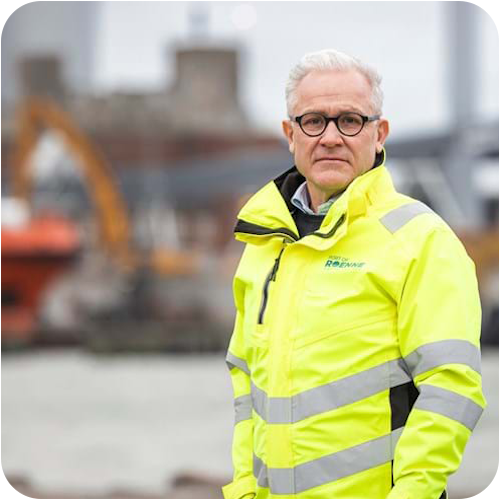
Danish Ports strengthens its board with Lars Nordahl, CEO of Port of Roenne, as a new member.
Lars, in his role as CEO of Port of Roenne, has been instrumental in consolidating the port’s position as a central part of Bornholm’s infrastructure and a key player in the green transition in the Baltic Sea. Port of Roenne serves as Bornholm’s primary supply port, a hub for cruise tourism, and an essential shipping port for the wind energy industry.
According to Tine Kirk, CEO of Danish Ports, Lars has transformed Port of Roenne into a vital player in the port sector. “Port of Roenne is a role model for green transition and has become a growth engine for Bornholm. We look forward to benefiting from Lars’s experience and vision in our efforts to strengthen Danish commercial ports,” she states.
Danish Ports is the trade organisation for Danish commercial ports, working to highlight the importance of ports in green transition, local development, and economic growth. With Lars joining the board, the organisation aims to continue emphasising the significant societal role played by ports.
Related article } The Bornholm advantage
Read MoreMission
The Hanseatic aims to be a region-building news outlet that promotes closer commercial ties within the Baltic Sea region by reporting on news from the region to the region.
At the same time, The Hanseatic aims to be a region-promoting news outlet that reports on the Baltic sea region to a global audience.
Regional news • Global perspective
Read MoreNato looks to Baltic as proving ground for AI, crewless vessels
Nato says it is ready to deploy artificial intelligence and uncrewed vessels in the Baltic as part of its increasing efforts to detect the telltale activity that could indicate that a ship is preparing to damage undersea cables and pipelines.
The military alliance’s hope is that it can use software to process information from satellite imagery, sonar systems and underwater sensors to spot merchant vessels that appear to be acting erratically above undersea infrastructure.
The software, known as Mainsail (a backronym for Multi-Domain Awareness and Insight with AI Layering), has been developed in response to concerns that Russia is engaged in a campaign of damaging undersea infrastructure in and around Europe.
The most dramatic of example of an attack on undersea infrastructure was the 2022 sabatoge of the Nord Stream gas pipeline. The evidence there points to Ukraine, but similar incidents in which Moscow is implicated were recorded before then; in recent months, the number has increased rapidly.
Read more
In November and December of 2024 alone, three separate cables carrying internet data and power between in the Baltic, connecting five Nato members—Estonia, Finland, Germany, Lithuania and Sweden—were severely damaged in incidents.
In most incidents, the damaging vessel—Russian or otherwise—cannot be identified, just as it is impossible to ascertain whether the damage was intentional. Both are often due to a lack of information. As a result, Nato has increased its presence in the Baltic Sea. It is hoped that, where they cannot deter future attacks, they can at least help to clear up which vessel is at fault.
As part of this effort, it is incorporating autonomous vessels that will be able to conduct persistent surveillance over large areas.
Labelled Task Force X, all members of the alliance were invited on to take part, but the hope is that Baltic Rim states will be among those to take the lead.
Nato says the countries taking contributing to the initiative are free to deploy their own assets, making it a proving ground of sorts that puts emerging technologies into active service.
Baltic Sea shipping tax could pay for undersea cable protection: Estonian defence minister
Shipping firms may need to pay a fee to use the Baltic Sea, one of the world’s busiest shipping routes, in order to cover the high costs of protecting undersea cables, Estonia’s defence minister said on Wednesday following a spate of breaches.
Nato said last week it would deploy frigates, patrol aircraft and drones in the Baltic Sea after a series of incidents in which ships have damaged power and communications cables with their anchors in acts of suspected sabotage.
In addition to the patrols, Hanno Pevkur, the defence minister, said countries are weighing other measures to protect cables, including installing sensors to detect anchors dragged across the sea floor or constructing casings or walls around the cables.
But this will come at a cost, and, whether countries or cable operators end up paying for it, consumers may be left ultimately footing the bill through higher taxes or utility costs. Another option, Mr Pevkur said, would be to levy a tax on vessels that sail through the Baltic Sea.
Source: Reuters
Read MoreIeva Jāgere to head Latvian investment agency
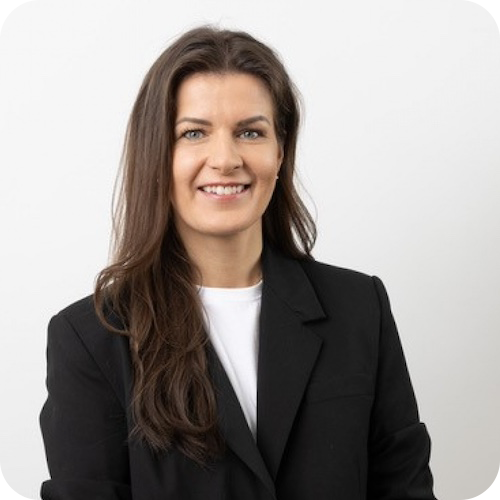
The open competition for the position of director of the Investment and Development Agency of Latvia has concluded with a nod from the minister of economics to Ieva Jāgere.
Ieva comes to the position with more than 15 years of experience in corporate finance. She has led high-volume investment attraction deals and, until her appointment, worked at ALTUM, a financial institution. Additionally, Ieva is a managing partner at Callidus Capital, a financial and investment consultancy, as well as an independent member of the Internal Audit Committee at Indexo.
From 2016 to 2022, Ieva served as CEO of Callidus Capital. Prior to that, she spent more than three years as head of corporate finance at Oaklins Baltics, where she was responsible for investment attraction and deal management for various clients.
The newly appointed LIAA director holds an MBA from the Stockholm School of Economics in Riga and a master’s in international economics and business from the University of Latvia.
Read MoreAdrian Becke tapped to become TASK Engineering COO on Bornholm
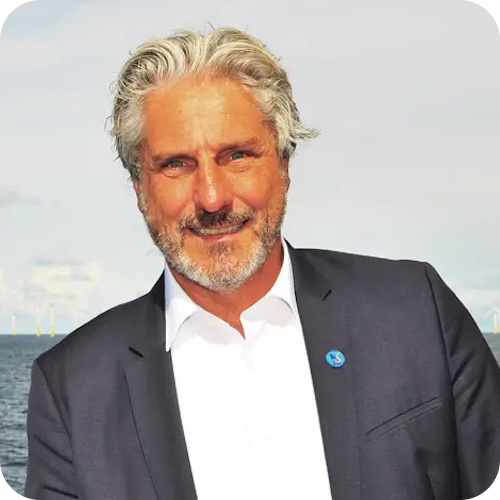
Adrian Becke has been selected to head TASK Engineering’s operations on Bornholm. A 25-year veteran of the maritime industry, Adrian moved to the position on 1 October.
He comes to the position after two years working on Bornholm as site-team assistant for Vestas Commercial, where he co-ordinated construction of off-shore wind-energy parks Arcadis-Ost and Baltic Eagle.
In selecting Adrian as COO, TASK Engineering highlighted his wealth of experience in the wind-energy industry on Bornholm and in the Baltic Sea Region. It reckons this will benefit the development of the offshore-wind industry in the region and is pleased to have a permanent contact on Bornholm that can strengthen the island’s connection with the German state of Mecklenburg-Vorpommern.
Connect with Adrian on LinkedIn
Read MoreRussia expands Baltic ports as it eyes new grain markets
Russia, the world’s leading wheat exporter, is expanding its Baltic Sea ports as it aims to boost agricultural exports by 50% by 2030 while reducing dependence on traditional Black Sea routes, officials and executives said, Reuters, a news outlet, reports.
Baltic Sea ports loaded 1.5 million tons of grain last season, a three-fold increase from the previous season but still just 2.4% of overall Russian exports, according to Reuters calculations based on publicly available data.
“Logistically, the Baltic has many advantages for grains exports,” said Darya Snitko, vice president for Gazprombank, one of Russia’s largest banks and one of the biggest lenders to farmers.
She said the ability of Baltic terminals to handle bigger ships should help reduce overall costs.
Source: Reuters
Read MoreFinland, Estonia to join up to protect subsea cables
Finland and Estonia on Friday have agreed to increase the security of their subsea infrastructure, which includes power and telecommunications cables as well as the Balticconnector gas pipeline that was damaged a year ago.
The agreement, announced in Helsinki on Friday, will see the two countries join forces to on things like technical surveillance, patrolling and repair capacities of subsea infrastructure in the Baltic.
It comes amid what Tallin and Helsinki say has been an increased number of threats against subsea infrastructure, and as countries around the Baltic rim are looking to expand all manner of subsea connections.
Finnish police continue to investigate cause of the Balticconnector damage, while Estonian police are looking into damage to subsea telecommunications links that occurred around the same time. Police in both countries have yet to provide their conclusions.
Read More