


Posts by The Hanseatic
All aboard Rail Baltica gets a political push

Rail Baltica—the multi-billion‑euro, European‑gauge rail line linking Estonia, Latvia and Lithuania with the rest of the EU—remains on schedule for completion in 2030, the prime ministers from the three countries said on Friday. Meeting in Rīga, they provided a status report for the project and pledged that they would devote the time and money needed for it to be completed (and promised to get as much EU funding as they could get their hands on).
The unwavering backing for the project is a reassurance; the problem is that it is necessary at all. All major infrastructure construction goes over time and over budget, but Rail Baltica is more than a matter of prestige. Like their decoupling from the Russian power grid earlier this year, its construction reiterates to Moscow that the Baltics are EU territory and would make it harder for the Kremlin to bring them back into its sphere of influence. Reports that Latvia was considering saving money by retaining the Russian gauge on its part of the railway may just have been rumour, but the seriousness of the situation cannot be exaggerated.
(📸 Inga Ruginienė)
Read MorePower play The EU’s energy upgrade
The European Commission has released its set of proposals for helping EU members to move some of the union’s most important energy projects forward. The measures were first aired in September by Ursula von der Leyen, the commission’s president, as a way to speed up projects that can make Europe’s energy net more resilient and—consumers will like this—its power cheaper.
In addition to cutting paperwork, the European Grids Package and the Energy Highways initiative will increase the amount of funding Brussels is willing to make available to big energy projects five-fold, to €30 billion. Ms von der Leyen had already identified the Harmony Link, connecting the Baltic states to Poland, and Energy Island Bornholm, an energy project that could serve as blue-print for hugely ambitious energy projects, as two of her eight highways towards the union’s power needs. Yesterday, she put the pedal to the metal.
Read MoreBetting for the house Estonia lowers taxes for online casinos
Estonia’s Riigikogu has approved a phased-in reduction the tax it charges online casinos. Reducing the rate to 4% of gross revenue, from the current 6% is in keeping with the country’s efforts to cultivate a well-regulated offshore gambling industry. A previous proposal would have raised the rate a percentage point, but supporters in the government, led by Tanel Tein, worried that doing so would scare off potential investors.
Opponents fret that cutting the tax without any guarantees that the industry will see its revenues grow means Tallinn risks having less money for culture and sport. Critics also warn that more betting increases the risk that Estonia’s online casinos will be exploited by money launderers. Mr Tein managed to sell the lower rate by labelling it a “pro-growth pivot”, but dissenters within the government said only voted for it because of his threats to dissolve the government if they did not get in line. His high-stakes bid has paid off, for now.
Read MoreUnplanned departure Vilnius’s airspace disruptions
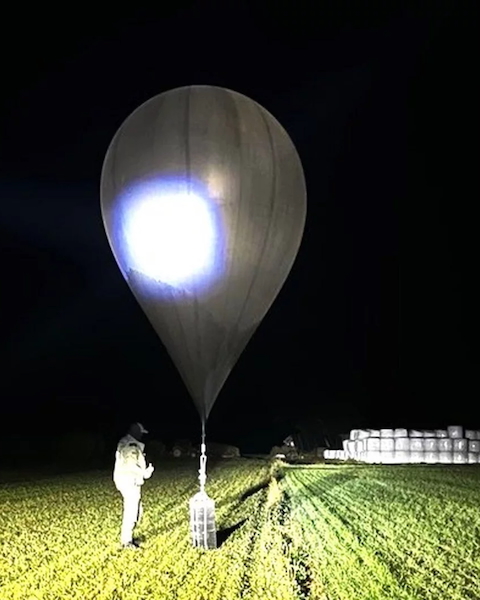
Finnair has cancelled its evening flight from Helsinki to Vilnius until March. The decision, taken on Wednesday, came after two other airlines said they would move their evening flights to earlier in the day. The reason: repeated airspace restrictions over Vilnius Airport in recent months caused by weather balloons sent over the border with Belarus.
Smugglers have used high-altitude weather balloons have to carry cigarettes into Lithuania since at least 2021. Last year alone, some 1.4 million cigarettes were confiscated. But officials say the timing and the direction of the current wave suggest it is a deliberate effort by the Belarusian government to disrupt air traffic.
In October and November, the airspace over Vilnius airport was closed 14 times due to balloon sightings. Kaunas Airport, the country’s second busiest, has also been closed. Only about 5% of all travellers in and out of Vilnius during the period were affected by the closures, but the number of balloons reported has continued to rise, and the airport was closed twice in the past week because of them.
Belarus says the balloons are Lithuania’s problem. The airlines are doing what they can to make that the case.
Read MorePekka Ala-Pietilä appointed as Chair of Sitra’s Board of Directors
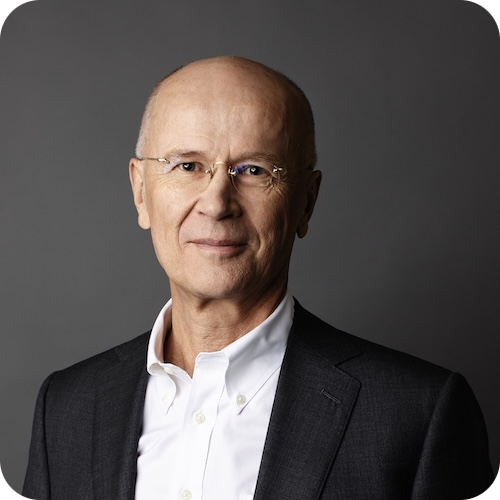
Experienced technology executive to head Finnish innovation fund
Pekka Ala-Pietilä, who has had a long career in technology companies, has been elected as chair of the board of Sitra.
Pekka currently serves as chair of the board of Sanoma and of the supervisory board of SAP SE. He has previously chaired the boards of Huhtamaki and Solidium, among others.
He also served as chair of the European Commission’s high-level expert group on artificial intelligence. From 2017 to 2019, Ala-Pietilä was a member of Sitra’s international expert panel.
Read MoreLanding an orca Poland chooses Saab to build subs
Saab, a Swedish industrial group, has been chosen to deliver three submarines to the Polish navy. The deal will see the first sub delivered as part of the 10 billion zloty (€2.3 billion) Orka programme in 2030.
Even before Moscow’s unprovoked war on Ukraine, in 2022, Poland was one of Europe’s biggest military spenders. Since then, it has expanded investments in its armed forces further, and today its military spending amounts to 4.48% of its gross domestic product, the highest in Nato.
The Orka programme makes up a big chunk of that increase, and, say proponents, the subs are necessary for Poland to protect maritime infrastructure. Currently, Poland has one operational submarine, the ORP Orzeł. Built in the Soviet Union in 1985, it has a reputation of spending more time in repair than at sea.
Saab’s offer was chosen over five other bids, in part, because its model is specifically developed to operate in the Baltic. “The Swedish offer is the only one that met all the expectations of the navy,” Wladyslaw Kosiniak-Kamysz, Poland’s defence minister, said. Nothing under the sea apparently comes close either.
Read MoreAigars Rostovskis re-elected Eurochambres vice-president

Latvian is first to hold senior position with association of European chambers of commerce
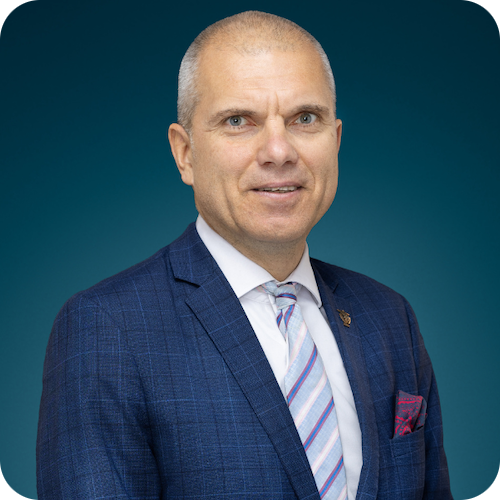
Aigars Rostovskis has been re-elected as vice-president of Eurochambres, the association of european chambers of commerce and industry. Aigars is the president of LTRK, the Latvian chamber of commerce. His re-election helps the organistion to maintain a powerful voice among European business representatives.
Eurochambres acts as the voice of the business community at the EU level, representing more than 20 million companies. It is an important player in the European business environment, driving significant initiatives and supporting entrepreneurs to ensure a sustainable and competitive European economy.
Aigars is the first Latvian representative to hold a senior Eurochambres office.
Read MoreePoster child Nordic-Baltic countries move forward on EU eID scheme
For someone from Denmark, the idea of accessing digital services or personal documents on-line is rather old-fashioned. The country is on version 2.0 of its national eID, and some 97% of residents over 15 use it to access all manner of public services. The private sector can also be partly thanked for the uptake: many firms have adopted the system as the login for their services as well.
Denmark stands out when it comes to eID, but it is not alone. All of the countries of the NB8, the club of eight Nordic and Baltic countries, can be found near the top the UN’s rankings of public services available on-line. Facilitating this requires giving residents reliable ways of verifying themselves—and forcing them to use it. The latter is an irritation in the start, but familiarity, as the Danish case shows, breeds content.
That should make the next goal something of a tip-in: this week, the countries’ digitalisation ministers agreed to pool their experience in order to be among the first EU members to roll out an eID that can be used in the entire bloc.
Brussels has stipulated that, by the end of next year, all members must offer at least one form of eID. Being a first-mover, the thinking amongst the NB8 goes, will allow the countries’ software developers to stay ahead of the pack, making their systems attractive to countries that will not have an eID solution of their own ready by the deadline. When it comes to identification technology, the biggest selling point may be reputation.
Read MorePilot project In Rønne, drones are pointing the way to safer shipping
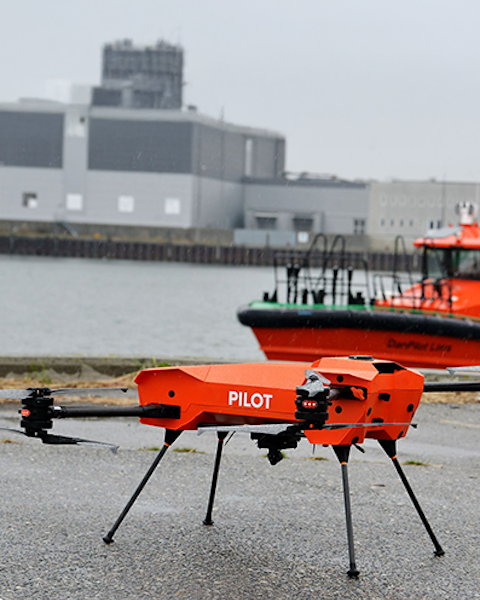
The concept of a maritime pilot is simple: a local mariner boards a vessel that is sailing unfamiliar waters and steers it safely through. Two projects being run by Danpilot, the Danish state pilot agency, may redefine key aspects of that job description.
In the first, begun last month, drones are being used to assist pilots operating on the water in the Port of Rønne, sending live aerial video to give pilots a top-down view when steering ships. Rønne serves as the staging point for several windfarms being built in the Baltic, and it is just this type of bulky traffic requiring complex manoeuvring the drones are well-suited to help with.
VesCo, the DanPilot-owned firm that is conducting the project, is hoping it will result in a system in which drones can automatically follow vessels to improve situational awareness, cutting risk during heavy-lift calls and reducing turn-around time.
A separate project, being run together with Danelec, a maritime-safety firm, may take this idea a step further by keeping the pilot on land entirely and instead navigating using the video beamed down by drones.
Trials in Esbjerg, on Denmark’s North Sea coast, suggest that using drones in this way makes piloting safer and faster. For local firms, the test flights are an opportunity to push their expertise in robotics and autonomy. Pilots, meanwhile, will be finding themselves in unfamiliar job territory.
Read MoreAlfonso Faubel re-elected as Ignitis grupė supervisory board chair
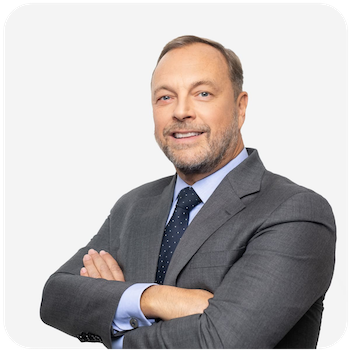
Second term as the chair for experienced executive and board member
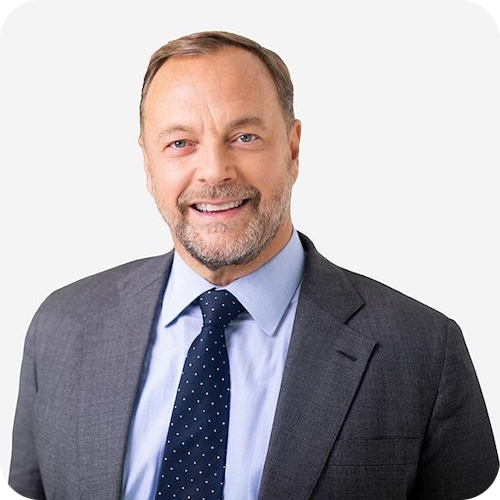
Alfonso Faubel has been elected to a second term as chair of the Ignitis grupė supervisory board.
Alfonso brings 36 years of experience in the energy and automotive industries and digitalisation to the position. He is valued for his skills in business turnaround, improving operations and working with teams in various cultural environments on assignments worldwide.
He has spent the past decade gathering experience in the energy sector, focusing in particular on wind energy, while working at the leading global players in the market.
Alfonso has held executive responsibilities at Siemens Gamesa and Alstom/GE, where he was senior vice-president responsible for launching in 16 new markets.
Connect with Alfonso on LinkedIn
Read More