


Opinion Resilience is the Baltic Sea region’s most urgent priority

THE BALTIC SEA region has built one of the world’s most interconnected and dynamic areas, bound together by trade, energy, digital infrastructure and a shared maritime environment. But the pressures bearing down on the region today require something more than connectivity. They require resilience.
Geopolitical tension on Europe’s eastern flank, accelerating climate stress on the Baltic Sea ecosystem, demographic shifts across the region and hybrid threats targeting critical infrastructure do not respect national borders. They cannot be solved by any single country, economic sector or level of government acting alone.

Tallinn hosts the 17th EUSBSR Annual Forum on 11-13 May 2026 at Tallinn Creative Hub, bringing together over 500 policymakers, municipal representatives, researchers, businesspeople and civil-society representatives from across the Baltic Sea region to turn strategy into action. The aim of the Annual Forum is to translate regional co-operation into concrete action.
Resilience in this context means more than crisis response or military preparedness, though both matter. It means energy systems robust enough to withstand disruption, transport and digital networks that hold under pressure, economies competitive enough to attract investment and talent and institutions trusted enough that societies stay coherent when tested. It also means coastal and marine ecosystems healthy enough to sustain the communities that depend on them. As Tõnis Nirk, chair of the EU Strategy for the Baltic Sea Region National Co-ordinators Group, has put it: resilience in the Baltic Sea region means more than withstanding shocks—it means thriving through them by building the capacity to adapt and collaborate in an era where crises are becoming the new normal.
Cities and regions sit at the centre of all of this. When a crisis hits, whether a flood, a cyberattack or a supply-chain collapse, it is local and regional authorities that respond first. They manage infrastructure, deliver essential services and maintain the community trust that resilience depends on. Their co-operation across the Baltic Sea region is not peripheral. It is foundational.
CO-OPERATION AS THE ANSWER
This is also where the EU Strategy for the Baltic Sea Region demonstrates its purpose. Since 2009, the strategy has connected policies, funding programmes and stakeholders across countries and sectors, turning individual projects into long-term solutions. The newly updated Action Plan (2026, pending European Commission approval), the result of over 100 ministries, national agencies and EU institutions working toward a shared roadmap, reflects a clear shift: member states have placed resilience at the centre of transnational co-operation in the Baltic Sea region.
The experience of 17 years of co-operation shows that the better the region works together across borders, levels and sectors, the stronger it becomes. That is not a platitude. It is the architecture behind a strategy that has shaped how eight EU member states address their most complex shared challenges.
The author is the International PR and Global Visibility Co-ordinator for the city of Tallinn.
Originally published by the city of Tallinn.


THE BALTIC SEA in recent years has become a place where everything converges: climate goals, economic ambitions, environmental protection, fishing, shipping and—more and more—security. Offshore wind energy for Latvia is not just a story about “green” electricity. It is a choice about what kind of Baltic Sea we want to see: will it be a space for our energy independence, security and innovation, or a territory of disputes, concerns and uncertainty?
According to the latest insights from the LIAA survey, conducted in February in collaboration with the sociological research firm Norstat, there is already a solid foundation for a conversation about offshore wind-energy development.
READ MORE
A convincing majority (70%) of the Latvian public considers the sea a suitable location for wind farms, and national energy independence remains a top priority (84%). In fact, the key question is no longer whether wind energy is beneficial, but rather how we can implement it safely and intelligently, ensuring that coastal residents and the country as a whole benefit from it.
Professionals also revisit this “how” once a year in dedicated discussions; for example, in the programme of the WindWorks 2026 conference, the security dimension was highlighted explicitly: how to protect critical energy infrastructure in the Baltics, and what to expect in terms of cybersecurity threats.

The planned Latvian-Estonian wind farm ELWIND is not an isolated object. It will become part of a system consisting of subsea cables, substations, communication solutions, maritime traffic safety monitoring, remote control, data exchange and many other components. In other words, it is a network of critical infrastructure whose vulnerability in Europe has, in recent years, become an open and publicly acknowledged fact.
That is precisely why tangible steps have already been taken at the European level to treat underwater infrastructure not merely as an engineering solution, but also as a significant security issue. In 2024, the European Commission published recommendations for the security of submarine cables, emphasising co-ordination, governance and funding measures to mitigate risks to these connections that are vital for global communications. Meanwhile, in 2023, NATO established the Critical Undersea Infrastructure Coordination Cell to strengthen co-operation with industry, promote the exchange of best practices and enhance defence capabilities.
Security is not an abstract concept in Latvia either. In April 2024, the energy ministers of eight Baltic Sea countries agreed the Vilnius Declaration, which provides for closer co-operation in strengthening the security of critical offshore energy infrastructure. This agreement was reached at a time when concerns in the region had increased over attacks and acts of sabotage, which have highlighted the vulnerability of infrastructure.
In the current context of geopolitical tension, energy security has shifted from a theoretical concept to a matter of everyday costs and resilience. Even minor disruptions in supply chains are enough for global price increases to impact inflation in Latvia. This is clearly reflected in the recent situation in the oil market. Crude oil prices have risen, while the European gas market remains volatile.
HOW DOES WIND ENERGY FIT INTO THIS CONTEXT?
In the event of unpredictable developments, imported fuel quickly becomes a significant risk to household budgets. Under these conditions, electrification and domestic renewable-energy sources take on strategic importance. The greater the share of consumption that can be shifted to electricity, and the more of it we produce ourselves (using wind, solar and other renewable resources), the less dependent we are on external disruptions, and the more stable and predictable energy bills become.
Excessive dependence on a limited number of electricity sources is a significant risk we cannot afford. Wind energy enables diversification of the energy-production structure; therefore, security and maritime spatial planning dimensions must be integrated from the very beginning of a project, rather than added later as an afterthought.
When designing such facilities, potential incident scenarios and response plans must be anticipated in advance, cybersecurity requirements should be included as a mandatory technical baseline, and maritime spatial planning must be carried out in a way that balances security and defence interests with the needs of energy, fisheries and environmental protection. With this approach, the ELWIND can become a reliable and resilient part of critical infrastructure.
Job creation, local business development, investment in infrastructure, as well as growth in science and research are among the most frequently cited benefits of offshore wind energy. Although approximately 70% of the population considers the sea a suitable location for wind-farm development, people still have questions about their potential impact on the landscape, biodiversity and restrictions on fishing, kitesurfing and shipping. Often, people’s perceptions are dominated by the image of wind turbines alone, rather than the broader scope of economic activity and overall benefits they can bring.
RELATED ARTICLE } Intertwined, under attack and in need of protection
The development of offshore wind creates opportunities for the emergence of new coastal industries and competencies. It encompasses a wide range of maritime-related activities—from energy production to the use of water resources and coastal tourism—while simultaneously fostering the development of new technologies, skills and services. From this perspective, offshore wind can become a significant platform that generates jobs in coastal areas and promotes innovation.
In Europe, this platform approach is increasingly manifesting as multi-functional solutions, for example, seaweed farming within wind farm zones. In the Netherlands, as part of the North Sea Farmers project at the Hollandse Kust Zuid wind farm, located approximately 18 kilometers offshore, commercial-scale seaweed cultivation has been established, while simultaneously researching biodiversity and carbon-sequestration opportunities. Meanwhile, the Ecowende wind farm, another Dutch project, is being created as one of the most environmentally friendly projects of its kind, where all activities and technical solutions are aligned with nature-conservation principles.
These examples lead to a vital conclusion: a wind farm is not a closed or restrictive zone; it can become a space for innovation, where research, services and coastal entrepreneurship develop simultaneously. In fact, it is part of the solution for preserving local communities and encouraging the younger generation to settle in coastal areas.
For Latvia, this perspective is particularly significant, as it offers coastal cities and ports the opportunity to transform from infrastructure peripheries into regional centers of competence. In practice, harnessing offshore wind energy means strengthening port capacities, developing logistics, vessel servicing, cable infrastructure, service and repair bases, as well as training opportunities. If this phase is not developed, the greatest added value flows elsewhere. Conversely, by developing it, coastal residents gain jobs, knowledge and business opportunities.
COEXISTENCE AT SEA
The survey mentioned above shows that public awareness in Latvia about wind-farm initiatives and energy-security issues is gradually increasing; however, a large part of the public still remains at the level of “I have heard about it” or “hard to say”. This lack of information creates fertile ground for rumour, resistance and politically motivated fluctuations during pre-election periods.
If we want to build an inspiring yet honest narrative, we must state clearly: ELWIND will only be successful if the discussion about it is framed in terms of security, economic development and public trust. To achieve this, simple and understandable principles are needed: fewer general slogans and more clear answers on the essentials (where the project will be located? why specifically there? what the benefits and risks will be? what compensation and benefit-sharing mechanisms are planned? and how nature and security protection will be ensured?)
Communication should follow an approach in which coastal residents are perceived as beneficiaries rather than obstacles. Latvia’s task is not to prove that wind energy is good; Latvia’s task is to demonstrate that it can be implemented safely, with added value for the economy, and through a process that the public can trust.
The author is the head of the ELWIND project division for the Investment and Development Agency of Latvia (LIAA).
Originally published by LIAA.
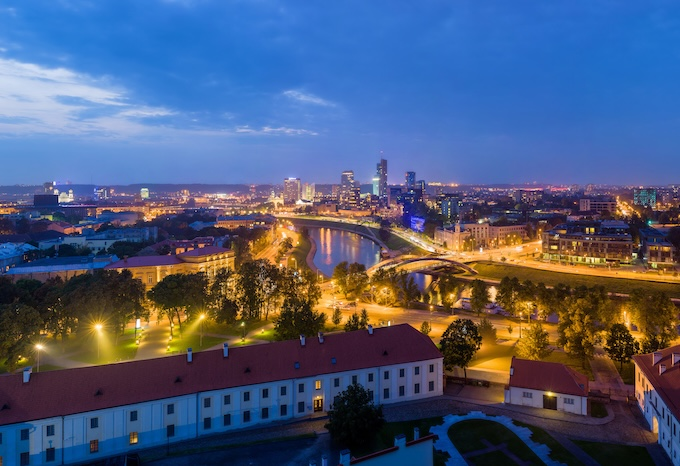
A small Baltic reform is being watched far beyond Vilnius
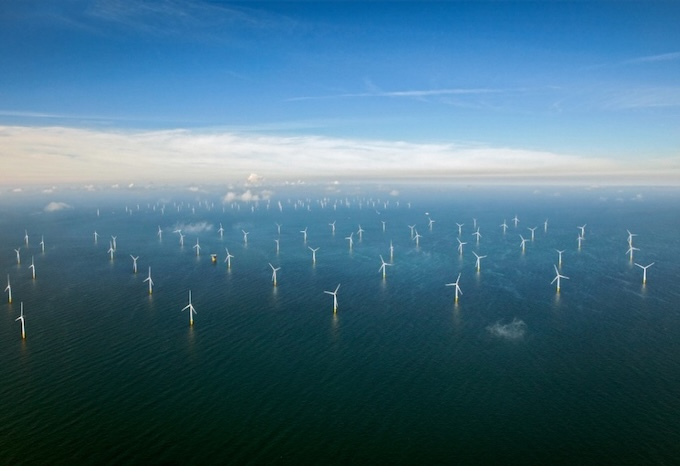
The Baltic is already making a big contribution to Europe’s energy independence, but most of its potential remains untapped
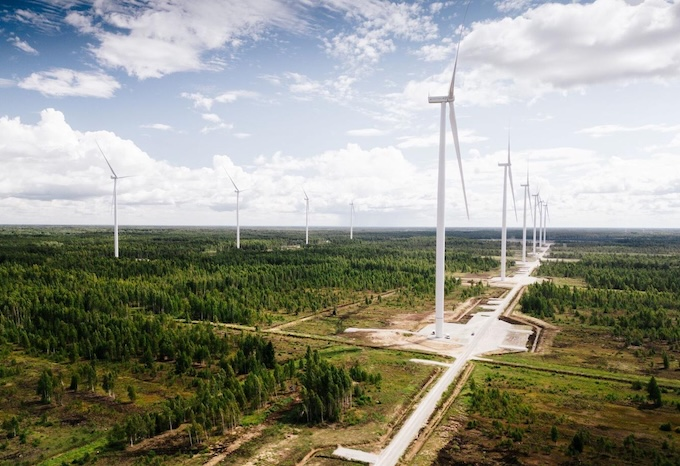
Europe needs to stop seeing the climate and defence as mutually exclusive challenges

The economic case for Rail Baltica can be found in examples of other major infrastructure projects that were initially deemed too big not to fail