


Concise news summaries, often with the benefit of at least 24 hours of hindsight
On Thursday, the Baltic’s largest container port reported the best year in its history—for the third year running. Last year, Baltic Hub, a part of the Port of Gdańsk, handled 23% more containers than it did in 2024. The increase is directly tied to the completion in June of T3, the facility’s third deep-water quay, which raised its capacity by a third.
The expansion of Baltic Hub significantly increases its competitive advantage in the region, and puts pressure on other ports to keep pace, but it should not take its edge for granted. Many of its competitors in Poland were already on the decline, due largely to a falling volume of coal shipments, and are making investments of their own in the hopes of reversing their fortunes. The twin port of Świnoujście and Szczecin, for example, is investing 10 million złoty (€2.4 million) in upgrades, including construction of its own deep-water container port. Its capacity will only be half of Baltic Hub’s, but it touts road and railway access, as well as its existing ferry and LNG terminals, as its strong suits. A port cannot thrive on containers alone.

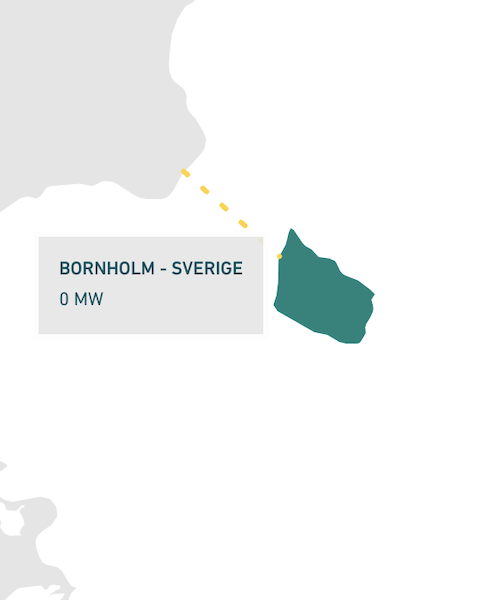
At 10:16 this morning, Bornholm lost power. The outage was immediately localised to the submarine power cable linking it with southern Sweden. Precisely 30 minutes later, Trefor El-net Øst, the TSO for the island, announced that the outage had been due to an overload caused by a technical problem; the cable was undamaged.
For the island’s 40,000 residents and its businesses, the three hours or so without power was a minor irritation. For those who are responsible for keeping the island running in the event of a situation of this sort, it was a golden opportunity: not knowing what the reason for the outage was, or how long it would last, emergency plans, including firing up the island’s backup power plant, were set into action.
The good news is that the initial reports seem to indicate that everything went mostly according to plan. More of a concern is the reason for the overload, and why it caused the entire island to black out. Call it an unknown known.
For years now, rail buffs and those keen on closer EU integration have had their eyes firmly, if nervously, fixed on Rail Baltica, a planned high-speed railway connecting the three Baltic states that is far behind schedule and way over budget. Somewhat overlooked amid that drama has been the steady progress of another, less prestigious railway project connecting Tallinn, Tartu, Rīga and Vilnius via existing railways.
Since last January, when service began on a limited basis—and requiring transfers in each of the three countries—it has transported some 16,000 passengers, well above expectations. That is due to get a bump this year: an extension of service that began on Monday means most of the line can now be travelled without a transfer. A limited number of departures and long travel times will make it less of an option for long-distance travellers, and, even for regional travel, coaches will still be a competitive option, but southern Estonia and northern Latvia in particular are hoping that more infrastructure ties will give rise to better economic ties, spurring growth. Tartu, Estonia’s second-largest city, has long felt that a direct connection to someplace other than Tallinn was overdue.
Detractors point out that the €2 million subsidy the line will require is much more than other lines get, and that standing up the service will require a further €400,000 initial investment. Public officials expect the subsidy to fall as passenger numbers grow, but the are concerns that there may not be enough passengers for it ever to become viable. For now, the trains will run, but they may not get much time.

The leaders of Sweden’s Socialdemokraterna are calling for the establishment of a permanent multinational Nato force on the island of Gotland. Their plan, put forward on Sunday during the opening day of Folk och Försvar, an annual security conference, proposes establishing a contingent that could supplement the island’s existing defensive capabilities. They also suggest making the island the home base of an 800‑person amphibious battalion capable of operating throughout the Baltic.
Gotland, given its strategic location in the Baltic, has been a focal point of Sweden’s post-post-Cold War rearmament. Even so, the island remains only lightly defended—the Gotland Regiment, re-established in 2018, comprises only 350 soldiers. Gotland’s home-guard unit reckons it could muster another 500 soldiers in the event of a Russian attack, and the thinking in Stockholm had been that the combined force would be enough to hold any unforeseen Russian invasion in check until reinforcements from elsewhere in Sweden and the rest of Nato could arrive.
But, with Moscow expected to be antagonistic for the foreseeable future, and Washington looking increasingly unwilling help out, that strategy is up for revision. In practice, the military is already preparing for both of these scenarios: in September, Sweden held its first bilateral drill with Poland on Gotland (pictured above).
Politically, Socialdemokraterna are in the opposition, but the proposal aligns with the government’s own position that it would welcome a Nato contingent if the alliance decided to send one. Their hope is that they would do so before the Russians decided to send their own.
(📸 Försvarsmakten)

For mariners in the Baltic Sea plagued by disrupted satellite-navigation systems, help is on its way in the form of a forgotten technology. Sjöfartsverket, the Swedish maritime authority, will equip a total of ten lighthouses on Sweden’s south-eastern coast, starting with Kapelludden (pictured above), with what is known as a radar beacon, a system that, in short, emits a Morse-code signal when it receives a radar signal. Navigators who receive the signal can then determine their ship’s location from the bearing and distance to the beacon.
Sweden, like other countries in the Baltic, points to Russia as the source of disruptions to satnav systems used not just by ships, but also aeroplanes, and research has shown the signal that causes the them is strongest near Kaliningrad. Regardless of who is to blame, it is a growing problem. Mariners say it is a regular occurrence, and perhaps tens of thousands of ships in one of the world’s busiest maritime areas have been affected. Fortunately, navigators can still find their way with other methods, including navigational charts on paper. They require more effort to use—and often additional training—but they are also harder to disrupt. Necessity is also the mother of re-invention.
(📸 Stefan Svanaeus)