


Concise news summaries, often with the benefit of at least 24 hours of hindsight

Rail Baltica—the multi-billion‑euro, European‑gauge rail line linking Estonia, Latvia and Lithuania with the rest of the EU—remains on schedule for completion in 2030, the prime ministers from the three countries said on Friday. Meeting in Rīga, they provided a status report for the project and pledged that they would devote the time and money needed for it to be completed (and promised to get as much EU funding as they could get their hands on).
The unwavering backing for the project is a reassurance; the problem is that it is necessary at all. All major infrastructure construction goes over time and over budget, but Rail Baltica is more than a matter of prestige. Like their decoupling from the Russian power grid earlier this year, its construction reiterates to Moscow that the Baltics are EU territory and would make it harder for the Kremlin to bring them back into its sphere of influence. Reports that Latvia was considering saving money by retaining the Russian gauge on its part of the railway may just have been rumour, but the seriousness of the situation cannot be exaggerated.
(📸 Inga Ruginienė)

The European Commission has released its set of proposals for helping EU members to move some of the union’s most important energy projects forward. The measures were first aired in September by Ursula von der Leyen, the commission’s president, as a way to speed up projects that can make Europe’s energy net more resilient and—consumers will like this—its power cheaper.
In addition to cutting paperwork, the European Grids Package and the Energy Highways initiative will increase the amount of funding Brussels is willing to make available to big energy projects five-fold, to €30 billion. Ms von der Leyen had already identified the Harmony Link, connecting the Baltic states to Poland, and Energy Island Bornholm, an energy project that could serve as blue-print for hugely ambitious energy projects, as two of her eight highways towards the union’s power needs. Yesterday, she put the pedal to the metal.
Estonia’s Riigikogu has approved a phased-in reduction the tax it charges online casinos. Reducing the rate to 4% of gross revenue, from the current 6% is in keeping with the country’s efforts to cultivate a well-regulated offshore gambling industry. A previous proposal would have raised the rate a percentage point, but supporters in the government, led by Tanel Tein, worried that doing so would scare off potential investors.
Opponents fret that cutting the tax without any guarantees that the industry will see its revenues grow means Tallinn risks having less money for culture and sport. Critics also warn that more betting increases the risk that Estonia’s online casinos will be exploited by money launderers. Mr Tein managed to sell the lower rate by labelling it a “pro-growth pivot”, but dissenters within the government said only voted for it because of his threats to dissolve the government if they did not get in line. His high-stakes bid has paid off, for now.
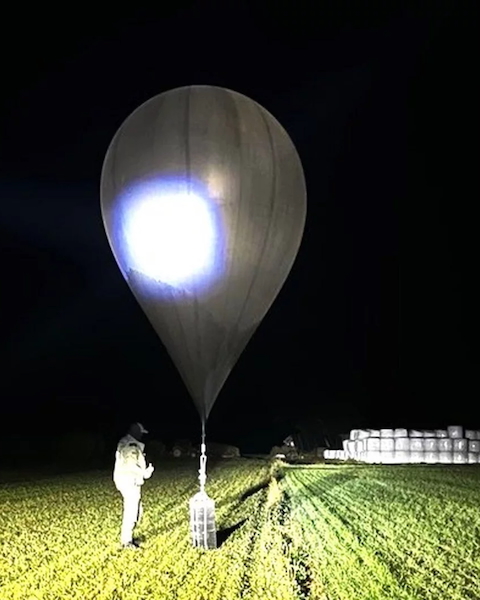
Finnair has cancelled its evening flight from Helsinki to Vilnius until March. The decision, taken on Wednesday, came after two other airlines said they would move their evening flights to earlier in the day. The reason: repeated airspace restrictions over Vilnius Airport in recent months caused by weather balloons sent over the border with Belarus.
Smugglers have used high-altitude weather balloons have to carry cigarettes into Lithuania since at least 2021. Last year alone, some 1.4 million cigarettes were confiscated. But officials say the timing and the direction of the current wave suggest it is a deliberate effort by the Belarusian government to disrupt air traffic.
In October and November, the airspace over Vilnius airport was closed 14 times due to balloon sightings. Kaunas Airport, the country’s second busiest, has also been closed. Only about 5% of all travellers in and out of Vilnius during the period were affected by the closures, but the number of balloons reported has continued to rise, and the airport was closed twice in the past week because of them.
Belarus says the balloons are Lithuania’s problem. The airlines are doing what they can to make that the case.
Proposed adjustments to the public-service-media landscape in Denmark could cost Bornholm its sole TV station. Three recommendations handed down by an expert panel on Tuesday for the future of the eight regional TV stations all include eliminating TV2 Bornholm as an independent outlet.
The recommendations are hardly a surprise: part of the brief given the panel by the culture ministry was to find a way to rectify a situation in which all TV regions receive the same funding. TV2 Bornholm, the smallest TV region, serves 40,000 people, yet gets the same 71.8 million kroner (€9.34 million) each year as TV 2 Kosmopol, which serves the 1.9 people living in Greater Copenhagen.
Two of the experts’ recommendations would redraw the map entirely, either by combining funding for TV and radio production or by creating 30 semi-independent local news outlets.
The last calls for the creation of a third TV region in eastern Denmark, and to include Bornholm as part of the coverage area for one of them. This may be the one scenario the other regions can accept, since they generally would remain intact, and, in fact, is something they long have hinted would be fair. In its report, the panel seemed to suggest it agreed. “To ensure that Denmark as a whole is covered uniformly, it is necessary to take money away from TV2 Bornholm.”
The author is a member of the TV2 Bornholm board of directors.