


Posts Tagged ‘Latvia’
“Payment Radar”: non-cash payments in Latvia have reached a record-breaking share
The most recent (spring 2025) “Payment Radar” published by Latvijas Banka suggests that the ratio between non-cash and cash payments in Latvia was 78% to 22% in February 2025. This represents the highest-ever share of non-cash payments.
Relative to the figures from February and August 2024, the share of non-cash payments has climbed by 1 percentage point (from 77% to 78%).
Read full announcement (external link)
Originally published on 31 Mar
Read MoreIt’s good Baltic wood and life after Swedish timber
Covering some 8 million hectares, forested areas in Estonia, Latvia and Lithuania make up about half of the three countries’ land area in total. That is comparatively less than in Sweden, where its 28 million hectares account for more than two thirds of its land. Nevertheless, the Swedish forestry industry imports up to 40% of its timber from the Baltics.
Part of Swedish firms’ interest in Baltic forests stems from their productivity and their makeup. Latvia, for example, stands out for its high proportion of deciduous trees, such as birch, particularly compared with Sweden, where pine dominates. Baltic forests have something else going for them, too: they are expanding; in the past century, their area has increased by more than half.
In spite of that, the price of Baltic forestland has gone up. In 2000, a hectare of went for €500. Today, it gets €3,700. Much of the increase has been fuelled by Swedish forest companies buying up land. But, should their interest weaken (in January, Södra Skogsägarna, a Swedish firm that is the largest forest owner in the three Baltic countries, announced plans to divest its Baltic holdings), it need not result in a fall in prices.
Danske Bank, a Danish financial institution whose Swedish subsidiary follows the forestry industry, reckons that, unlike in Sweden and Finland, the price of Baltic forestland does not yet take into account factors like its potential for carbon sequestration, its suitability for solar arrays or wind turbines, or its recreational value. All of those could support further price increases, it concludes, even if the Swedes stop seeing Baltic forests solely for their trees.
Read MoreKertu-Liina Lehismäe appointed Mintos CMO
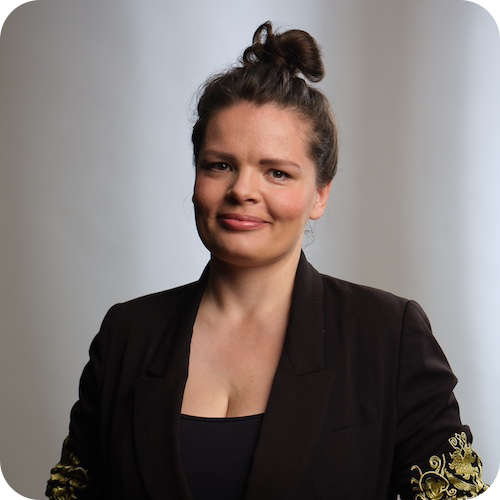
Mintos, the investment platform that enables people to earn regular passive income through diversified investments, has announced the appointment of Kertu-Liina Lehismäe as the latest addition to its senior leadership team.
Kertu-Liina brings a wealth of marketing experience. Most recently, she led all customer acquisition globally at N26, one of Europe’s leading on-line banks. Her proven track record in driving global marketing strategies and delivering growth will be instrumental in advancing Mintos’ mission of democratising investments, highlighting the importance of long-term regular income, and growing its customer base across the European continent.
In her role as CMO, Kertu-Liina will oversee all aspects of Mintos’ marketing and external communications, including customer acquisition, engagement, PR & communications, brand and more. She will be responsible for developing and executing innovative marketing campaigns to further raise awareness around Mintos and strengthen its position in the global investment space.
Connect with Kertu-Liina on LinkedIn
Read MoreTeachers explore new approaches and tools for using AI in teaching at the ”Idea Day” conference
On Friday, 14 March, the third “Idea Day” conference for teachers and education technology experts took place, bringing together more than 180 teachers and education experts from all over Latvia and offering them a wide-ranging program on the opportunities and challenges of artificial intelligence in education. Teachers had the chance to improve their AI skills in 14 workshops and discussions on methods, solutions, and experiences.
Read full announcement (external link)
Originally published on 17 Mar
Read MoreLatvian Artificial Intelligence Association elects new board
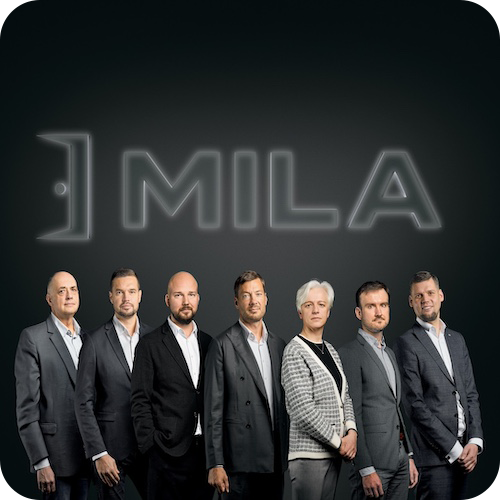
Mila, the Latvian Association of Artificial Intelligence, announces the election of a new board that brings together leaders and experts from various industries with extensive experience in business, innovation and technology development.
The board’s goal is to provide strategic support to the association’s activities and promote the development and integration of artificial intelligence in Latvian business and society.
The board includes six industry experts:
- Armands Broks, founder and CEO of fintech company Twino
- Oksana Sivokobilska, Financial sector digitalisation strategist
- Dmitrijs Jemeljanovs, Machine Learning expert and head of Forward IT Consulting
- Gatis Romanovskis, CEO of Hansab
- Kristaps Siliņš, brand strategist and leading partner of McCann
- Guntis Kalniņš, technology industry leader
- Dmitrijs Ņititins, board member and Chief Technology Officer at SIA TET
Latvian Association of Artificial Intelligence
Read full announcement (external link)
Read MoreEnergy communities – the future of sustainable heating and electricity in Latvia

The second Green4HEAT regional working group took place in Salaspils, where representatives of local governments, experts of heat supply companies and energy specialists discussed the development of energy communities in Latvia. The event took place within the framework of the Interreg Europe programme project Green4HEAT, which aims to accelerate the deployment of low-temperature heating solutions by promoting cooperation and knowledge sharing between regions.
Read full announcement (external link)
Originally published on 11 Mar
Read MoreLatvia Ready to Adopt Norway’s Experience in Green Hydrogen Development
Today, a study was presented regarding the role of green hydrogen in the Norwegian economy and its potential development in Latvia. Currently, Norway produces 10% of Europe’s total green hydrogen, making it the second-largest player in the industry after Germany. Latvia has also begun early-stage hydrogen technology applications in various sectors, including water transport and aviation fuel, which could potentially establish a new economic industry.
Read full announcement (external link)
Originally published on 10 Mar
Read MoreNIB, Luminor and NORD/LB to co-finance a 148 MWp solar farm in Latvia
NIB, Luminor Bank and NORD/LB have agreed to co-finance a 148 MWp solar farm in the Ventspils municipality. The project is developed by Stelo Orienta SIA, a subsidiary of European Energy, a Danish renewable energy company.
The overall financing amounts to EUR 68 million. NIB’s EUR 28 million loan is supported by the European Union under NIB’s InvestEU Framework Operation on Clean Energy Transition. This is NIB’s first InvestEU loan in Latvia.
Read full announcement (external link)
Originally published on 6 Mar
Read MoreELKO Group enters refurbish business by acquiring Renewed AB
Akciju Sabiedriba ELKO Grupa (ELKO Group), a region’s leading distributor of IT and consumer electronics products, through its subsidiary Gandalf Distribution AB, has concluded a sales and purchase agreement for the purchase of 78.95 percent of the shares in Renewed AB, a fast-growing Sweden-based electronics recommerce player.
Read full announcement (external link)
Originally published on 6 Mar
Read MoreNord Stream 2 revival met with Baltic chill
Germany and its Baltic allies have flatly rejected suggestions that delivery of Russian gas via the Nord Stream 2 pipeline may resume. Rumours that such a plan are afoot emerged on Sunday, when the Financial Times, a news outlet, reported that a former boss of Gazprom, the Russian firm that operated the pipeline, was working to revive the €11 billion project.
To its boosters, the pipeline running along the floor of the Baltic Sea was a sign that Russia was securely tethered to Europe and the west. Its detractors, both those who remained unconvinced that Moscow was indeed an ally, as well as greens agitating for lower, greener energy consumption, were never sold on the first Nord Stream, let alone its sequel.
But when both were damaged by sabotage in September 2022 (by whom remains unknown), European countries, and Germany in particular, rushed to break their energy ties to Russia: today, Norway is Germany’s primary gas supplier, and, on 8 February, Estonia, Latvia and Lithuania broke a power connection to Russia that dates back to the Soviet Union when they connected themselves to the EU grid.
Nothing suggests anyone is interested going back. “Independence from Russian gas is of strategic importance,” the German economy ministry insisted in its denial that Berlin was talking to Moscow about re-opening Nord Stream 2. With Europeans now looking to secure their future, it would appear that the era of Russian gas has passed.
Read More