


Posts Tagged ‘Poland’
Eight Baltic Sea electricity TSOs publish offshore system study to promote coordinated sea basin planning

The electricity Transmission System Operators (TSOs) of eight countries bordering the Baltic Sea today published the first comprehensive regional system study for offshore network infrastructure and offshore wind, marking a significant step toward coordinated sea basin planning in Europe.
The TSOs of Denmark, Estonia, Finland, Germany, Latvia, Lithuania, Poland and Sweden – organised in the Baltic Offshore Grid Initiative (BOGI) – developed a study that moves from electricity transmission corridors to potential projects for the 2040-time horizon. The results show that the Baltic Sea region can become a clean energy hub, with around 13 GW of new cross-border interconnectors and up to 50 GW of additional offshore wind identified by 2040. These connections include point-to-point links between countries and strategic offshore nodes such as Bornholm, which could serve as future hybrid hubs. The market modelling indicates that these interconnectors would operate with high utilisation throughout the year and significantly reduce system costs, price peaks and CO₂ emissions.
Read full announcement (external link)
Originally published on 22 Jan
Read MoreMarket participants are invited to provide feedback on the Nordic–Baltic Hydrogen Corridor project

The implementers of the Nordic–Baltic Hydrogen Corridor project — the European gas transmission system operators “Conexus Baltic Grid” (Latvia), “Gasgrid Finland” (Finland), “Elering” (Estonia), “Amber Grid” (Lithuania), “GAZ‑SYSTEM” (Poland) and “ONTRAS” (Germany) — have launched a market survey, inviting market participants to express their views by completing a questionnaire on the cross‑border hydrogen infrastructure development project.
At this stage, market participants are invited to take part in shaping the development of the cross‑border hydrogen network by providing their perspectives on the creation of the Nordic–Baltic Hydrogen Corridor, which will strengthen Europe’s energy security and support the transition to a climate‑neutral economy.
Read full announcement (external link)
Originally published on 16 Jan
Read MoreBechtel and Westinghouse tap Arabelle Solutions to supply steam turbine and key auxiliary components

Bechtel and Westinghouse Electric Company have chosen Arabelle Solutions to supply three half-speed Arabelle steam turbine and generator sets for the AP1000® nuclear project in Poland. The selection was confirmed by Polskie Elektrownie Jądrowe (PEJ), the Polish state-owned company developing the country’s first nuclear power plant at the Choczewo site in Pomerania.
Arabelle Solutions will provide the steam turbine and generator systems for all three units at the Choczewo nuclear plant, along with the major supporting equipment needed to run the steam cycle. In a nuclear power plant, heat from the reactor turns water into steam, which spins a turbine and generator to produce electricity.
Read full announcement (external link)
Originally published on 13 Jan
Read MoreWhy the Baltic Sea moved to the centre of Europe’s energy map
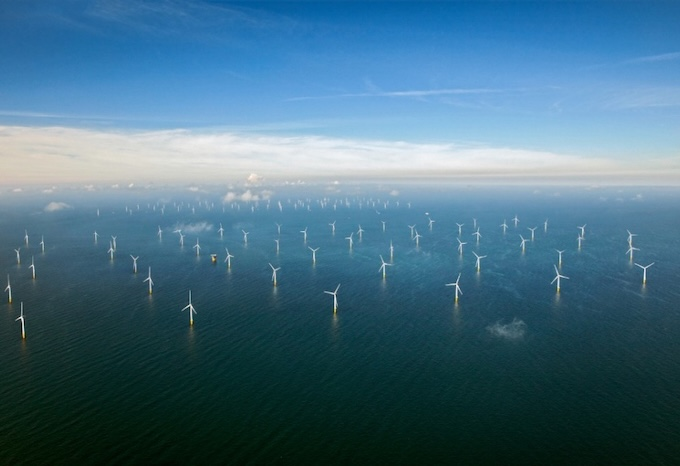
The Baltic is already making a big contribution to Europe’s energy independence, but most of its potential remains untapped
Read MoreRWE to sell Polish offshore wind development project to PGE

RWE has signed an agreement with PGE for the sale of its F.E.W. Baltic II offshore wind development project in the Polish Baltic Sea. The wind farm has a planned capacity of 350 megawatts and will be located approximately 50 kilometres from shore, north of the Polish town of Ustka. The transaction is expected to be closed in the first quarter of 2026. The parties already completed the transfer of an Environmental Decision and related data for the adjacent wind development site 44.E.1. to PGE.
RWE remains fully committed to further support the Polish energy transition by developing, constructing and operating a diverse pipeline of renewable energy projects across Poland. Today, the company already operates onshore wind and solar farms with a combined capacity of more than 660 megawatts in the country.
Sven Utermöhlen, Chief Executive Officer RWE Offshore Wind: “We are convinced that, in synergy with their other portfolio, PGE is better positioned to realise this project than RWE would be on a standalone basis. However, our target to further grow our offshore wind portfolio remains unchanged. We are currently building four large-scale offshore wind farms in four European countries and have several further offshore projects under development.”
Read full announcement (external link)
Originally published on 18 Dec
Read MoreTwo modern fertiliser warehouses opened in the Free Trade Zone at the Port of Gdańsk
On 16 December, a ceremony was held in the Free Trade Zone at the Port of Gdańsk to inaugurate two modern warehouses belonging to Solid Port, one of the key operators in the Inner Port.
Solid Port conducts tasks like handling operations at the WOC (Free Trade Zone) Quay. As part of the new investment, on land leased from the Port of Gdańsk for 30 years, they have erected two steel-structured tent-type buildings, designed on a rectangular plan with 40×60 m base dimensions plus a ridge height of 14.5 m. The walls and roofs of the halls have been made using a durable PVC coating. These warehouses are used to store organic fertilisers.
Solid Port has a significant role in handling such bulk cargo as loose raw materials, aggregates and fertilisers. These types of cargo are essential for the functioning of many sectors of the economy, including industry, agriculture and trade. The activities of such entities make it possible to maintain the continuity of supplies of these strategic goods. It has invested consistently in the development of infrastructure and superstructure for many years, systematically raising the cargo handling standards.
Read full announcement (external link)
Originally published on 17 Dec
Read MoreDEME secures foundation and cable installation contracts for BC-Wind offshore wind farm in Poland

DEME has been awarded three contracts for the installation of monopile foundations, inter-array cables, and the export cable at the BC-Wind offshore wind farm in Poland. These new contracts position DEME as a key contributor to Poland’s renewable energy build-out, supporting the country’s energy transition.
BC-Wind, developed by international offshore wind company Ocean Winds, a 50-50 joint venture between EDP Renewables and ENGIE, is located approximately 23 km off the Polish Baltic Sea coast. With a planned capacity of up to 390 MW, the wind farm will generate clean electricity for around 500,000 households per year.
DEME will deploy its offshore installation vessel Orion to install 27 monopile foundations: 26 monopiles for the wind turbines and 1 foundation for the offshore substation (OSS). Equipped with a motion-compensated pile gripper, a 5,000-ton crane and advanced ballasting systems, Orion is designed to handle the largest foundations with precision and efficiency, even in challenging conditions.
Read full announcement (external link)
Originally published on 10 Dec
Read MorePoland: With €600 million loan, EIB is the main financier behind new offshore wind farm

The European Investment Bank (EIB) will contribute €600 million and become the largest lender to the construction of BC-Wind, a 390 MW offshore wind windfarm in the Baltic Sea set to supply nearly half a million Polish households and businesses with clean power. Developed by Ocean Winds, an ENGIE and EDPR joint venture, the wind farm will sit over 20 kilometres off Poland’s western coast and is expected to start production in 2028. It marks the fourth major offshore project backed by the EIB in Poland, and the third one signed in the country just this year.
“The EIB’s persistent commitment to supporting climate, economic competitiveness and Europe’s strategic sovereignty stands behind this beneficial, long-term loan for the construction and operation of BC-Wind, a new offshore wind project in the Polish economic zone in the Baltic Sea. As the climate bank of the European Union, the EIB is a trusted partner of ambitious energy transition in Poland from renewable sources to grid modernisation to energy efficiency and affordability. The latest addition to Poland’s rapidly growing offshore wind industry, BC-Wind will help reduce Poland’s carbon emissions and ensure energy security for people and businesses,” said EIB Vice-President Teresa Czerwińska.
BC-Wind will consist of 26 bottom-fixed turbines, each with a maximum capacity of 15 MW. Ocean Winds has already secured all of the required permits, as well as a 25-year contract for difference to underpin future sales. On Dec.1, the company announced the sealing of an around €2 billion financing agreement with 15 lenders, which means construction can start in 2026.
Read full announcement (external link)
Originally published on 1 Dec
Read MoreLanding an orca Poland chooses Saab to build subs
Saab, a Swedish industrial group, has been chosen to deliver three submarines to the Polish navy. The deal will see the first sub delivered as part of the 10 billion zloty (€2.3 billion) Orka programme in 2030.
Even before Moscow’s unprovoked war on Ukraine, in 2022, Poland was one of Europe’s biggest military spenders. Since then, it has expanded investments in its armed forces further, and today its military spending amounts to 4.48% of its gross domestic product, the highest in Nato.
The Orka programme makes up a big chunk of that increase, and, say proponents, the subs are necessary for Poland to protect maritime infrastructure. Currently, Poland has one operational submarine, the ORP Orzeł. Built in the Soviet Union in 1985, it has a reputation of spending more time in repair than at sea.
Saab’s offer was chosen over five other bids, in part, because its model is specifically developed to operate in the Baltic. “The Swedish offer is the only one that met all the expectations of the navy,” Wladyslaw Kosiniak-Kamysz, Poland’s defence minister, said. Nothing under the sea apparently comes close either.
Read MoreThe Baltic economy Why Poland matters
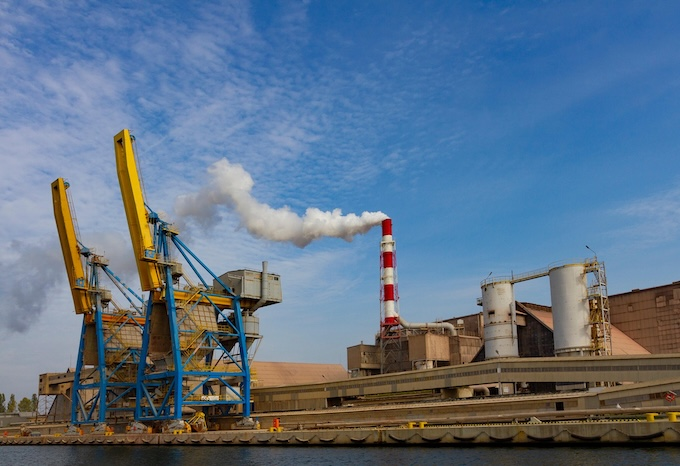
It is a business opportunity
Read More