


Posts Tagged ‘Shadow fleet’
Unleash the lawyers Armed with regulations, coast guards are getting tough on the shadow fleet
Moscow has resumed shipments of crude oil from two Baltic Sea ports near St Petersburg after a drone attack damaged a loading facility at Primorsk on Sunday. A second facility, at Ust-Luga, was closed as a precaution but re-opened after authorities lifted an attack alert. The two ports are major outlets for Russian oil, and the attack was a part of Ukraine’s strategy of targeting oil refineries in order to disrupt Moscow’s war economy.
Countries of the Baltic Sea region would like to see traffic to and from Primorsk and Ust-Luga stopped as well—for the added reason that the 1,000 or so ships that Russia uses to transport the oil and other banned items are not seaworthy, and they fear they will cause an accident. They are also suspected of being used by Moscow to sabotage undersea infrastructure.
READ MORE
But where Ukraine has the option of sending drones to accomplish its goals, Baltic Sea countries have had to tread more carefully for fear of provoking the Kremlin. That meant only stepping in when vessels posed an imminent danger, or when they were suspected of causing damage.
Now, though, their coast guards are becoming increasingly proactive. The Swedish coast guard, for example, boarded two vessels in a single week earlier this month. In one of the incidents, the captain was detained for “violating maritime code and the ship safety act, as well as the use of a forged document”. Those are hardly fighting words—but that is precisely the point.
German gambit Seizing Russia’s shadow fleet
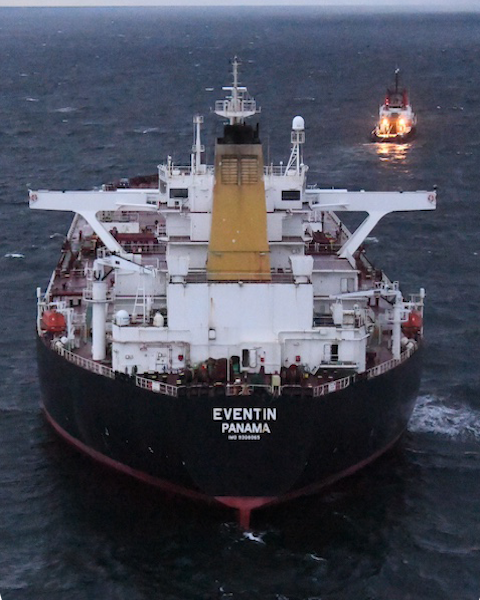
German customs authorities have confiscated the Eventin, a tanker linked to the Kremlin’s “shadow fleet”, along with its cargo of approximately 100,000 tons of crude oil. The ship was impounded in January and its seizure comes after the EU placed it on its sanctions list.
The seizure is a notable escalation in the enforcement of sanctions against Moscow’s attempts to get around restrictions on its oil trade. The “shadow fleet” of vessels flying flags other than the Russian is used to transport oil. It emerged shortly after Moscow’s unprovoked 2022 attack on Ukraine in response to Western sanctions against the Russian oil industry.
Recently the fleet’s role in wreaking havoc on subsea infrastructure has been getting a lot of attention. Environmentalists, for their part, fret that the ships are an oil spill waiting to happen; they are old, poorly kept and lack proper insurance. The Eventin was found floating adrift in January off the island of Rügen.
Germany’s seizure sends a message to Moscow and its cronies who help it to bypass sanctions. But Berlin must now carefully consider its next move: the confiscation order means that the vessel and its cargo now belong to the German state. Other countries in the Baltic will be keeping a close eye on what it does—and how the Kremlin reacts—to keep the shadow fleet in check.
Read MoreFinland releases cable-damaging tanker
Finnish police on Sunday released the dark-fleet tanker accused of damaging an undersea cable between Finland and Estonia on 25 December.
The police are continuing to investigate the Eagle S and members of its crew, but the enquiry, they said, had reached a point where it was no longer necessary to prevent the ship from leaving Finnish waters.
The decision came after Fingrid, the Finnish grid operator, and Elering, its Estonian counterpart, waived their right to continue to have the Cook Islands-flagged vessel detained, saying that the cost of doing so would likely exceed its value.
The two firms said they still plan to file a lawsuit against the Eagle S and its Dubai-based owner for the damages the ship caused.
Read MoreIntertwined, under attack and in need of protection
This looks like a job for Nato
Read MoreDenmark to enforce ban on Russian ships
Denmark will start enforcing EU sanctions that prevent 27 Russian ships from entering Danish waters or anchorage sites, according to new guidlines issued by Danpilot, the national pilotage service. The ban also applies to services like bunkering and ship supplies.
The measure comes after Brussels in June adopted its 14th round of sanctions against Moscow in response to its unprovoked attack on Ukraine. These latest sanctions target the growing “shadow fleet” Moscow is said to be using to transport oil in violation of previous sanctions. They mark a significant step in the EU’s efforts to the Kremlin to comply with sanctions.
The shadow fleet has reportedly expanded to include between 360 to 1,400 vessels, representing a substantial portion of the global tanker market. The ships, often old and with unclear insurance and ownership, have only limited ties to Moscow, raising serious environmental concerns, particularly in the ecologically sensitive Baltic Sea region.
Reports suggest that they had continued to access Danish anchorages, just as it is unclear whether Danish pilots have begun enforcing the ban, but Russian officials have warned of potential retaliatory measures in response the latest round of sanctions.
Read more
This fleet’s existence underscores the challenges faced by the EU and its allies in curtailing Russia’s oil trade, which has been increasingly rerouted to the Kremlin’s allies amid tightening sanctions, indicating a shift in global trade patterns in response to sanctions.
Denmark’s geographical position makes it a crucial player in monitoring maritime traffic in the Baltic Sea, where a considerable volume of Russian oil passes through. Copenhagen is considering additional restrictions, motivated by the environmental risks posed by the vessels, but international maritime laws grant vessels the right to innocent passage, limiting its ability to enforce its ban without risking diplomatic tensions with Russia.