


Posts by The Hanseatic
Clear signal Baltic states call out Russia for navigational shenanigans
Fourteen countries bordering the Baltic and North seas are pointing the finger at Russia as the source of navigational-signal jamming and ship-identification manipulation that are making their waters increasingly dangerous places to sail. The countries now urge everyone that has anything to do with shipping—flag states, shipping companies and operators, to name three—to be aware of the risks Russian antics pose and ensure their vessels are prepared, should they be forced to make due without electronic navigation systems.
Although the start of Russia’s jamming coincides with its annexation of Crimea, in 2014, the problem grew significantly worse after the start of its unprovoked war against Ukraine, in 2022. Mostly, this has been a problem for its neighbours who are in Nato (Latvia says it saw the number instances of jamming rise to 820 in 2024, compared with 26 in 2022) but, by framing jamming in terms of maritime safety, they are making it an international issue. Up to now, countering jamming has mostly involved making sure that mariners have the skills to sail without satnav—and, most recently, giving them alternative, if lower-tech, systems they can use to navigate by. Coastal states, however, say they will require that vessels adhere to the vast body of international maritime-safety regulations. Call it a pretext for preventative action.
Read MoreSari Kola appointed chair of BotH₂nia
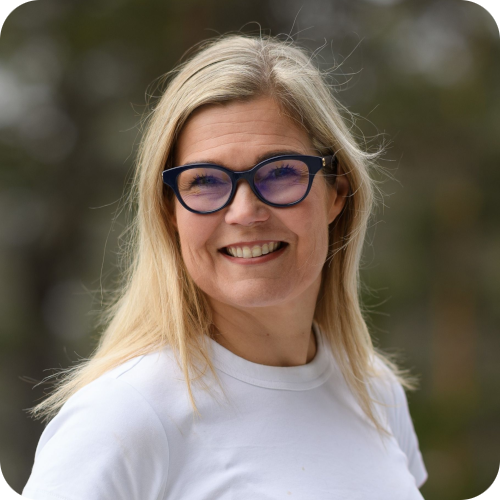
The board of BotH₂nia has chosen Sari Kola as its new chair. She has led the organisation’s activities since she was elected to the board last January.
Sari currently also serves as director of the EnergySampo ecosystem, which is tasked with creating carbon-neutral energy solutions for a sustainable future, particularly on the coast of Ostrobothnia.
Her areas of expertise include strategy-formulation and implementation, as well as the facilitation and orchestration of collaborative cultures and ecosystems. She holds doctorates in organisation and leadership and in industrial engineering and management.
Read MoreThird terminal’s a charm Baltic Hub posts third straight record volume
On Thursday, the Baltic’s largest container port reported the best year in its history—for the third year running. Last year, Baltic Hub, a part of the Port of Gdańsk, handled 23% more containers than it did in 2024. The increase is directly tied to the completion in June of T3, the facility’s third deep-water quay, which raised its capacity by a third.
The expansion of Baltic Hub significantly increases its competitive advantage in the region, and puts pressure on other ports to keep pace, but it should not take its edge for granted. Many of its competitors in Poland were already on the decline, due largely to a falling volume of coal shipments, and are making investments of their own in the hopes of reversing their fortunes. The twin port of Świnoujście and Szczecin, for example, is investing 10 million złoty (€2.4 million) in upgrades, including construction of its own deep-water container port. Its capacity will only be half of Baltic Hub’s, but it touts road and railway access, as well as its existing ferry and LNG terminals, as its strong suits. A port cannot thrive on containers alone.
Read MoreIn the dark Power outage gives Bornholm a trial run
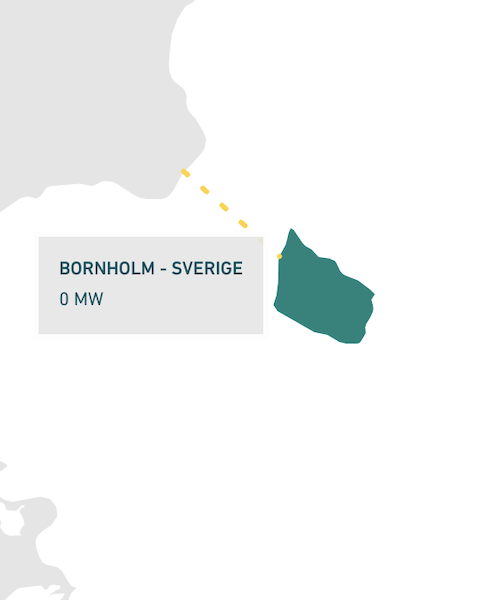
At 10:16 this morning, Bornholm lost power. The outage was immediately localised to the submarine power cable linking it with southern Sweden. Precisely 30 minutes later, Trefor El-net Øst, the TSO for the island, announced that the outage had been due to an overload caused by a technical problem; the cable was undamaged.
For the island’s 40,000 residents and its businesses, the three hours or so without power was a minor irritation. For those who are responsible for keeping the island running in the event of a situation of this sort, it was a golden opportunity: not knowing what the reason for the outage was, or how long it would last, emergency plans, including firing up the island’s backup power plant, were set into action.
The good news is that the initial reports seem to indicate that everything went mostly according to plan. More of a concern is the reason for the overload, and why it caused the entire island to black out. Call it an unknown known.
Read MorePower outage on Bornholm
Bornholm is currently without power. Trefor, the island’s TSO, reports that it has traced the outage to the submarine power cable linking the island to Sweden. TV2 Bornholm, citing Trefor, reports the outage is due to an overload, and that the cable is undamaged. Sabotage at this point is being ruled out. “What we know…
Read MoreLitgrid appoints Andrius Šemeškevičius as CEO
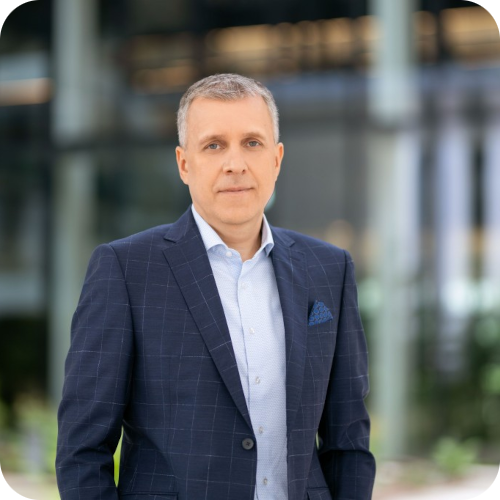
Technology specialist moves to Lithuanian TSO after a decade as telecoms CTO
On January 12, the board of Litgrid, the Lithuanian electricity transmission-system operator belonging to the EPSO-G group, appointed Andrius Šemeškevičius as CEO. He begins his five-year term on February 23.
Andrius has many years of experience in the field of technology. For the past 11 years, he served as CTO of Telia Lietuva. From 2023 to 2024, he served as an independent member of the Litgrid board of directors, where he was responsible for technology and digitalisation. Andrius holds a master’s degree in engineering informatics from Vilnius Gediminas Technical University (Vilnius Tech) and has completed leadership and business development programs at Saïd Business School, University of Oxford and The Wharton School of the University of Pennsylvania.
Litgrid, the Lithuanian electricity transmission-system operator, maintains the stable operation of the country’s electricity system, manages electricity flows and facilitates competition in the open electricity market.
Connect with Andrius on LinkedIn
Read MoreRasa Kražauskienė appointed to EPSO-G nomination and remuneration committee
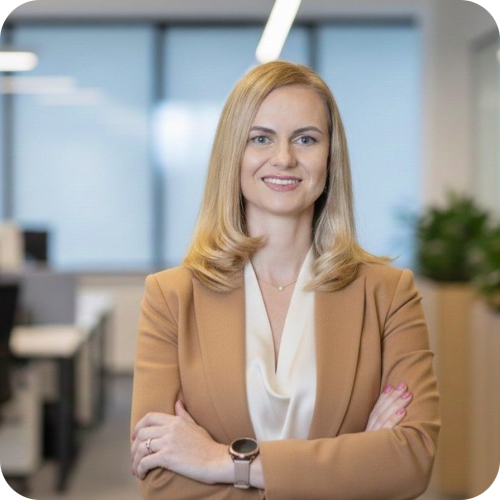
The board of Lithuanian energy group EPSO-G has appointed Rasa Kražauskienė as an independent member of its nomination and remuneration committee.
Rasa has more than 20 years of experience in human-resources management and organisational culture. She currently serves as the human-resources manager of Fazer Baltics and is a member of the board of Fazer Lietuva.
She holds a master’s degree in law from Mykolas Romeris University and a degree in nuclear law from the University of Montpellier.
Read MoreEnergy Cells names Andrius Gudzinskas as CEO
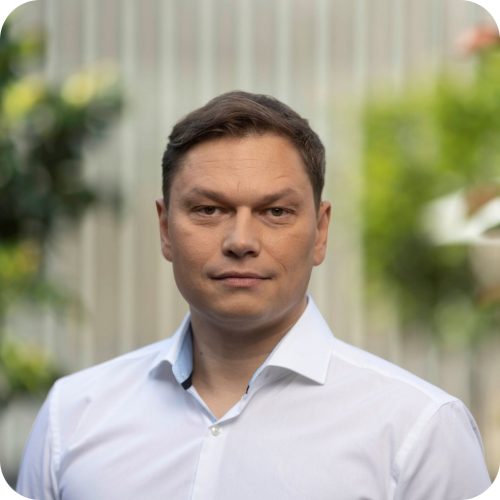
Energy-industry veteran to head Lithuanian energy storage-system operator
The board of Energy Cells, an operator of energy storage systems and part of the EPSO-G energy group, has appointed Andrius Gudzinskas as the company’s chief executive officer. He begins his five-year term on 27 January 2026.
Andrius has more than 20 years of experience in the energy industry, including electricity and heat generation, renewable-energy project development, production-operations management, energy-infrastructure modernisation and international team leadership. He holds a master’s degree in energy and thermal engineering from Kaunas University of Technology.
Energy storage-system operator Energy Cells provides an isolated operation reserve service that is essential to the security and stability of the Lithuanian electricity system. The electricity storage system managed by the company comprises four identical battery parks, each with a capacity of 50 MW and 50 MWh, located in Vilnius, Šiauliai, and the Alytus and Utena districts.
Connect with Andrius on LinkedIn
Read MorePeter Weinreich-Jensen to sit on Baltic Energy Island board
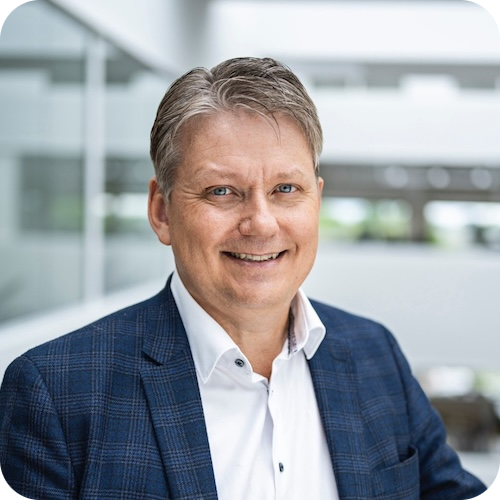
Experienced executive will contribute international perspective and extensive knowledge of the energy sector to offshore wind project
Peter Weinreich-Jensen has been chosen to sit on the board of Baltic Energy Island.
Peter is senior director for business development with Siemens Energy and has more than 30 years of experience in electrification and energy-system development. In addition to being well versed in the technical aspects of Bornholm Energy Island, he possesses specialised expertise in power-to-X, cable connections for large offshore wind projects and sector coupling.
Connect with Peter on LinkedIn
Read MoreAnne Thomas chosen to sit on Baltic Energy Island board
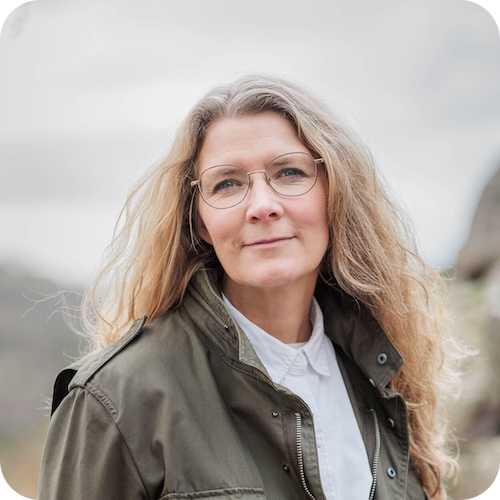
Local SocDem councillor will also serve on the boards of other business organisations
Anne Thomas has been chosen to sit on the board of Baltic Energy Island.
Anne is a member of the Bornholm island council representing Socialdemokratiet. She chairs the council’s environment and business committee, and is expected to be chosen for vacant seats on the board of Business Center Bornholm and the Bornholm branch of Erhvervshus Hovedstaden, a consultancy.
Prior to being elected to the island council in December, Anne was the head of the Centre for Regional and Tourism Research.
Read More