


All in Estonia is putting its economic future in AI’s hands
If someone out there was going to make artificial intelligence an integral part of its economy, a good bet would have been Estonia. Already one of the most digitalised countries, it is now looking to systematise its approach to the technology with the aim of increasing the size of its economy by half by 2035 (amounting to an extra €20 billion). Unveiled yesterday by Kristen Michal, the prime minister, and a group of the country’s all-star entrepreneurs, the Eesti.ai initiative will start by identifying the areas where AI stands to make the biggest impact. (The leading candidates are education, healthcare and security.) Once the areas are finalised, public-private partnerships will then be set up to develop applications that can increase productivity.
For a country in Estonia’s situation, such increases are not just nice-to-have. Its population is shrinking, and, all things being equal, when residents do not have enough babies, the labour force contracts. The result must either be fewer services or higher taxes. Immigration is one way to avoid having to make a that choice, but this option is becoming increasingly less viable; population declines are not unique to Estonia, and that is putting skilled labour at a premium throughout Europe. Another is to find ways for the hands that remain to do more work, and here, Estonia is hoping that, AI, in the labour market at least, will make its residents more productive.


Denmark’s culture ministry has named the town of Svaneke (pop 1,000) on the island of Bornholm, as one the country’s best-preserved examples of its built heritage. In all, 16 places ranging from entire villages to the centre of Copenhagen, all of them dating from the Middle Ages to the 19th century, were selected as examples of how historic areas can retain their distinct characteristics, while also functioning as modern inhabited areas. The designations are meant to be an inspiration for other places in Denmark from the same time period. For the 16 sites that made the list, the local councils that are responsible for them will be required to place preservation on par with development when making decisions about them.
Some towns might see that as a threat, but, for Svaneke, it is a relief and a recognition of the work local groups have put into keeping the town looking much the same as it did in the 19th century—to the extent that the owners of homes whose chimneys had been removed by past owners were at one point told to add one, even if it served no function. Their fervour and attention to detail has already been twice honoured: first in 1975, by the Council of Europe, and again in 2014 by Danes in a popular vote to find the country’s prettiest market town.
When the European award was given, Palle Lauring, a popular historian, said of the town’s efforts, “the people of Svaneke were satisfied that their town was as it was.” Apparently, visitors have been too. Svaneke is the most visited town on Bornholm, and Bornholm is Denmark’s biggest tourism destination. That can make Svaneke a crowded place during the high season, but, those who come say it is a nice place to visit because people want to live there.
(📸 A Savin)
Seven countries in the Nordic-Baltic region have agreed to pool their resources to stave off cyberattacks. Funded by the EU, hosted by Denmark, and with the participation of Estonia, Finland, Iceland, Latvia, Lithuania and Norway, the Nordic-Baltic Cyber Consortium will serve as a means for national cyber-security agencies in the seven countries to share information and to work together to develop new ways to counter cyberthreats.
The threat of cyberattack is not unique to the Baltic region, but the countries taking part in the consortium are among the most digitalised in the world, and thus particularly at risk. One strategy to protect themselves would be to take their foot off the pedal and move some services offline again, but that would mean losing many of the efficiency gains digitialisation has created, especially in the public sector. Doing so would also spoil plans to roll out artificial intelligence. By doubling down on digitalisation, they have decided that what makes them vulnerable is also what can make them stronger.
Employees of LRT, the Lithuanian public broadcaster, began a three-day protest today as members of the Seimas opened discussion of a law that would make it easier to dismiss its director-general. Some 1,500 journalists and cultural figures gathered to raise alarm that the measure—which comes on the heels of a decision to reverse a planned 11% budget increase over the next three years—is an attack on LRT’s independence and an encroachment on free speech.
Earlier in the month, 10,000 people gathered for a similar protest, and many Lithuanians say hamstringing LRT puts Lithuania on a path already laid out in Hungary, Slovakia and Poland. That is indeed bad company, but the reality is that public broadcasters throughout Europe have come under increased political scrutiny. Cases such as the BBC’s misleading editing of a Donald Trump speech adds fuel to the critics’ fire, but the big scandals are rare, and, indeed, their reporting is deemed as being critical, fair and necessary by both the public and experts alike. No wonder why the lawmakers are irritated.
A frequent topic of discussion on Bornholm is the island’s declining population. Despite efforts to attract new residents, more islanders die or move off the island each year than can be replaced by birth or in-migration. One bright spot has been the number of foreigners coming to the island to work. One in eight jobs is held by a non-Dane; in 2008, it was one in 30. That is the largest per-capita increase in Denmark in the period, and it was enough to help the island keep its workforce stable.
The typical foreigner still works in hospitality or agriculture—where they have all but become indispensable for firms—but the shrinking workforce means there are a growing number of opportunities for them in a broader range of fields. There may be soon be new jobs where their labour will be needed: Energy Island Bornholm, a power-converter for offshore wind energy, is expected to create some 1,500 temporary construction jobs, and then perhaps 1,000 permanent jobs running, maintaining and serving the facility. As yet, the energy island is only a proposal, but the workforce it will need is already charging up.

Rail Baltica—the multi-billion‑euro, European‑gauge rail line linking Estonia, Latvia and Lithuania with the rest of the EU—remains on schedule for completion in 2030, the prime ministers from the three countries said on Friday. Meeting in Rīga, they provided a status report for the project and pledged that they would devote the time and money needed for it to be completed (and promised to get as much EU funding as they could get their hands on).
The unwavering backing for the project is a reassurance; the problem is that it is necessary at all. All major infrastructure construction goes over time and over budget, but Rail Baltica is more than a matter of prestige. Like their decoupling from the Russian power grid earlier this year, its construction reiterates to Moscow that the Baltics are EU territory and would make it harder for the Kremlin to bring them back into its sphere of influence. Reports that Latvia was considering saving money by retaining the Russian gauge on its part of the railway may just have been rumour, but the seriousness of the situation cannot be exaggerated.
(📸 Inga Ruginienė)
The European Commission has released its set of proposals for helping EU members to move some of the union’s most important energy projects forward. The measures were first aired in September by Ursula von der Leyen, the commission’s president, as a way to speed up projects that can make Europe’s energy net more resilient and—consumers will like this—its power cheaper.
In addition to cutting paperwork, the European Grids Package and the Energy Highways initiative will increase the amount of funding Brussels is willing to make available to big energy projects five-fold, to €30 billion. Ms von der Leyen had already identified the Harmony Link, connecting the Baltic states to Poland, and Energy Island Bornholm, an energy project that could serve as blue-print for hugely ambitious energy projects, as two of her eight highways towards the union’s power needs. Yesterday, she put the pedal to the metal.
Estonia’s Riigikogu has approved a phased-in reduction the tax it charges online casinos. Reducing the rate to 4% of gross revenue, from the current 6% is in keeping with the country’s efforts to cultivate a well-regulated offshore gambling industry. A previous proposal would have raised the rate a percentage point, but supporters in the government, led by Tanel Tein, worried that doing so would scare off potential investors.
Opponents fret that cutting the tax without any guarantees that the industry will see its revenues grow means Tallinn risks having less money for culture and sport. Critics also warn that more betting increases the risk that Estonia’s online casinos will be exploited by money launderers. Mr Tein managed to sell the lower rate by labelling it a “pro-growth pivot”, but dissenters within the government said only voted for it because of his threats to dissolve the government if they did not get in line. His high-stakes bid has paid off, for now.
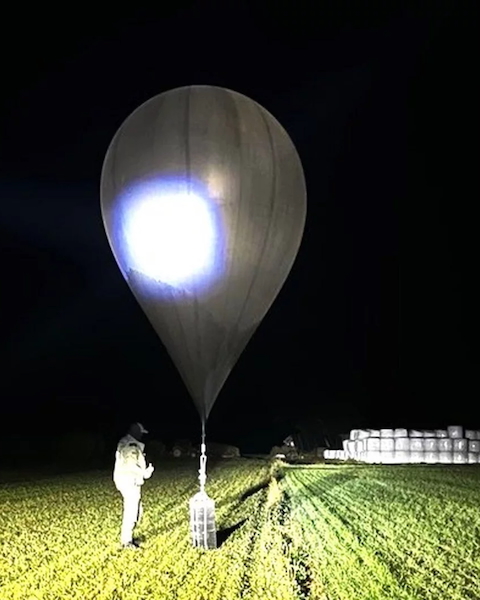
Finnair has cancelled its evening flight from Helsinki to Vilnius until March. The decision, taken on Wednesday, came after two other airlines said they would move their evening flights to earlier in the day. The reason: repeated airspace restrictions over Vilnius Airport in recent months caused by weather balloons sent over the border with Belarus.
Smugglers have used high-altitude weather balloons have to carry cigarettes into Lithuania since at least 2021. Last year alone, some 1.4 million cigarettes were confiscated. But officials say the timing and the direction of the current wave suggest it is a deliberate effort by the Belarusian government to disrupt air traffic.
In October and November, the airspace over Vilnius airport was closed 14 times due to balloon sightings. Kaunas Airport, the country’s second busiest, has also been closed. Only about 5% of all travellers in and out of Vilnius during the period were affected by the closures, but the number of balloons reported has continued to rise, and the airport was closed twice in the past week because of them.
Belarus says the balloons are Lithuania’s problem. The airlines are doing what they can to make that the case.
Proposed adjustments to the public-service-media landscape in Denmark could cost Bornholm its sole TV station. Three recommendations handed down by an expert panel on Tuesday for the future of the eight regional TV stations all include eliminating TV2 Bornholm as an independent outlet.
The recommendations are hardly a surprise: part of the brief given the panel by the culture ministry was to find a way to rectify a situation in which all TV regions receive the same funding. TV2 Bornholm, the smallest TV region, serves 40,000 people, yet gets the same 71.8 million kroner (€9.34 million) each year as TV 2 Kosmopol, which serves the 1.9 people living in Greater Copenhagen.
Two of the experts’ recommendations would redraw the map entirely, either by combining funding for TV and radio production or by creating 30 semi-independent local news outlets.
The last calls for the creation of a third TV region in eastern Denmark, and to include Bornholm as part of the coverage area for one of them. This may be the one scenario the other regions can accept, since they generally would remain intact, and, in fact, is something they long have hinted would be fair. In its report, the panel seemed to suggest it agreed. “To ensure that Denmark as a whole is covered uniformly, it is necessary to take money away from TV2 Bornholm.”
The author is a member of the TV2 Bornholm board of directors.
The concept behind an energy island is easy enough to understand: connect offshore windfarms to a converter station that can transform the electricity they generate to high‑voltage direct current and export it to markets where it is needed.
Indeed, in the case of Energy Island Bornholm, the matter should be even simpler: the converter station can be built on the island of Bornholm, about halfway between northern Germany and eastern Denmark—two markets that have said they want to buy the three gigawatts of electricity (enough to power as many as 4.5 million homes) the windfarms would produce.
READ MORE
What has not been so simple has been getting lawmakers to find the money for a project that has nearly doubled in cost since it was proposed in 2020 and now stands at 31.5 billion kroner (€4.15 billion). Uncertainty about whether Germany would still support the project after its federal elections this past February led to negotiations being suspended until May, but now it appears Berlin is eager for them to draw to a close.
Stefan Rouenhoff, a spokesperson for the German government, told an industry get-together on Bornholm on Monday that his country was willing to shoulder the larger share of the bill, and that he hoped a deal could be reached in time for it be announced on 26 January, when Germany hosts a wind-energy gathering of its own.
His comments echo earlier remarks from EU and Danish officials that an agreement is close. Other developments—from the EU’s pledge of €645 million as part of its wider energy‑security programme to the opening of public consultation in Denmark and Germany—suggest they are not exaggerating.
The industry appears to share their outlook. The meeting on Bornholm was the third of its kind, and, say the Danish hosts, the best attended, with representatives from all the key firms and agencies needed to bring Energy Island Bornholm on-line by 2030.
Also on hand were those looking for proof of concept for energy islands of their own, including one linking Åland, Gotland and Estonia’s Saaremaa. The real question, then, may be neither if nor when, but where.