


Shipping firms may need to pay a fee to use the Baltic Sea, one of the world’s busiest shipping routes, in order to cover the high costs of protecting undersea cables, Estonia’s defence minister said on Wednesday following a spate of breaches.
Nato said last week it would deploy frigates, patrol aircraft and drones in the Baltic Sea after a series of incidents in which ships have damaged power and communications cables with their anchors in acts of suspected sabotage.
In addition to the patrols, Hanno Pevkur, the defence minister, said countries are weighing other measures to protect cables, including installing sensors to detect anchors dragged across the sea floor or constructing casings or walls around the cables.
But this will come at a cost, and, whether countries or cable operators end up paying for it, consumers may be left ultimately footing the bill through higher taxes or utility costs. Another option, Mr Pevkur said, would be to levy a tax on vessels that sail through the Baltic Sea.
Source: Reuters


As is the case with most islands, there are two ways to get to and from Bornholm. The vast majority travel by sea: the ferry service transports some two million passengers annually, a service for which the current operator receives 4bn kroner (€540m) from the Danish state over the course of its 10-year contract. The locals complain a lot, but the operator turns a healthy profit.
Not so much luck on either count for DAT, the airline that offers the only other regularly scheduled way to get on or off the island. Its service, flying 200,000 passengers to and from Copenhagen each year, is neither subsidised nor profitable. Indeed, its current loss of 1.5m kroner per month had Jesper Rungholm, its managing director, earlier in the year publicly mulling whether to just stop serving the route from one day to the next, in breech of the airline’s contract with the local hospital to fly those patients who are too frail to take the ferry and the connecting coach service to Copenhagen for treatment.
Mr Rungholm immediately thought the better of doing so, telling the press the next day that his firm wasn’t the type to walk away from contracts. But his bellyaching served as a reminder that the route is not commercially viable, and that, unless someone in the government listens to his repeated requests to subsidise the route, his airline plans to stop serving Bornholm when the contact expires at the end of next November.
Read more
Mr Rungholm immediately thought the better of doing so, telling the press the next day that his firm wasn’t the type to walk away from contracts. But his bellyaching served as a reminder that the route is not commercially viable, and that, unless someone in the government listens to his repeated requests to subsidise the route, his airline plans to stop serving Bornholm when the contact expires at the end of next November.
What Mr Rungholm would like the government to do is to declare the Bornholm-Copenhagen route a PSO (short for public-service obligation). To date, Copenhagen as been unwilling to do so, on the argument that it would break EU rules—and, anyway, it says, it already spends 25m kroner annually running Bornholm’s airport, despite it too losing money, and that this constitutes a form of subsidy, albeit indirect.
Other airlines, primarily SAS and Norwegian, do occasionally fly to Bornholm, but typically only during times when there are lots of passengers, which only makes it harder for DAT to turn a profit and riles Mr Rungholm further.


PROJECT ØDELAND INVESTIGATES how ceramic and glass waste, along with granite waste from a local stone quarry on Bornholm, can be recycled into new ceramic products. The project, initiated by artists Christina Schou Christensen, Thora Finnsdottir and Signe Fensholt, is supported by the Danish Arts Foundation and Nationalbankens Jubilæumsfond, and developed in collaboration with Bofa, Bornholm’s waste-management authority.

The open competition for the position of director of the Investment and Development Agency of Latvia has concluded with a nod from the minister of economics to Ieva Jāgere.
Ieva comes to the position with more than 15 years of experience in corporate finance. She has led high-volume investment attraction deals and, until her appointment, worked at ALTUM, a financial institution. Additionally, Ieva is a managing partner at Callidus Capital, a financial and investment consultancy, as well as an independent member of the Internal Audit Committee at Indexo.
From 2016 to 2022, Ieva served as CEO of Callidus Capital. Prior to that, she spent more than three years as head of corporate finance at Oaklins Baltics, where she was responsible for investment attraction and deal management for various clients.
The newly appointed LIAA director holds an MBA from the Stockholm School of Economics in Riga and a master’s in international economics and business from the University of Latvia.
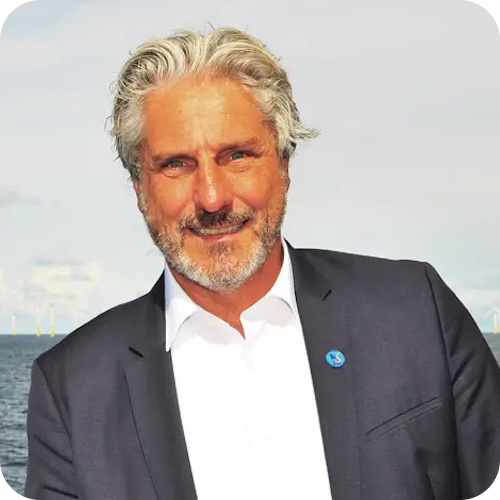
Adrian Becke has been selected to head TASK Engineering’s operations on Bornholm. A 25-year veteran of the maritime industry, Adrian moved to the position on 1 October.
He comes to the position after two years working on Bornholm as site-team assistant for Vestas Commercial, where he co-ordinated construction of off-shore wind-energy parks Arcadis-Ost and Baltic Eagle.
In selecting Adrian as COO, TASK Engineering highlighted his wealth of experience in the wind-energy industry on Bornholm and in the Baltic Sea Region. It reckons this will benefit the development of the offshore-wind industry in the region and is pleased to have a permanent contact on Bornholm that can strengthen the island’s connection with the German state of Mecklenburg-Vorpommern.
Connect with Adrian on LinkedIn
The Sopi‑Tootsi on‑shore wind project will strengthen energy independence and spur local economic growth

It starts by feeding them their own excrement
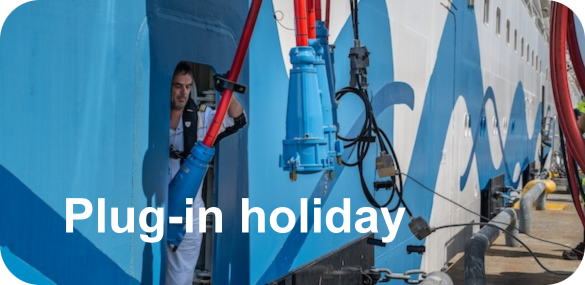
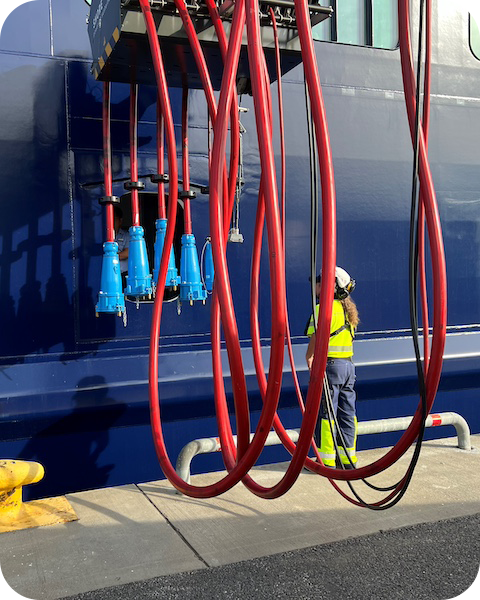
Shore-side power has become a major focus of the cruise industry’s efforts in recent years to reduce its environmental impact. It should come as no surprise, then, that Ports of Stockholm, the port authority overseeing the Swedish capital’s three main ports, made a big deal out it when it inaugurated the country’s on-shore power supply (or OPS) facility for international cruise ships on 17 September, making Stockholm the first port in Sweden—and one of just a handful in Europe—to allow cruise ships to power down their engines while in port.
Unlike a lot of other environmental initiatives, the benefits of on-shore power are immediately visible. For ships, being able to plug in, rather than run their engines, means no exhaust belching out of their smokestacks while in port.
This is because, in addition to propulsion, the diesel-electric engines that power most modern cruise ships also generate electricity. Often, more than half of an engine’s output is used for things like charging phones and keeping the lights on. Those are things that cannot be shut off entirely when the ships are in port.
Being able to plug in, more or less the way you would plug in an electric car, means less air pollution in the immediate vicinity of the ship, just as it also cuts out the noise the running engines generate. In places where the power is generated using renewable energy—such as Sweden’s hydroelectric or wind power—switching to on-shore electricity from on-board bunker brings down carbon pollution.
Read more
For now, about half of the cruise ships that land at one of Port of Stockholms’ ports can connect to electricity. This is more than double the amount that could a few years ago. By 2028, three quarters of the world’s cruise ships are expected to be able to plug in, according to CLIA, an industry group.
For cruise operators, there is an incentive in being a first mover, if it makes it possible to attract those who are turned off by the industry’s tarnished image. The promise of financial gain will undoubtedly speed the process along, but ports themselves can also play a role, either by directly mandating that ships be able plug in or by holding carrots.
Ports of Stockholm, for example, already offers discounts on port fees for ships that exceed emissions standards for carbon dioxide and soot. These could be extended to include on-shore power.
Paying ships to run cleaner makes more than just environmental logic, according to Jens Holm, the chair of the Ports of Stockholm board. It and three other Baltic Sea ports, Copenhagen/Malmö, Aarhus and Helsinki, all received funding from the EU to install OPS—amounting to 20% of the total €76mn the four port authorities will spend to do so—and he reckons this can help the Baltic Sea region market itself as a green cruise destination.
Mixing water and electricity may, in this case at least, not be such a bad idea after all.
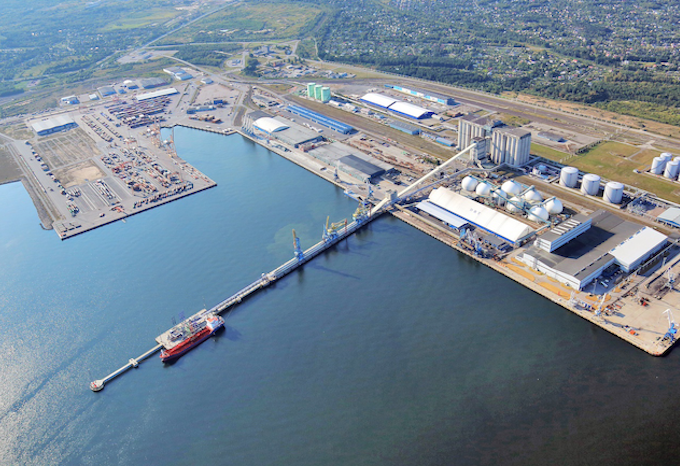
Russia, the world’s leading wheat exporter, is expanding its Baltic Sea ports as it aims to boost agricultural exports by 50% by 2030 while reducing dependence on traditional Black Sea routes, officials and executives said, Reuters, a news outlet, reports.
Baltic Sea ports loaded 1.5 million tons of grain last season, a three-fold increase from the previous season but still just 2.4% of overall Russian exports, according to Reuters calculations based on publicly available data.
“Logistically, the Baltic has many advantages for grains exports,” said Darya Snitko, vice president for Gazprombank, one of Russia’s largest banks and one of the biggest lenders to farmers.
She said the ability of Baltic terminals to handle bigger ships should help reduce overall costs.
Source: Reuters
Finland and Estonia on Friday have agreed to increase the security of their subsea infrastructure, which includes power and telecommunications cables as well as the Balticconnector gas pipeline that was damaged a year ago.
The agreement, announced in Helsinki on Friday, will see the two countries join forces to on things like technical surveillance, patrolling and repair capacities of subsea infrastructure in the Baltic.
It comes amid what Tallin and Helsinki say has been an increased number of threats against subsea infrastructure, and as countries around the Baltic rim are looking to expand all manner of subsea connections.
Finnish police continue to investigate cause of the Balticconnector damage, while Estonian police are looking into damage to subsea telecommunications links that occurred around the same time. Police in both countries have yet to provide their conclusions.