

Making ketchup green Baltic ports are taking a piecemeal approach to fossil-free shipping
It will only get the region so far
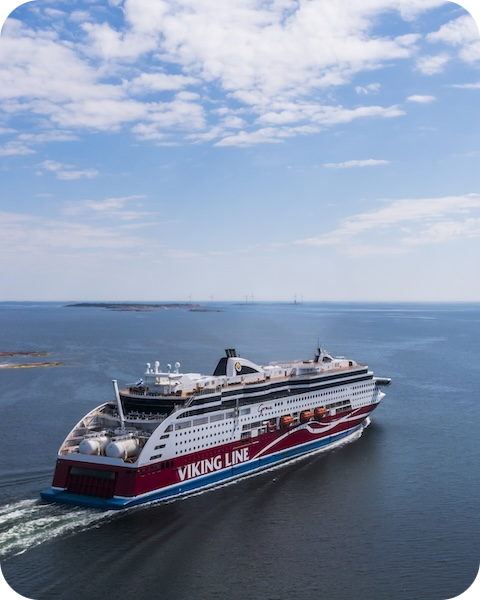
AT ANY GIVEN TIME, there are some 2,000 vessels sailing the Baltic Sea. That makes it one of the world’s most heavily shipped regions and a good place to roll out ideas that can help reduce the carbon footprint of maritime transport. A shipping corridor between Turku and Stockholm is showing how the transition to fossil-free freight can be done—one customer at a time.
The corridor, launched in February 2024 by Viking Line Cargo, is turning one unassuming commodity in particular into an unexpected symbol of sustainability. Since July 2024, Orkla, a food producer, has been transporting its Felix brand of ketchup from Sweden to Finland using a fossil-free logistics chain. The journey begins aboard lorries running on HVO, a biofuel made from used vegetable oil, driving to Stockholm. From there, the cargo is shippied across the Baltic a aboard one of Viking Line’s ferries, which can run on liquefied biogas (LBG), a fuel that is made from waste.
For Orkla, this means a 90% reduction in the carbon-dioxide emissions tied to each ketchup shipment, to just over 100kg, or a savings of some 190 tonnes annually. The biofuels are more expensive than diesel and the liquefied natural gas (LNG) Viking Line’s ships normally run on, but the cost per bottle is marginal, so Orkla has decided to absorb the expense, adding a halo to the ketchup’s green tint.
RELATED ARTICLE } Plug-in holiday
Strictly speaking, the Stockholm-Turku corridor is not green; Viking Line’s ships still primarily sail on LNG. The fossil-free part comes in when customers pay Viking Line to buy biogas amounting to the quantity of fuel required to ship its fraction of the total weight. The same option was made available to passengers in 2023.
Doing it this way, the argument goes, allows Viking Line to phase in fossil-free shipping. It has given itself ample time to do so entirely, setting a deadline of 2035, but that has the benefit of supporting producers of alternative fuels without being completely reliant on fuel supply chains that are not yet fully established.
So far, the idea of sailing fossil-free has appealed mostly to firms that are looking to reduce the carbon footprint of their entire supply chain, not just the maritime leg. Valio, a Finnish dairy, began buying offsets last year as part of its goal to create a carbon-neutral milk chain by 2035. Similar to Orkla, SSAB, a steelmaker, is combining its purchase of offsets with land transport aboard low-carbon vehicles to ship its wares—in this case, by placing its steel coils aboard electric lorries for transport in Finland.
Viking Line, for its part, is contributing to the work being done by the port authorities in Stockholm and Turku to eliminate the carbon from their operations in much the same way. Both ports are investing in the infrastructure that will be needed if they are to be able serve more ships that use alternative fuels, and they are looking to offer carbon-free shoreside services. The Port of Turku, for example, is building charging stations for heavy vehicles and planning for onshore power to eliminate emissions when ships are docked.
RELATED ARTICLE } Why the Baltic Sea moved to the centre of Europe’s energy map
The progress being made by the Stockholm-Turku line suggests the potential is there to reduce emissions locally. Indeed, it is just one of several lines in the Baltic that are seeking to go fully fossil-free. Others say they are further ahead (the Vaasa-Umeå line, across the Gulf of Bothnia, claims to have done so already—four years ahead of its 2030 target). But the approach relies heavily on corporate-responsibility ambitions and the promise of technological advance, and, in the case of the ports, the success of public-private partnerships. Small gains add up, but the approach has its limits.
Firstly, because the business case still hinges on willing partners. Orkla’s willingness to absorb the extra cost of biogas, Viking Line’s transactional shift to LBG, and the ports’ incremental rollout of shore‑power and heavy‑vehicle charging stations all reflect a voluntary, cost‑absorbing model. For now, that gives the “green” label more the the feel of branding—and, for some, will smack of greenwashing—than an actual structural change.
Secondly, infrastructure gaps make anything more than piecemeal progress unfeasible. Outfitting every ship operating in the Baltic to run on alternative fuels would require a far greater supply than is currently available—not to mention the establishment of distribution network to get it to ports. Viking Line’s incremental approach is a way to move this process along, but picking up the pace will require co-ordinated investment—perhaps in the form of a Baltic‑wide “green‑corridor fund”—of the magnitude that would require EU involvement or a business case that is so strong that private-sector investors would find it worth their while.
The Stockholm‑Turku corridor shows what is possible when the incentives of a brand, a carrier and a port align. Scaling that alignment across the entire Baltic will be less a matter of goodwill and more of harmonised policy, stable financing and a consensus on what a green corridor actually entails. In the long run, green ketchup will not cut the mustard.