


Danish manufacturers are at the ready to facilitate the rapid military buildup to the tune of 50bn kroner (€6.7bn) over the next two years announced by the prime minister on Wednesday. But they warn that any return to a military-industrial complex needed to sustain the military for the long-term will require more than just money.
“We should use this an opportunity to think strategically and truly modernise our society,” Lars Sandahl Sørensen, the managing director of DI, a business lobby, said. “Lawmakers won’t be able to avoid making considerable reforms, improving efficiency and investing in new technology and competitiveness.”
The additional funding comes on top of a 10-year, 190bn kroner plan to revamp the military, bringing it in line with Washington’s increasing demands that Nato members spend more on defence.
Denmark currently spends 2.4% percent of its gross domestic product on defence. That places it above the Nato target of 2%, but in January, Mette Frederiksen, the PM, told Danes to be prepared for cuts to some services, as her government looked towards spending 5% of GDP on defence in the coming years
Read more
The additional funding comes after years of cuts have hollowed out the military’s capabilities. And with Washington’s willingness to come to Europe’s aide in the event of a Russian attack now in doubt, Ms Frederiksen said the military would be allowed to fast-track purchases until it was rearmed, by-passing a lengthy and scandal-ridden tendering process.
Correction: We originally stated that the Nato spending target was 3%. Sorry.


Six months after joining Destination Bornholm, Anders Wiberg has been named interim head of the island’s publicly funded tourism-promotion agency.
Anders joined Destination Bornholm in August as the head of marketing and tourism information. He takes over the reins of the outfit after the unexpected resignation of its now-former director.
Anders will serve as interim head until February 2026.
Connect with Anders on LinkedIn
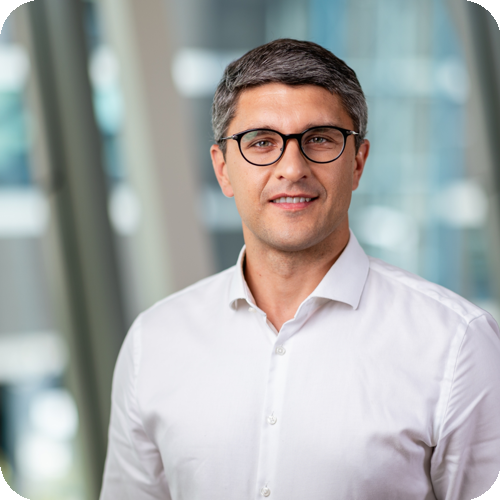
Audrius Matikiūnas has been appointed interim CEO of INVL Asset Management. He has been with the Invalda INVL group for nearly nine years, previously serving as head of business development and as a member of the company’s investment committee.
With a background in law and extensive experience in asset management, Audrius has played a key role in the company’s strategic initiatives. His appointment took effect on 7 January after the Bank of Lithuania granted its approval. He will oversee INVL Asset Management’s operations until a permanent CEO is selected.
As interim CEO, Audrius will work with the company’s board to ensure continuity and drive on-going projects.
INVL Asset Management is part of the Invalda INVL group. It manages over €1.6 billion in assets across private equity, real assets and private debt. The company operates in Lithuania, Latvia and Estonia, with a team of more than 120 professionals.
Connect with Audrius on LinkedIn
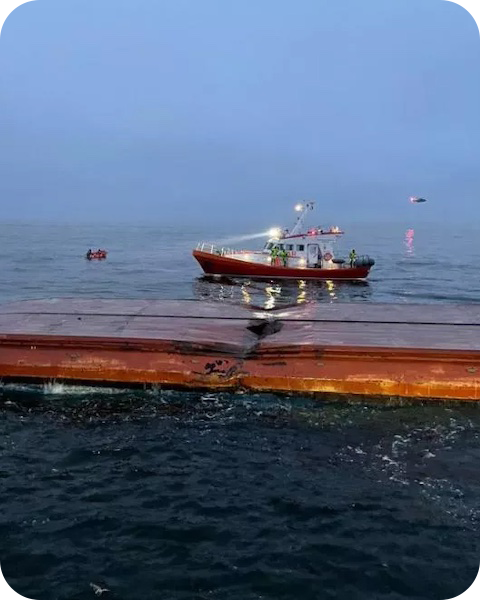
A court in Southampton, England, has sentenced the captain of a British cargo vessel and its operator for their roles in a December 2021 Baltic Sea collision that resulted in the deaths of two Danish seamen.
The crash occurred when the Scot Carrier, managed by Intrada Ships Management Ltd, collided with the Karin Høj, a Danish-registered barge, causing it to capsize. Investigators later determined that serious failures in watch-keeping and safety protocols contributed to the accident.
Sam Farrow, the 33-year-old master of the Scot Carrier, was sentenced on 14 Feb to eight months in prison, suspended for 12 months, for failing to prevent the collision, despite being aware that his second officer was unfit for duty. He was also ordered to pay £25,000 (€30,000) in legal costs.
Meanwhile, Intrada Ships Management Ltd was fined £180,000 and ordered to pay £500,000 in legal costs for failing to enforce safety measures that could have prevented the accident.
Read more
In 2022, a Danish court sentenced Mark Wilkinson, the second officer, to 18 months in prison after admitting to gross negligence and intoxication while on duty. Additionally, he received a 12-year ban from entering Denmark and had his maritime license revoked for operations in Danish waters.
(📸 Sjöräddningssällskapet)
The European Union is mulling a public-private initiative worth “hundreds of millions” of euros to buy ships that can promptly repair subsea cables in case of damage or sabotage, the bloc’s tech chief said.
“We are discussing now with member states what would be the amount that is needed,” Henna Virkkunen, the European Commission’s executive vice-president for technological sovereignty, security and democracy, said on the sidelines of the Munich Security Conference. “When it comes to security we see that there’s an urgent need for action.”
In recent months, there have been a string of incidents in the Baltic Sea in which telecommunication and power cables strung across the sea floor between countries were damaged by passing ships. While it is unclear whether these disruptions were accidental or intentional, they have spurred the EU to focus on its infrastructure’s resilience, including by ramping up the continent’s cable-repairing fleet.
Subsea cables carry internet and power connections across countries and continents and their loss can cause disruptions to digital services, including web access and payments, and force telecommunications providers to reroute traffic. More than 95% of global data traffic goes through subsea cables, according to the International Cable Protection Committee.
Source: Bloomberg

The leadership of Riga Technical University announced on 4 February that Inese Muzikante will become director of the Riga Business School.
Inese Muzikante had been serving as the school’s interim director since 3 August. Previously, she had been responsible for the management and development of the faculty of all academic programs and was a lecturer in the Executive MBA Leadership Development Practicum course.
Tālis Juhna, the rector of Riga Technical University, said: “RBS is an important part of the RTU ecosystem. For more than 30 years, RBS has focused on developing high-level business leadership education. Business and innovation management and digitalisation play an increasingly important role in today’s business environment, so they are already and will continue to be the leading directions at RBS. I am confident that Inese Muzikante’s strategic vision and experience will inspire the RBS team and students to grow purposefully.”
Connect with Inese on LinkedIn
The Baltic states of Estonia, Latvia and Lithuania completed a switch from Russia’s electricity grid to the EU’s system on Sunday, severing Soviet-era ties amid heightened security after the suspected sabotage of several subsea cables and pipelines.
Ursula von der Leyen, the president of the European Commission, hailed the move, years in the planning, as marking a new era of freedom for the region, in a speech at a ceremony in Vilnius alongside the leaders of the three countries and the Polish president.
Debated for many years, the complex switch away from the grid of their former Soviet imperial overlord gained momentum following Moscow’s annexation of Crimea in 2014 and its invasion of Ukraine in 2022.
It is designed to integrate the three Baltic states more closely with the EU and to boost the region’s energy security.
Source: Reuters
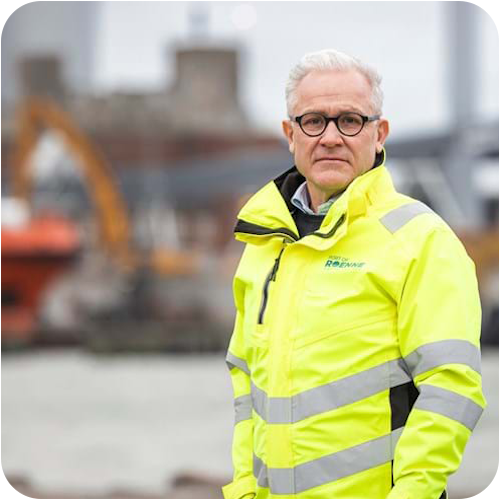
Danish Ports strengthens its board with Lars Nordahl, CEO of Port of Roenne, as a new member.
Lars, in his role as CEO of Port of Roenne, has been instrumental in consolidating the port’s position as a central part of Bornholm’s infrastructure and a key player in the green transition in the Baltic Sea. Port of Roenne serves as Bornholm’s primary supply port, a hub for cruise tourism, and an essential shipping port for the wind energy industry.
According to Tine Kirk, CEO of Danish Ports, Lars has transformed Port of Roenne into a vital player in the port sector. “Port of Roenne is a role model for green transition and has become a growth engine for Bornholm. We look forward to benefiting from Lars’s experience and vision in our efforts to strengthen Danish commercial ports,” she states.
Danish Ports is the trade organisation for Danish commercial ports, working to highlight the importance of ports in green transition, local development, and economic growth. With Lars joining the board, the organisation aims to continue emphasising the significant societal role played by ports.
Related article } The Bornholm advantage
The Hanseatic aims to be a region-building news outlet that promotes closer commercial ties within the Baltic Sea region by reporting on news from the region to the region.
At the same time, The Hanseatic aims to be a region-promoting news outlet that reports on the Baltic sea region to a global audience.
Regional news • Global perspective
Nato says it is ready to deploy artificial intelligence and uncrewed vessels in the Baltic as part of its increasing efforts to detect the telltale activity that could indicate that a ship is preparing to damage undersea cables and pipelines.
The military alliance’s hope is that it can use software to process information from satellite imagery, sonar systems and underwater sensors to spot merchant vessels that appear to be acting erratically above undersea infrastructure.
The software, known as Mainsail (a backronym for Multi-Domain Awareness and Insight with AI Layering), has been developed in response to concerns that Russia is engaged in a campaign of damaging undersea infrastructure in and around Europe.
The most dramatic of example of an attack on undersea infrastructure was the 2022 sabatoge of the Nord Stream gas pipeline. The evidence there points to Ukraine, but similar incidents in which Moscow is implicated were recorded before then; in recent months, the number has increased rapidly.
Read more
In November and December of 2024 alone, three separate cables carrying internet data and power between in the Baltic, connecting five Nato members—Estonia, Finland, Germany, Lithuania and Sweden—were severely damaged in incidents.
In most incidents, the damaging vessel—Russian or otherwise—cannot be identified, just as it is impossible to ascertain whether the damage was intentional. Both are often due to a lack of information. As a result, Nato has increased its presence in the Baltic Sea. It is hoped that, where they cannot deter future attacks, they can at least help to clear up which vessel is at fault.
As part of this effort, it is incorporating autonomous vessels that will be able to conduct persistent surveillance over large areas.
Labelled Task Force X, all members of the alliance were invited on to take part, but the hope is that Baltic Rim states will be among those to take the lead.
Nato says the countries taking contributing to the initiative are free to deploy their own assets, making it a proving ground of sorts that puts emerging technologies into active service.