


Posts Tagged ‘Denmark’
Nuclear option Danish opposition frontrunner casts doubt on energy project
The leading opposition party standing in Denmark’s general election on 24 March is suggesting that the 61 billion kroner (€816 million) in subsidies pledged by the Danish state last month to build Bornholm Energy Island would be better spent supporting the development of atomic power.
The proposal, put forward by Alex Vanopslagh, the leader of the Liberal Alliance, calls for taking a total of 120 billion kroner in subsidies for renewable-power projects and using the money fund construction of as many as eight atomic-energy plants over the next 15 years.
READ MORE
Though Bornholm Energy Island, which encompasses two offshore windfarms and an onshore power converter, is a Danish project, Germany is its biggest benefactor: in exchange for footing 70% of the bill it will get most of the power the windfarms generate.
The setup is one that the Danes worked hard to sell to Berlin, and would make it hard for Mr Vanopslagh to make good on his proposal without Denmark losing face. This is something he is well aware of, suggesting the purpose of making it has more to do with promoting his party’s position that Denmark should overturn its ban on atomic energy than it does with sinking an energy island.
An unmanned invasion Denmark’s military build-up is going to the drones
Denmark has reactivated an air-force squadron that will operate four long-range drones to support surveillance of its interests in the Arctic, the North Atlantic and the Baltic.
The decision to purchase the American-produced MQ-9B SeaGuardians was announced last year, as was the three-year wait to have them delivered. But building up a drone corps in Denmark will take time as well; the air-force announced yesterday that it will need to hire and train a hundred or so people—many of them civilians—to keep the drones up and running.
READ MORE
The drone purchase is being made with the blank cheque the government gave the military last year, when it ordered it to procure the materiel it deems necessary to scale up its capacity as quickly as possible. Drones, it appears, fit that bill nicely: the SeaGuardians join four saildrones that were sea-trialled in June in preparation for surveillance operations in the Baltic. Compared with crewed systems, the drones are cheap and quickly rolled out.
The saildrones are also American-made, however—a fact that does not sit well with those who would prefer that the military start buying more of its kit in Europe. Other European armies are stocking up on American arms too, though: Germany, Belgium and Poland are all buying SeaGuardians. The saildrones’ producer, for its part, has chosen to set up a European sales office in Copenhagen. Denmark is unlikely to be the last country American drones take over.
Niklas Finné appointed acting CEO of CMP
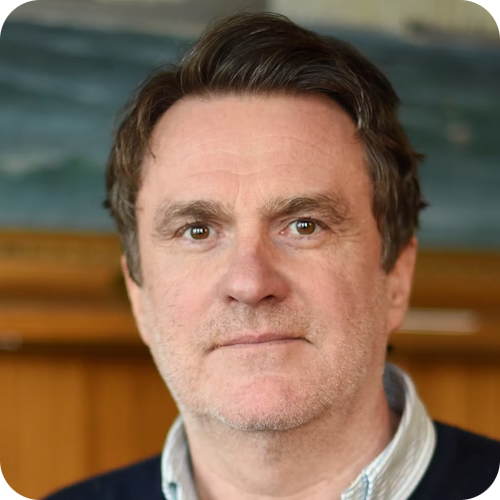
Copenhagen Malmö Port CFO CFO Niklas Finné has been appointed acting CEO effective 1 March. He remain in the position until a replacement for Barbara Scheel Agersnap, who has chosen to step down.
Niklas has been part of CMP’s executive management team since 2019 and, in his role as CFO, has played an important part in developing the business and creating stable conditions for the company’s continued progress. As Acting CEO, he will ensure continuity in the strategic work, which is now entering an important implementation phase.
He will continue in his position as CFO after the new CEO is in place.
Connect with Niklas on LinkedIn
Read MoreKeeping up with the Nordics Baltics staying the course against corruption
When it comes to corruption rankings, there are the Nordics and then there is everyone else. Again this year, Denmark, Finland, Norway and Sweden ended in a log jam at the top of the Corruption Perceptions Index, an annual ranking of perceived corruption in the public sector. Germany rounded out the top 10. The Baltic states (Estonia: 12; Lithuania: 28th; Latvia: 37) are showing that despite some setbacks (including the resignation of Lithuania’s prime minister last year amid a corruption scandal), that they, too, take corruption seriously.
Transparency International, which has produced the report each year since 1995, cautions against easing up against corruption, even in the Nordic countries, but, in the Baltic region, the trends at least are with them: countries with the best records are generally democratic and highly digitalised.
READ MORE
That will show the path for Poland (52). To be sure, it has shown improvement since PiS, an illiberal regime that dismembered the country’s civil-society infrastructure, was voted out of office in 2023, and it finds itself solidly in the top third of the table.
Progress, though, has been modest, due to what has been deemed insufficient efforts to undo the damage done by PiS. Russia (157) finished level with Chad, Honduras and Zimbabwe. An outlier in a sea of outliers.
Hurtigruten opens a new route from Copenhagen to North Cape and Tromsø

Hurtigruten is launching a new sailing from Copenhagen to Tromsø via North Cape as one of three new routes along Norway’s coast. The new itinerary gives Scandinavians and international travelers the opportunity to journey from the continent to the Arctic, with stops in some of Norway’s most iconic coastal towns and natural areas.
Demand from Scandinavia is growing strongly. The number of Danish customers has increased by 17 percent from 2024 to 2025, while the number of Swedish travelers has grown by 20 percent during the same period.
Read full announcement (external link)
Originally published on 12 Feb
Read MoreCopenhagen wins Best Northern Europe Cruise Port award
Copenhagen has been voted Best Northern Europe Cruise Port by Spanish‑speaking cruise guests at the prestigious Cruceroadicto 2025 Awards. This is the fourth cruise award won by Copenhagen during the past five months
Award winners are determined directly by votes from Spanish‑speaking cruise guests who have travelled at least once on a cruise during the past 12 months. Candidate ports for the award are only those accessible to the Spanish‑speaking market. With almost 70,000 arrivals in 2025, Spanish cruise guests made up the third-largest single nationality group visiting the Danish capital by ship.
Read full announcement (external link)
Originally published on 6 Feb
Read MoreA new special vessel at the Fehmarnbelt project

A new special vessel has arrived in the work harbour in Rødbyhavn. It is the large floating crane “Hebo Lift 9”. The floating crane will place the enormous anchors on the seabed, to which the immersion pontoon IVY will be attached with long steel wires in connection with the immersion of the first tunnel element this spring.
A total of eight anchors weighing 500 tonnes each will be used. The anchors are shaped like large boxes and are lowered onto the seabed. After the immersion of an element, the anchors can then be picked up again by the crane and reused in connection with the immersion of the next element.
Read full announcement (external link)
Originally published on 30 Jan
Read MoreFinal Agreement on the Bornholm Energy Island
At the North Sea Summit on January 26, Denmark and Germany took the final steps toward realizing the Bornholm Energy Island. At Baltic Energy Island, we are grateful and more than ready to move forward.
Denmark and Germany have agreed to share the costs of the support needed for offshore wind. The cost distribution reflects a fair balance between the benefits of the project and the expected allocation of green power.
Read full announcement (external link)
Originally published on 27 Jan
Read MoreGreen land Denmark and Germany agree financing for Bornholm Energy Island
Denmark and Germany say they are ready to split the cost of any public funding needed to make sure that Bornholm Energy Island becomes a reality. Essentially a set of offshore windfarms that would double Denmark’s offshore wind capacity, the project, if completed, would send power to 4.5 million Danish and German consumers via its namesake island. More than that, say boosters, it provides a model for other mega energy projects that lawmakers are more keen on than investors.
Locally, the news has been well received. Even the healthiest of economies would find it hard to be unhappy about being the focal point of a multinational project whose final tab is expected to be over €4 billion. Bornholm, meanwhile, is still striken from the implosion of its fishing industry in the 1980s. But while a project of this sort will be good for its budding offshore industry, particularly if an associated industry estate comes to fruition, local lawmakers are still treading carefully: energy firms have yet to deem the project worth putting money into, while those living near the 111 hectare converter station will need be placated (read as: compensated). . Beyond that, there is irony of spoiling a chunk of pristine coastline of Denmark’s most popular tourism destination in the name of clean energy. If being a Danish island is a challenge these days, being a green one is doubly so.
Read MoreAgreement on the Bornholm Energy Island project: “Strong european signal in geopolitically difficult times.”

The agreement on the wind farms for the Bornholm Energy Island project is the decisive building block for the realisation of this particular German-Danish infrastructure undertaking.
Stefan Kapferer, CEO of 50Hertz: “The agreement be-tween Germany and Denmark has an impact on the offshore industry across Europe, extending far beyond the Baltic Sea project Bornholm Energy Island. It is furthermore a strong european signal in geopolitically difficult times. Both countries are breaking new regulatory ground and are therefore pio-neering the way forward. 50Hertz and Energinet will jointly contribute their expertise and experience and, as those responsible for the electricity hub on Bornholm and for the direct current connections to Denmark and Germany, will play their part in the success of the project overall.”
Read full announcement (external link)
Originally published on 26 Jan
Read More