


Posts Tagged ‘infrastructure’
New procurement launched for Rail Baltica energy subsystem design expertise in Latvia and Lithuania

RB Rail AS has announced the launch of a new procurement for Design Expertise Services for the Rail Baltica Energy Subsystem in Latvia and Lithuania (ID No. RBR 2025/14), marking the next step forward in the detailed technical development of the Rail Baltica electrification system.
The procurement is structured into two separate lots, one for Latvia and one for Lithuania, allowing suppliers to submit proposals for one or both countries. Local design expertise companies with relevant experience in Latvia and Lithuania are encouraged to participate.
Read full announcement (external link)
Originally published on 2 Apr
Read MoreRail Baltica Partners with Asite to Centralize Project Information Management
Asite, a leading provider of digital transformation solutions for the construction and infrastructure sectors, has been selected through a public procurement process to supply the Common Data Environment (CDE) for Rail Baltica – the high-speed rail project that will connect Poland, Lithuania, Latvia, and Estonia, and indirectly Finland, to the wider European rail network.
The platform will support governance, collaboration, and structured information management across the Rail Baltica delivery organizations, enabling transparent and efficient information exchange across one of Europe’s largest infrastructure programs.
Read full announcement (external link)
Originally published on 11 Mar
Read MoreRail Baltica advances consolidated materials procurement across core superstructure elements
Rail Baltica has moved to the next stage of its consolidated construction materials procurement, with several framework agreements for key track components now signed or close to being finalised. The centralised procurement model, implemented together by Estonian, Latvian and Lithuanian delivery organizations and led by the central coordinator of the project, plays an important role in making sure the future high-speed railway is developed as one connected and compatible system.
Framework agreements establish pre-agreed conditions for pricing, performance, quality assurance and delivery schedules without creating immediate financial commitments. This structure allows national implementing bodies to place orders in line with actual construction progress, maintaining flexibility while securing supply chain reliability.
Read full announcement (external link)
Originally published on 5 Mar
Read MoreContractor tests special vessel for immersion of tunnel elements

At present, the contractor consortium Femern Link Contractors (FLC) is testing the special vessel that will immerse the tunnel elements for the Fehmarnbelt tunnel. Over the weekend, the unique immersion pontoon IVY 1 & 2 carried out the first test of connecting the vessel to a completed tunnel element.
The immersion pontoons are currently located in the large Danish work harbour on Lolland, with the first tunnel element secured between the two units. The initial phase of testing has already been successfully completed and includes, among other things, confirming that all functions operate correctly – both when IVY 1 & 2 are operated separately holding a standard element secured in between, and when they are operated as a combined vessel.
Read full announcement (external link)
Originally published on 3 Mar
Read MoreNIB to finance upgrades to Riga water systems

NIB has agreed on a credit facility of up to EUR 50 million with SIA Rīgas ūdens to support a 2025–2028 investment programme for wastewater treatment and clean-water infrastructure. The aim is to improve service reliability and quality and to cut non-revenue water.
The total programme cost is EUR 235 million and is also co-financed by a EUR 70 million loan from the European Investment Bank, as well as funding raised through green bond issuances.
Read full announcement (external link)
Originally published on 12 Feb
Read MoreA new special vessel at the Fehmarnbelt project
A new special vessel has arrived in the work harbour in Rødbyhavn. It is the large floating crane “Hebo Lift 9”. The floating crane will place the enormous anchors on the seabed, to which the immersion pontoon IVY will be attached with long steel wires in connection with the immersion of the first tunnel element this spring.
A total of eight anchors weighing 500 tonnes each will be used. The anchors are shaped like large boxes and are lowered onto the seabed. After the immersion of an element, the anchors can then be picked up again by the crane and reused in connection with the immersion of the next element.
Read full announcement (external link)
Originally published on 30 Jan
Read MoreLatvia receives record-high EIB Group financing of €381 million in 2025

The European Investment Bank (EIB) Group increased financing for Latvia to a record €381 million in 2025 to speed up the green transition, strengthen infrastructure and promote loans for households and businesses. The EIB Group last year also opened its first office in Riga to anchor a closer partnership with authorities, companies and financial intermediaries in the country.
“2025 was a significant year for the EIB Group in Latvia,” said EIB Vice-President Karl Nehammer. “With record financing and our new office in Riga, we are now closer to our partners than ever before – supporting energy security, modern infrastructure and better access to finance for people and businesses across the country.”
Read full announcement (external link)
Originally published on 30 Jan
Read More€113 million in EU funding allocated to strengthen the resilience of Baltic and Polish electricity grids

The European Commission has allocated €113 million in funding from Connecting Europe Facility (CEF) for critical Synchronisation infrastructure protection implemented by the transmission system operators of Lithuania, Estonia, Latvia and Poland. The implementation of wider range of projects aimed at ensuring energy security against potential cyber and physical threats began on February 9 last year, following the successful synchronization of the Baltic States with the Continental European electricity network.
“Having successfully completed the synchronization project, the Baltic States and Poland continue to invest in energy independence and security. We are grateful to the European Commission for supporting our ambition to make the Baltic Sea region a model for strengthening the security and resilience of critical energy infrastructure across Europe. This funding is the result of our consistent efforts and sets a new precedent, as until now the European Union had no dedicated financing for the protection of critical energy infrastructure. By consistently applying the lessons learned from Ukrainian energy specialists, we are expanding the scope of protection for our critical energy infrastructure projects. We plan to apply for further funding for resilience projects and are actively working to ensure that a long-term EU-level instrument for financing critical energy infrastructure protection is established,” – said Žygimantas Vaičiūnas, Minister of Energy of the Republic of Lithuania.
Read full announcement (external link)
Originally published on 28 Jan
Read MorePreparations underway for immersing tunnel elements into the Fehmarnbelt
Preparations for the special vessel IVY, which will play a key role in the construction of the Fehmarnbelt tunnel, are nearing completion. The approval of the immersion pontoon is almost two years behind the original schedule.
In the coming weeks, the first part of the tunnel trench will be prepared for immersion. The trench is being adapted to the elements, and the contractor is laying a gravel bed to create an even base for the tunnel elements.
Read full announcement (external link)
Originally published on 21 Jan
Read MoreIn the dark Power outage gives Bornholm a trial run
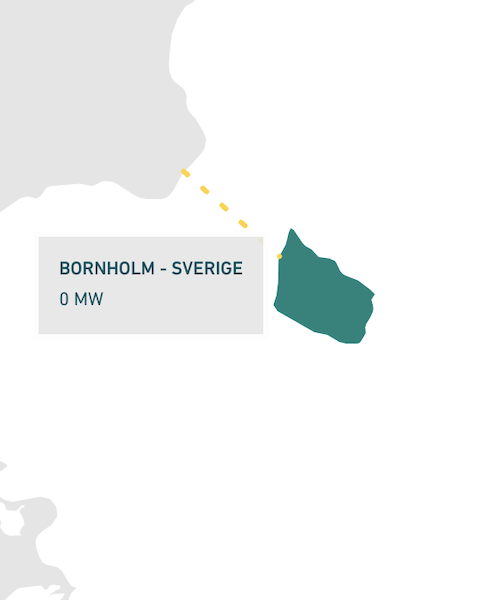
At 10:16 this morning, Bornholm lost power. The outage was immediately localised to the submarine power cable linking it with southern Sweden. Precisely 30 minutes later, Trefor El-net Øst, the TSO for the island, announced that the outage had been due to an overload caused by a technical problem; the cable was undamaged.
For the island’s 40,000 residents and its businesses, the three hours or so without power was a minor irritation. For those who are responsible for keeping the island running in the event of a situation of this sort, it was a golden opportunity: not knowing what the reason for the outage was, or how long it would last, emergency plans, including firing up the island’s backup power plant, were set into action.
The good news is that the initial reports seem to indicate that everything went mostly according to plan. More of a concern is the reason for the overload, and why it caused the entire island to black out. Call it an unknown known.
Read More