


Posts Tagged ‘ports’
Comprehesive Ports: New Strategic Nodes for Baltic Energy and Security

The Baltic Sea Region (BSR) port ecosystem faces profound geopolitical and economic reorganization, which has necessitated the rapid dissolution of established trade flows and energy connections. The new TEN-T framework places immediate pressure on the comprehensive ports in the BSR to adapt to rapidly changing security, economic, and regulatory environments.
Long-term competitiveness relies on fulfilling strict 2050 standards for environmental, digital, and multimodal infrastructure, and strengthening dual-use capabilities for military mobility. Securing the long-term vitality of these crucial regional nodes demands immediate, grounded analysis to protect their operational continuity and guide strategic diversification.
To aid the maritime community in the BSR in navigating this transformed reality, the Baltic Ports Organization (BPO) has published the report Comprehensive ports in the Baltic Sea – Resilience, Transformation and Future Prospects. This resource provides analysis and insights essential for understanding the shifting commercial, security, and regulatory landscape faced by the comprehensive port network.
Read full announcement (external link)
Originally published on 26 Nov
Read MorePorts of Tallinn and Stockholm take a step closer to fossil free maritime transport

The Port of Tallinn and Ports of Stockholm signed a Memorandum of Understanding on 4th of November in Tallinn to launch the Swed-Est Green Collaboration, a joint initiative aimed at promoting sustainable and fossil fuel free maritime activities between Estonia and Sweden, primarily at the harbours connecting Tallinn–Stockholm and Paldiski–Kapellskär routes.
According to Valdo Kalm, CEO of the Port of Tallinn, the collaboration aims to reduce the environmental impact of maritime transport while offering passengers and cargo operators future-oriented, sustainable solutions.
“This partnership provides both ports with a strategic advantage, making us more attractive to shipowners, passengers and cargo operators who are looking for sustainable travel and transport solutions. It also opens up opportunities for developing new business models in fossil fuel free maritime transport, for joint scientific and applied studies, and for applying for EU and other funding programmes,” Kalm said.
Read full announcement (external link)
Originally published on 5 Nov
Read MoreFrom green hydrogen to electrification: “Blue Supply Chains” roadmaps highlighted at BPO conferences
The recently developed two roadmaps in the Baltic Sea region outline concrete steps towards climate-neutral port operations and sustainable maritime transport. They provide actionable pathways for ports, municipalities, and industry stakeholders to accelerate the transition to renewable fuels, electrification, and other low-emission solutions. Both projects will be briefly presented at two upcoming conferences organised by the Baltic Ports Organization.
These strategic documents, created within the framework of the EU-funded Interreg Baltic Sea Region project “Blue Supply Chains”, serve as practical guidance on how to plan, implement, and scale green energy and zero-emission solutions in and around ports. They cover the entire value chain – from production sites, storage, and bunkering facilities to infrastructure requirements, policy frameworks, and stakeholder involvement, including both alternative fuel production and the electrification of inland waterway transport. The Baltic Ports Organization is one of the BSC project partners.
Read full announcement (external link)
Originally published on 9 Sep
Read MoreHouse modules unloaded from Frihamnen Port
More than 400 house modules are currently being unloaded from Frihamnen Port in Stockholm. The modules arrived by ship directly from Malaysia and have been stored for some time in the port, which is a strategic hub for further transport to the final destinations Enköping and Nyköping.
The centrally located inner-city quays are an important complement to the Stockholm region’s major freight ports, which include Stockholm Norvik Port, Port of Nynäshamn and Port of Kapellskär. By utilizing Frihamnen for project cargo, customers benefit from increased flexibility and additional transport options.
Read full announcement (external link)
Originally published on 3 Sep
Read MoreBaltic ports unite in Gdynia for a greener future
The Baltic Ports for Climate Conference 2025, organised by the Baltic Ports Organization and the Port of Gdynia, this year’s host will bring together leaders, experts, and innovators from across the Baltic Sea Region and Europe to address one of the maritime sector’s most urgent challenges: climate change. Taking place on 19-20 November 2025 in Gdynia, Poland, the conference will explore how ports can reduce emissions, implement sustainable strategies, and collaborate on innovative solutions that shape the future of maritime transport and supply chains.
The Baltic Ports for Climate Conference is a fairly new initiative launched in 2023, reflecting the Baltic Ports Organization’s strong commitment to active involvement in climate, environmental and sustainable development issues.
The conference will begin on the evening of 19 November with a welcome reception, providing participants with the opportunity to network and connect in an informal setting. Over the following day, participants will explore how ports can align with European climate strategies, implement effective emission reduction measures, and integrate sustainability into long-term development.
Read full announcement (external link)
Originally published on 3 Sep
Read MoreThe Port of Gdansk with a direct container service to the USA

The Port of Gdansk has joined the European ports operating regular, direct container connections with the United States. Thus, it strengthens its position on the map of global logistics, becoming a real alternative to the largest ports in Northern Europe.
Gdansk was included in the transatlantic rotation, strengthening the MSC network between Poland and the US. Mediterranean Shipping Company (MSC), the world’s largest shipowner, has expanded its Albatros service with direct connections from Northern Europe to New York and Charleston, offering full integration of inland waterway and logistics services.
Read full announcement (external link)
Originally published on 2 Sep
Read MorePlug-in holiday Stockholm’s ports are helping the cruise industry clean up its act
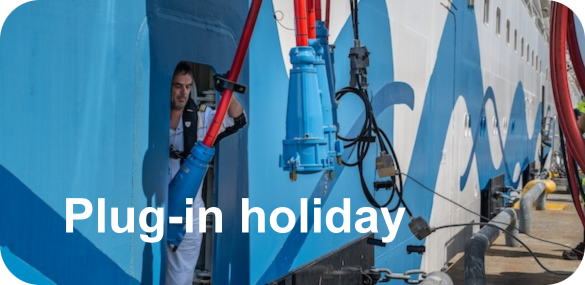
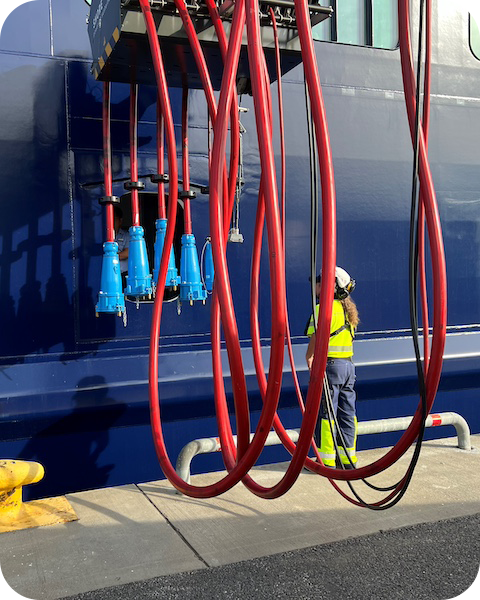
Shore-side power has become a major focus of the cruise industry’s efforts in recent years to reduce its environmental impact. It should come as no surprise, then, that Ports of Stockholm, the port authority overseeing the Swedish capital’s three main ports, made a big deal out it when it inaugurated the country’s on-shore power supply (or OPS) facility for international cruise ships on 17 September, making Stockholm the first port in Sweden—and one of just a handful in Europe—to allow cruise ships to power down their engines while in port.
Unlike a lot of other environmental initiatives, the benefits of on-shore power are immediately visible. For ships, being able to plug in, rather than run their engines, means no exhaust belching out of their smokestacks while in port.
This is because, in addition to propulsion, the diesel-electric engines that power most modern cruise ships also generate electricity. Often, more than half of an engine’s output is used for things like charging phones and keeping the lights on. Those are things that cannot be shut off entirely when the ships are in port.
Being able to plug in, more or less the way you would plug in an electric car, means less air pollution in the immediate vicinity of the ship, just as it also cuts out the noise the running engines generate. In places where the power is generated using renewable energy—such as Sweden’s hydroelectric or wind power—switching to on-shore electricity from on-board bunker brings down carbon pollution.
Read more
For now, about half of the cruise ships that land at one of Port of Stockholms’ ports can connect to electricity. This is more than double the amount that could a few years ago. By 2028, three quarters of the world’s cruise ships are expected to be able to plug in, according to CLIA, an industry group.
For cruise operators, there is an incentive in being a first mover, if it makes it possible to attract those who are turned off by the industry’s tarnished image. The promise of financial gain will undoubtedly speed the process along, but ports themselves can also play a role, either by directly mandating that ships be able plug in or by holding carrots.
Ports of Stockholm, for example, already offers discounts on port fees for ships that exceed emissions standards for carbon dioxide and soot. These could be extended to include on-shore power.
Paying ships to run cleaner makes more than just environmental logic, according to Jens Holm, the chair of the Ports of Stockholm board. It and three other Baltic Sea ports, Copenhagen/Malmö, Aarhus and Helsinki, all received funding from the EU to install OPS—amounting to 20% of the total €76mn the four port authorities will spend to do so—and he reckons this can help the Baltic Sea region market itself as a green cruise destination.
Mixing water and electricity may, in this case at least, not be such a bad idea after all.