


Posts by Kevin McGwin
airBaltic launches direct flights between Vilnius and Zurich

Lithuanian Airports (LTOU) have announced that on May 3rd, air carrier airBaltic started direct regular flights between Vilnius and Zurich. The airline’s flights to Switzerland’s largest airport will be operated two times a week in May, and three times a week for the rest of the aviation summer season.
“A wider choice of flights to Zurich means more flexibility for passengers and even more convenient connectivity to one of Europe’s most important financial and aviation centres. Such routes strengthen Lithuania’s relations with international partners, provide more opportunities for business, and open air gates to the farthest corners of the world for passengers,” says Roderikas Žiobakas, Vice-Minister of Transport and Communications.
Read full announcement (external link)
Originally published on 4 May
Read MoreAI Leap Invites International Education Leaders to Tallinn for Study Visit

Estonia’s AI Leap Foundation is inviting international education professionals and partners to Tallinn on May 28–29, 2026, for a two-day study visit introducing Estonia’s national AI education program. The AI Leap International Study Visit is designed for education leaders, ministry representatives, and partners interested in how AI is being integrated into general education at a national level.
Over the two days, participants will take part in school visits, hands-on sessions, and policy discussions, gaining direct insight into how AI tools are used in classrooms and how Estonia’s AI Leap program is implemented in practice. The event is designed as a small-group experience focused on meaningful exchange and collaboration among international peers, rather than a traditional conference.
Read full announcement (external link)
Originally published on 13 Apr
Read MoreMaking ketchup green Baltic ports are taking a piecemeal approach to fossil-free shipping

It will only get the region so far
Read MoreGlobal payments leader Checkout.com opens technology centre in Vilnius

Checkout.com, a leading global digital payments provider, has announced the establishment of a technology centre in Vilnius. The expansion follows the acquisition of Blue EMI, a Lithuanian electronic money institution, and will see Checkout.com build capabilities in compliance and technology, to serve its operations.
Since its establishment in 2012, Checkout.com has evolved from a fast-growing fintech into a payments infrastructure provider serving some of the world’s largest enterprises, with an expanding geographic presence and global operations. The company enables businesses to accept, process, and optimise digital payments worldwide, with services spanning online card acquiring, multi-currency processing, issuing, fraud detection, and payment orchestration.
Read full announcement (external link)
Originally published on 27 Jan
Read MoreLast post Denmark gives up its postal service

An unrelenting push towards digitalisation claims is most recognisable victim. Other iconic offline institutions should take note
Read MoreDenial of service Gov’t told to pull plug on Bornholm’s TV station
Proposed adjustments to the public-service-media landscape in Denmark could cost Bornholm its sole TV station. Three recommendations handed down by an expert panel on Tuesday for the future of the eight regional TV stations all include eliminating TV2 Bornholm as an independent outlet.
The recommendations are hardly a surprise: part of the brief given the panel by the culture ministry was to find a way to rectify a situation in which all TV regions receive the same funding. TV2 Bornholm, the smallest TV region, serves 40,000 people, yet gets the same 71.8 million kroner (€9.34 million) each year as TV 2 Kosmopol, which serves the 1.9 people living in Greater Copenhagen.
Two of the experts’ recommendations would redraw the map entirely, either by combining funding for TV and radio production or by creating 30 semi-independent local news outlets.
The last calls for the creation of a third TV region in eastern Denmark, and to include Bornholm as part of the coverage area for one of them. This may be the one scenario the other regions can accept, since they generally would remain intact, and, in fact, is something they long have hinted would be fair. In its report, the panel seemed to suggest it agreed. “To ensure that Denmark as a whole is covered uniformly, it is necessary to take money away from TV2 Bornholm.”
The author is a member of the TV2 Bornholm board of directors.
Read MoreWhen, not if Bornholm Energy Island
The concept behind an energy island is easy enough to understand: connect offshore windfarms to a converter station that can transform the electricity they generate to high‑voltage direct current and export it to markets where it is needed.
Indeed, in the case of Energy Island Bornholm, the matter should be even simpler: the converter station can be built on the island of Bornholm, about halfway between northern Germany and eastern Denmark—two markets that have said they want to buy the three gigawatts of electricity (enough to power as many as 4.5 million homes) the windfarms would produce.
READ MORE
What has not been so simple has been getting lawmakers to find the money for a project that has nearly doubled in cost since it was proposed in 2020 and now stands at 31.5 billion kroner (€4.15 billion). Uncertainty about whether Germany would still support the project after its federal elections this past February led to negotiations being suspended until May, but now it appears Berlin is eager for them to draw to a close.
Stefan Rouenhoff, a spokesperson for the German government, told an industry get-together on Bornholm on Monday that his country was willing to shoulder the larger share of the bill, and that he hoped a deal could be reached in time for it be announced on 26 January, when Germany hosts a wind-energy gathering of its own.
His comments echo earlier remarks from EU and Danish officials that an agreement is close. Other developments—from the EU’s pledge of €645 million as part of its wider energy‑security programme to the opening of public consultation in Denmark and Germany—suggest they are not exaggerating.
The industry appears to share their outlook. The meeting on Bornholm was the third of its kind, and, say the Danish hosts, the best attended, with representatives from all the key firms and agencies needed to bring Energy Island Bornholm on-line by 2030.
Also on hand were those looking for proof of concept for energy islands of their own, including one linking Åland, Gotland and Estonia’s Saaremaa. The real question, then, may be neither if nor when, but where.
Agro-construction in Latvia – a natural solution for sustainable building

As Latvia moves toward the European Union’s climate-neutrality goals, it is seeking new ways to reduce the construction sector’s carbon footprint and strengthen the use of local resources. One of the most significant yet underused opportunities is agro-construction – a sustainable building approach based on agricultural materials. It not only helps mitigate climate change but also creates new economic and social development opportunities for Latvia’s regions.
This topic has been brought to the forefront by the “Agro Building Carbon (ABC)” project, implemented by the Vidzeme Planning Region in cooperation with the Vidzeme University of Applied Sciences’ New Building School (JBS). The project aims to explore and strengthen the use of agricultural-based building materials, their carbon-sequestration potential, and their role in Latvia’s construction policy.
Conversations that set the direction
On September 25 of this year, project partners and industry experts gathered in Riga, at Paraugtipogrāfija, for the first joint discussion to share experiences and build collaboration networks. The conversations highlighted that hemp, straw, and other crops can significantly contribute to both construction and agriculture, while also helping to meet carbon reduction targets. It was emphasized that Latvia has a long history of cultivating these crops, yet the sector lacks sufficient processing capacity and clear regulations.
Read full announcement (external link)
Originally published on 19 Nov
Read MoreDouble feature Baltic film in New York and London

Move over Nordic film, here comes something even more unsettling
Read MorePlanned departure Sole airline serving Bornholm considers breaking contract
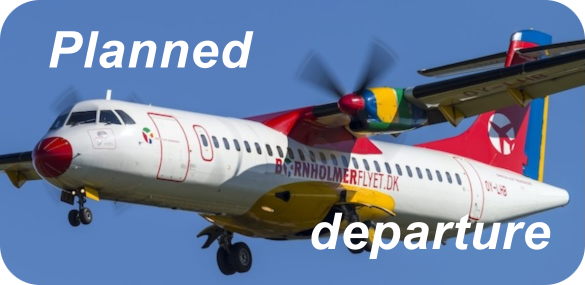
As is the case with most islands, there are two ways to get to and from Bornholm. The vast majority travel by sea: the ferry service transports some two million passengers annually, a service for which the current operator receives 4bn kroner (€540m) from the Danish state over the course of its 10-year contract. The locals complain a lot, but the operator turns a healthy profit.
Not so much luck on either count for DAT, the airline that offers the only other regularly scheduled way to get on or off the island. Its service, flying 200,000 passengers to and from Copenhagen each year, is neither subsidised nor profitable. Indeed, its current loss of 1.5m kroner per month had Jesper Rungholm, its managing director, earlier in the year publicly mulling whether to just stop serving the route from one day to the next, in breech of the airline’s contract with the local hospital to fly those patients who are too frail to take the ferry and the connecting coach service to Copenhagen for treatment.
Mr Rungholm immediately thought the better of doing so, telling the press the next day that his firm wasn’t the type to walk away from contracts. But his bellyaching served as a reminder that the route is not commercially viable, and that, unless someone in the government listens to his repeated requests to subsidise the route, his airline plans to stop serving Bornholm when the contact expires at the end of next November.
Read more
Mr Rungholm immediately thought the better of doing so, telling the press the next day that his firm wasn’t the type to walk away from contracts. But his bellyaching served as a reminder that the route is not commercially viable, and that, unless someone in the government listens to his repeated requests to subsidise the route, his airline plans to stop serving Bornholm when the contact expires at the end of next November.
What Mr Rungholm would like the government to do is to declare the Bornholm-Copenhagen route a PSO (short for public-service obligation). To date, Copenhagen as been unwilling to do so, on the argument that it would break EU rules—and, anyway, it says, it already spends 25m kroner annually running Bornholm’s airport, despite it too losing money, and that this constitutes a form of subsidy, albeit indirect.
Other airlines, primarily SAS and Norwegian, do occasionally fly to Bornholm, but typically only during times when there are lots of passengers, which only makes it harder for DAT to turn a profit and riles Mr Rungholm further.
Read More