


Posts Tagged ‘Sweden’
Open arms Nato’s Baltic members agree to open their borders in the event of an emergency
The eight Nato countries bordering the Baltic Sea, together with Iceland and Norway, have pledged to open their borders to each other’s citizens should they be forced to flee in the event of a disaster. The agreement is an extension of a patchwork of arrangements among some of the countries in the region and will make it possible to co-ordinate responses and establish uniform procedures for doing so.
The bear not in the room is Russia. The Kremlin has repeatedly said that it does not intend to invade Nato countries, but western intelligence agencies have advised their governments to be ready for everything from small-scale shenanigans to an outright invasion. Military collaboration has long been a way to signal to their populations that they are doing what they can to prevent such things from happening. Now, civil-defence agencies are showing they will be taken care of in the event they do.
RELATED ARTICLE } Swedes preparing to receive Bornholm refugees
Read MoreNiklas Finné appointed acting CEO of CMP
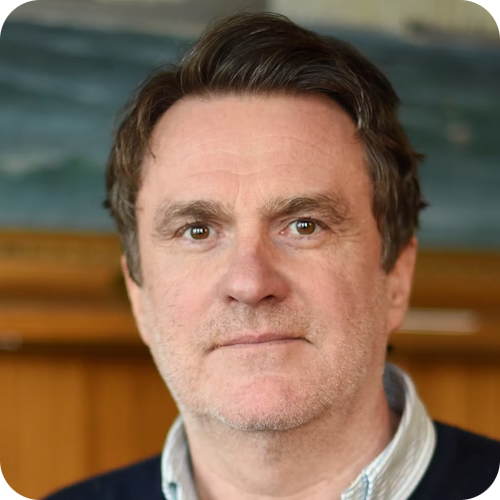
Copenhagen Malmö Port CFO CFO Niklas Finné has been appointed acting CEO effective 1 March. He remain in the position until a replacement for Barbara Scheel Agersnap, who has chosen to step down.
Niklas has been part of CMP’s executive management team since 2019 and, in his role as CFO, has played an important part in developing the business and creating stable conditions for the company’s continued progress. As Acting CEO, he will ensure continuity in the strategic work, which is now entering an important implementation phase.
He will continue in his position as CFO after the new CEO is in place.
Connect with Niklas on LinkedIn
Read MoreMirova and Evecon’s Baltic Renewable Energy Platform (BREP) launches Estonia’s largest solar‑plus‑storage hybrid project, signs first-of-its-kind Flexibility & Power Purchase Agreement in the Baltics with Pure Energy, and secures long-term financing from Swedbank

Mirova, an affiliate of Natixis Investment Managers dedicated to sustainable investing, and Evecon announce a series of major milestones supporting the acceleration of Estonia’s energy transition, through their jointly owned Baltic Renewable Energy Platform OÜ (“BREP”):
- Hybridization of the 77.5 MWp Kirikmäe Solar Photovoltaic (PV) plant with a 55 MW / 250 MWh Battery Energy Storage System (BESS),
- Execution of the first Flexibility & Power Purchase Agreement (FPPA) ever signed in the Baltics, with Pure Energy GmbH, and
- Completion of a new c.€85 million long‑term financing package from Swedbank.
Together, these developments demonstrate how combining renewable generation with energy storage and long term optimization tools can unlock new value for the Baltic energy market and support Estonia’s long term energy independence.
Read full announcement (external link)
Originally published on 16 Feb
Read MoreKeeping up with the Nordics Baltics staying the course against corruption
When it comes to corruption rankings, there are the Nordics and then there is everyone else. Again this year, Denmark, Finland, Norway and Sweden ended in a log jam at the top of the Corruption Perceptions Index, an annual ranking of perceived corruption in the public sector. Germany rounded out the top 10. The Baltic states (Estonia: 12; Lithuania: 28th; Latvia: 37) are showing that despite some setbacks (including the resignation of Lithuania’s prime minister last year amid a corruption scandal), that they, too, take corruption seriously.
Transparency International, which has produced the report each year since 1995, cautions against easing up against corruption, even in the Nordic countries, but, in the Baltic region, the trends at least are with them: countries with the best records are generally democratic and highly digitalised.
READ MORE
That will show the path for Poland (52). To be sure, it has shown improvement since PiS, an illiberal regime that dismembered the country’s civil-society infrastructure, was voted out of office in 2023, and it finds itself solidly in the top third of the table.
Progress, though, has been modest, due to what has been deemed insufficient efforts to undo the damage done by PiS. Russia (157) finished level with Chad, Honduras and Zimbabwe. An outlier in a sea of outliers.
Cross-border collaboration can strengthen sustainable cultural tourism
Strong and durable collaboration between cultural actors and tourism stakeholders across Northern Sweden and Northern Finland could play an important role in strengthening regional development in the Bothnian Arc. This conclusion is presented in a new white paper produced within the ACCENT project, a cross-border collaboration between the University of Oulu, Luleå University of Technology, LTU Business, and the Oulu Culture Foundation.
The white paper, Opening pathways to sustainable cultural tourism in the North, presents evidence-based insights from the ACCENT project on how culture-led tourism can support sustainable regional development across Northern Sweden and Northern Finland.
Read full announcement (external link)
Originally published on 9 Feb
Read MoreVeronika Leo new managing director of Port of Ystad
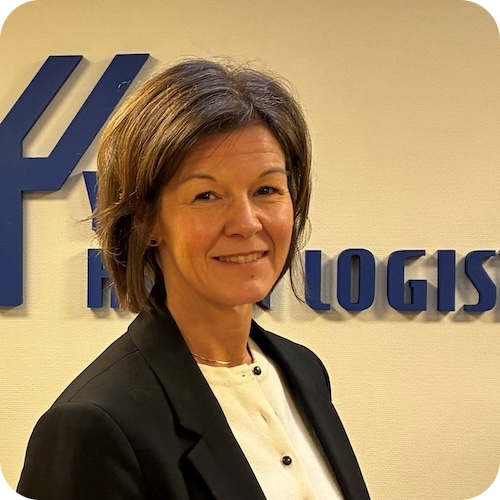
The Port of Ystad’s supervisory board has appointed Veronika Leo as the new managing director.
Veronika moves to the position after having served five years as the port’s financial manager.
Connect with Veronika on LinkedIn
Read MoreSödra’s divestment of its forest holdings in the Baltics is now completed

The agreement between Södra and the Ingka Group’s investment company, Ingka Investments, regarding Södra’s forest holdings in the Baltics has now been approved and finalised.
With the aim of doing what is best for the forest estate and for Södra’s long-term competitiveness, Södra decided in early 2025 to divest all its forest holdings in Latvia and Estonia. Since the agreement with the buyer in October 2025, a competition review and approvals from local authorities have been underway – a process that has now been concluded. The transaction, with a purchase price of 720 million euros, is therefore complete.
Read full announcement (external link)
Originally published on 30 Jan
Read MoreDoldrums Offshore wind in Sweden is losing speed
Eolus, a Swedish renewable-energy firm, announced last week that it had given up all but one of its offshore wind projects in the country.
The decision was not due to a lack of wind resources; starting in 2021, Eolus began expanding its capacity after evaluating that offshore wind would be necessary—and sufficient—for Stockholm to achieve its power-production targets. Eolus eventually built up a portfolio of projects with a planned capacity of 8.8MW. It blames a slow pace of electrification, as well as regulatory barriers and a lack of political support for making offshore wind unprofitable.
READ MORE
Eolus is not alone in its assessment. Earlier this month, RWS, a German firm, sold its Swedish offshore activities, stating that it was looking for a more dynamic market.
On paper, at least, Sweden fits that bill: it is already one of Europe’s largest onshore producers, and, with coastlines along both the North and Baltic seas and an estimated potential in excess of 100MW, it could also be one of its largest offshore producers. That it is not on its way to being so stems, in part, from a 2024 decision by the government to cancel 13 wind farms planned for the Baltic, totalling 32MW and €47 billion in investments.
The cancellation was made due to concerns that Baltic windfarms would just be another target for Russian shenanigans, and that the decision was made on the advice of the military. The industry says that does not explain why Sweden fell behind in the first place.
Sweden, it points out has 0.2GW of offshore windfarms, while neighbouring Denmark has up 2.6GW up and running. It also points out that the other countries of the Baltic have been able to balance security concerns with energy needs—and indeed incorporate them.
Domestically, the 13 cancelled projects, all of them to have been built in the south, would have been a way for Sweden to balance its grid; currently, producers in the north, where there is a surplus, may only send a limited amount of power to the south, where consumption outstrips demand. By removing the targets, Sweden may be shooting itself in the foot.
RWE and Aneo sign transaction agreement for the sale of RWE’s Swedish wind activities

RWE and Aneo, a Nordic renewables player, have signed a transaction agreement concerning RWE’s Swedish wind activities. This includes RWE’s onshore wind development pipeline (1.8 gigawatts), its onshore wind farms with a total operational capacity of 124 megawatts, the operational Karehamn offshore wind farm (48 megawatts), part of RWE’s third-party onshore service business, and the relevant development, operations and offshore teams assigned to the transferred projects and assets. Both parties have agreed not to disclose the purchase price. Completion of this transaction is subject to customary approvals and is expected in the first quarter of 2026.
Katja Wünschel, CEO RWE Renewables Europe & Australia: “We are delighted that our Swedish wind business and its project teams will be joining Aneo. As a key player in the Nordic wind sector, Aneo is dedicated to building a robust, long-term portfolio in Sweden, advancing energy projects that meet rising energy demand, create jobs and invest in communities. We are therefore pleased to have found a new home for our impacted employees, and we wish the Swedish team and its projects continued success. RWE’s strategic focus remains on its dynamic markets for attractive large-scale renewables growth.”
Read full announcement (external link)
Originally published on 23 Jan
Read MoreEight Baltic Sea electricity TSOs publish offshore system study to promote coordinated sea basin planning

The electricity Transmission System Operators (TSOs) of eight countries bordering the Baltic Sea today published the first comprehensive regional system study for offshore network infrastructure and offshore wind, marking a significant step toward coordinated sea basin planning in Europe.
The TSOs of Denmark, Estonia, Finland, Germany, Latvia, Lithuania, Poland and Sweden – organised in the Baltic Offshore Grid Initiative (BOGI) – developed a study that moves from electricity transmission corridors to potential projects for the 2040-time horizon. The results show that the Baltic Sea region can become a clean energy hub, with around 13 GW of new cross-border interconnectors and up to 50 GW of additional offshore wind identified by 2040. These connections include point-to-point links between countries and strategic offshore nodes such as Bornholm, which could serve as future hybrid hubs. The market modelling indicates that these interconnectors would operate with high utilisation throughout the year and significantly reduce system costs, price peaks and CO₂ emissions.
Read full announcement (external link)
Originally published on 22 Jan
Read More