


Denmark has reactivated an air-force squadron that will operate four long-range drones to support surveillance of its interests in the Arctic, the North Atlantic and the Baltic.
The decision to purchase the American-produced MQ-9B SeaGuardians was announced last year, as was the three-year wait to have them delivered. But building up a drone corps in Denmark will take time as well; the air-force announced yesterday that it will need to hire and train a hundred or so people—many of them civilians—to keep the drones up and running.
READ MORE
The drone purchase is being made with the blank cheque the government gave the military last year, when it ordered it to procure the materiel it deems necessary to scale up its capacity as quickly as possible. Drones, it appears, fit that bill nicely: the SeaGuardians join four saildrones that were sea-trialled in June in preparation for surveillance operations in the Baltic. Compared with crewed systems, the drones are cheap and quickly rolled out.
The saildrones are also American-made, however—a fact that does not sit well with those who would prefer that the military start buying more of its kit in Europe. Other European armies are stocking up on American arms too, though: Germany, Belgium and Poland are all buying SeaGuardians. The saildrones’ producer, for its part, has chosen to set up a European sales office in Copenhagen. Denmark is unlikely to be the last country American drones take over.

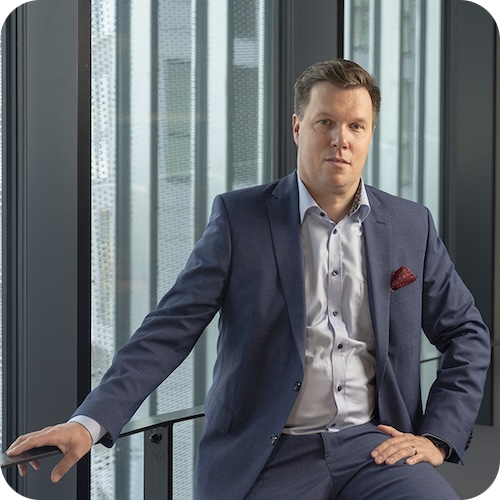
Niklas Mattsson is to become the president and CEO of Insta Group. The move takes effect on 1 June and comes as part of an internal restructuring that will see him step down as as vice-chair of the board.
Connect with Niklas on LinkedIn
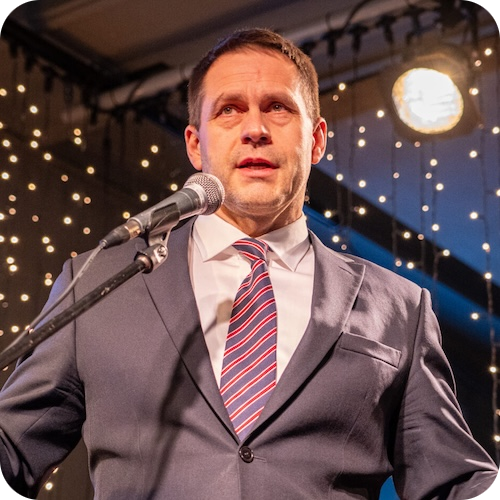
Elmar Vaher has been appointed director-general of the Estonian Centre for Defence Investments (ECDI). Elmar was selected by the defence minister, Hanno Pevkur, on the recommendation of the government’s senior executive selection committee.
From 2013 to 2023, Elmar served as director-general of the Police and Border Guard Board, where he led the consolidation and modernisation of one of Estonia’s largest public-sector organisations. He holds a master’s degree in law and has completed several executive-level leadership programmes.
Connect with Elmar on LinkedIn
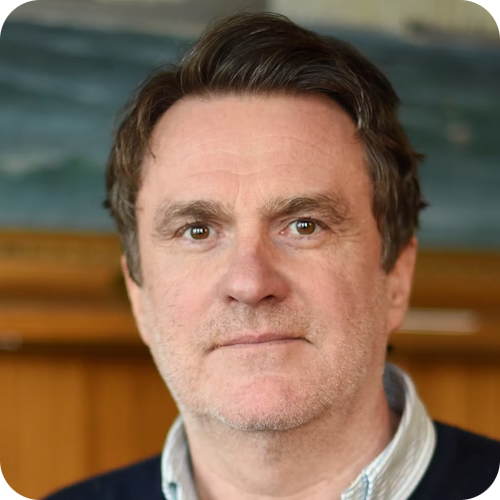
Copenhagen Malmö Port CFO CFO Niklas Finné has been appointed acting CEO effective 1 March. He remain in the position until a replacement for Barbara Scheel Agersnap, who has chosen to step down.
Niklas has been part of CMP’s executive management team since 2019 and, in his role as CFO, has played an important part in developing the business and creating stable conditions for the company’s continued progress. As Acting CEO, he will ensure continuity in the strategic work, which is now entering an important implementation phase.
He will continue in his position as CFO after the new CEO is in place.
Connect with Niklas on LinkedIn
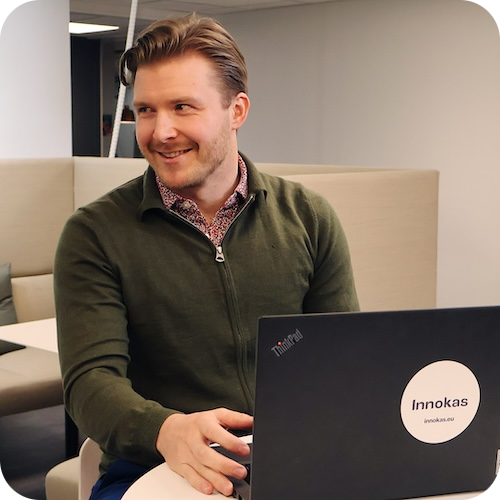
Marcus von Schoultz, has joined the Innokas team as Sales Manager. With more than ten years of experience in sales across different industries and organisations, Marcus is passionate about helping innovations reach the market in ways that make a real difference in people’s lives. Marcus found his way to Innokas through his growing interest in medical devices.
Connect with Marcus on LinkedIn
When it comes to corruption rankings, there are the Nordics and then there is everyone else. Again this year, Denmark, Finland, Norway and Sweden ended in a log jam at the top of the Corruption Perceptions Index, an annual ranking of perceived corruption in the public sector. Germany rounded out the top 10. The Baltic states (Estonia: 12; Lithuania: 28th; Latvia: 37) are showing that despite some setbacks (including the resignation of Lithuania’s prime minister last year amid a corruption scandal), that they, too, take corruption seriously.
Transparency International, which has produced the report each year since 1995, cautions against easing up against corruption, even in the Nordic countries, but, in the Baltic region, the trends at least are with them: countries with the best records are generally democratic and highly digitalised.
READ MORE
That will show the path for Poland (52). To be sure, it has shown improvement since PiS, an illiberal regime that dismembered the country’s civil-society infrastructure, was voted out of office in 2023, and it finds itself solidly in the top third of the table.
Progress, though, has been modest, due to what has been deemed insufficient efforts to undo the damage done by PiS. Russia (157) finished level with Chad, Honduras and Zimbabwe. An outlier in a sea of outliers.

It will only get the region so far
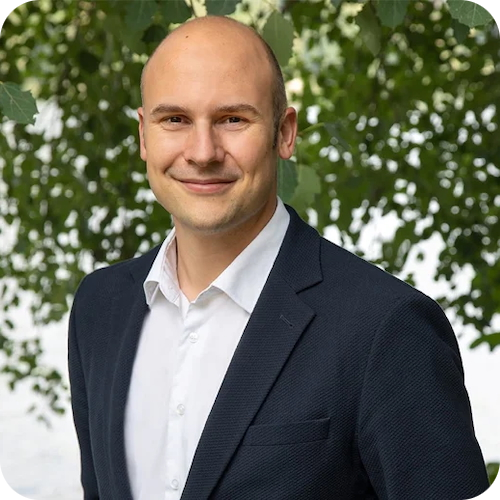
EEW Energy from Waste GmbH has appointed Philipp Andree as its new team leader for political affairs. In his new role, he will be responsible for representing the political interests of the EEW Group.
Together with his team, Philipp will strengthen EEW’s strategic positioning in key energy, climate and circular economy debates at national and European level.
Philipp brings with him years of experience at the interface between politics and business. Before joining EEW, he worked for several years in association work, including at the German Chamber of Industry and Commerce (DIHK) and as managing director of the German Association of Climate Protection Companies (Bundesverband Klimaschutz-Unternehmen e. V.) where he was responsible for projects and political initiatives in the areas of energy, climate and circular economy and supported companies on their way to a sustainable and competitive future.
Connect with Philipp on LinkedIn
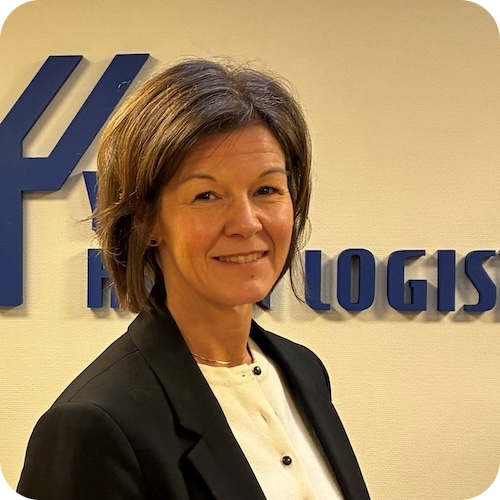
The Port of Ystad’s supervisory board has appointed Veronika Leo as the new managing director.
Veronika moves to the position after having served five years as the port’s financial manager.
Connect with Veronika on LinkedIn
Eolus, a Swedish renewable-energy firm, announced last week that it had given up all but one of its offshore wind projects in the country.
The decision was not due to a lack of wind resources; starting in 2021, Eolus began expanding its capacity after evaluating that offshore wind would be necessary—and sufficient—for Stockholm to achieve its power-production targets. Eolus eventually built up a portfolio of projects with a planned capacity of 8.8MW. It blames a slow pace of electrification, as well as regulatory barriers and a lack of political support for making offshore wind unprofitable.
READ MORE
Eolus is not alone in its assessment. Earlier this month, RWS, a German firm, sold its Swedish offshore activities, stating that it was looking for a more dynamic market.
On paper, at least, Sweden fits that bill: it is already one of Europe’s largest onshore producers, and, with coastlines along both the North and Baltic seas and an estimated potential in excess of 100MW, it could also be one of its largest offshore producers. That it is not on its way to being so stems, in part, from a 2024 decision by the government to cancel 13 wind farms planned for the Baltic, totalling 32MW and €47 billion in investments.
The cancellation was made due to concerns that Baltic windfarms would just be another target for Russian shenanigans, and that the decision was made on the advice of the military. The industry says that does not explain why Sweden fell behind in the first place.
Sweden, it points out has 0.2GW of offshore windfarms, while neighbouring Denmark has up 2.6GW up and running. It also points out that the other countries of the Baltic have been able to balance security concerns with energy needs—and indeed incorporate them.
Domestically, the 13 cancelled projects, all of them to have been built in the south, would have been a way for Sweden to balance its grid; currently, producers in the north, where there is a surplus, may only send a limited amount of power to the south, where consumption outstrips demand. By removing the targets, Sweden may be shooting itself in the foot.