


Energy-industry veteran to head Lithuanian energy storage-system operator
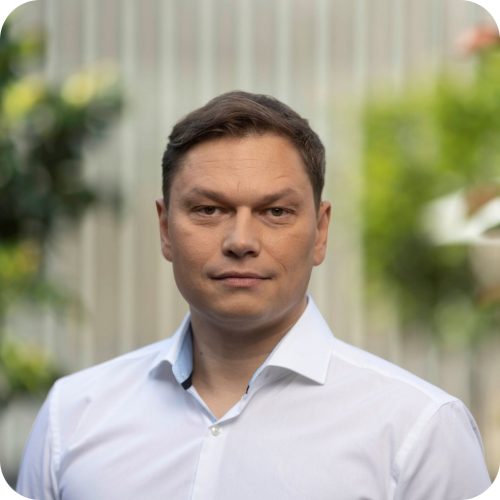
The board of Energy Cells, an operator of energy storage systems and part of the EPSO-G energy group, has appointed Andrius Gudzinskas as the company’s chief executive officer. He begins his five-year term on 27 January 2026.
Andrius has more than 20 years of experience in the energy industry, including electricity and heat generation, renewable-energy project development, production-operations management, energy-infrastructure modernisation and international team leadership. He holds a master’s degree in energy and thermal engineering from Kaunas University of Technology.
Energy storage-system operator Energy Cells provides an isolated operation reserve service that is essential to the security and stability of the Lithuanian electricity system. The electricity storage system managed by the company comprises four identical battery parks, each with a capacity of 50 MW and 50 MWh, located in Vilnius, Šiauliai, and the Alytus and Utena districts.
Connect with Andrius on LinkedIn

Experienced executive will contribute international perspective and extensive knowledge of the energy sector to offshore wind project
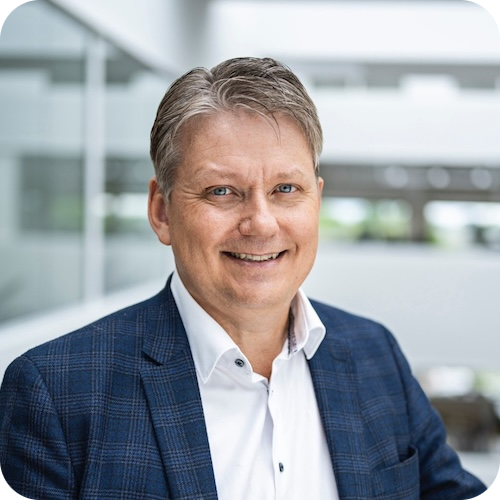
Peter Weinreich-Jensen has been chosen to sit on the board of Baltic Energy Island.
Peter is senior director for business development with Siemens Energy and has more than 30 years of experience in electrification and energy-system development. In addition to being well versed in the technical aspects of Bornholm Energy Island, he possesses specialised expertise in power-to-X, cable connections for large offshore wind projects and sector coupling.
Connect with Peter on LinkedIn
Local SocDem councillor will also serve on the boards of other business organisations
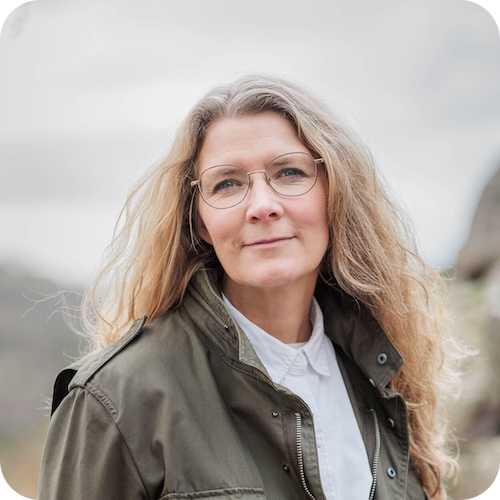
Anne Thomas has been chosen to sit on the board of Baltic Energy Island.
Anne is a member of the Bornholm island council representing Socialdemokratiet. She chairs the council’s environment and business committee, and is expected to be chosen for vacant seats on the board of Business Center Bornholm and the Bornholm branch of Erhvervshus Hovedstaden, a consultancy.
Prior to being elected to the island council in December, Anne was the head of the Centre for Regional and Tourism Research.
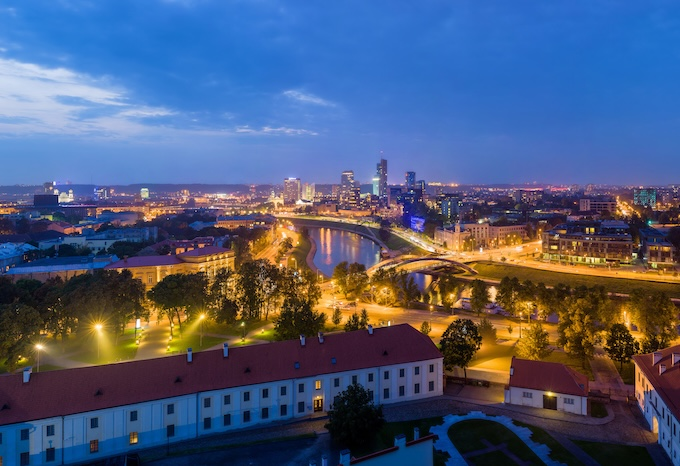
A small Baltic reform is being watched far beyond Vilnius
For years now, rail buffs and those keen on closer EU integration have had their eyes firmly, if nervously, fixed on Rail Baltica, a planned high-speed railway connecting the three Baltic states that is far behind schedule and way over budget. Somewhat overlooked amid that drama has been the steady progress of another, less prestigious railway project connecting Tallinn, Tartu, Rīga and Vilnius via existing railways.
Since last January, when service began on a limited basis—and requiring transfers in each of the three countries—it has transported some 16,000 passengers, well above expectations. That is due to get a bump this year: an extension of service that began on Monday means most of the line can now be travelled without a transfer. A limited number of departures and long travel times will make it less of an option for long-distance travellers, and, even for regional travel, coaches will still be a competitive option, but southern Estonia and northern Latvia in particular are hoping that more infrastructure ties will give rise to better economic ties, spurring growth. Tartu, Estonia’s second-largest city, has long felt that a direct connection to someplace other than Tallinn was overdue.
Detractors point out that the €2 million subsidy the line will require is much more than other lines get, and that standing up the service will require a further €400,000 initial investment. Public officials expect the subsidy to fall as passenger numbers grow, but the are concerns that there may not be enough passengers for it ever to become viable. For now, the trains will run, but they may not get much time.

The leaders of Sweden’s Socialdemokraterna are calling for the establishment of a permanent multinational Nato force on the island of Gotland. Their plan, put forward on Sunday during the opening day of Folk och Försvar, an annual security conference, proposes establishing a contingent that could supplement the island’s existing defensive capabilities. They also suggest making the island the home base of an 800‑person amphibious battalion capable of operating throughout the Baltic.
Gotland, given its strategic location in the Baltic, has been a focal point of Sweden’s post-post-Cold War rearmament. Even so, the island remains only lightly defended—the Gotland Regiment, re-established in 2018, comprises only 350 soldiers. Gotland’s home-guard unit reckons it could muster another 500 soldiers in the event of a Russian attack, and the thinking in Stockholm had been that the combined force would be enough to hold any unforeseen Russian invasion in check until reinforcements from elsewhere in Sweden and the rest of Nato could arrive.
But, with Moscow expected to be antagonistic for the foreseeable future, and Washington looking increasingly unwilling help out, that strategy is up for revision. In practice, the military is already preparing for both of these scenarios: in September, Sweden held its first bilateral drill with Poland on Gotland (pictured above).
Politically, Socialdemokraterna are in the opposition, but the proposal aligns with the government’s own position that it would welcome a Nato contingent if the alliance decided to send one. Their hope is that they would do so before the Russians decided to send their own.
(📸 Försvarsmakten)
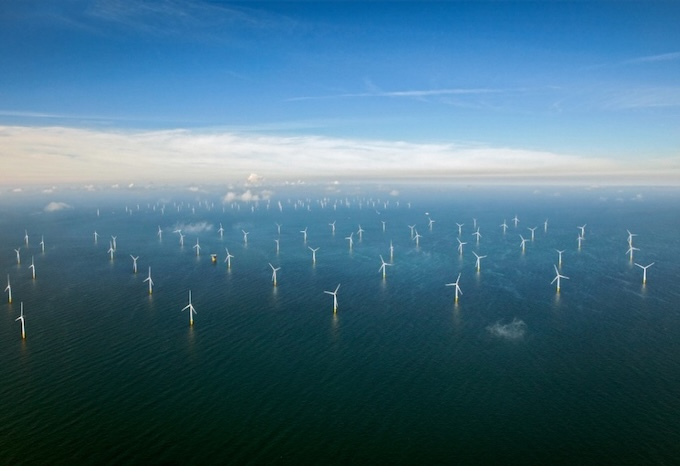
The Baltic is already making a big contribution to Europe’s energy independence, but most of its potential remains untapped

For mariners in the Baltic Sea plagued by disrupted satellite-navigation systems, help is on its way in the form of a forgotten technology. Sjöfartsverket, the Swedish maritime authority, will equip a total of ten lighthouses on Sweden’s south-eastern coast, starting with Kapelludden (pictured above), with what is known as a radar beacon, a system that, in short, emits a Morse-code signal when it receives a radar signal. Navigators who receive the signal can then determine their ship’s location from the bearing and distance to the beacon.
Sweden, like other countries in the Baltic, points to Russia as the source of disruptions to satnav systems used not just by ships, but also aeroplanes, and research has shown the signal that causes the them is strongest near Kaliningrad. Regardless of who is to blame, it is a growing problem. Mariners say it is a regular occurrence, and perhaps tens of thousands of ships in one of the world’s busiest maritime areas have been affected. Fortunately, navigators can still find their way with other methods, including navigational charts on paper. They require more effort to use—and often additional training—but they are also harder to disrupt. Necessity is also the mother of re-invention.
(📸 Stefan Svanaeus)

Mention Bornholm to any Dane, and they will immediately think of summer. That is a problem for an island that is looking to promote itself as a place to visit year-round. So far, efforts to promote winter tourism—including a pledge by shopkeepers to stay open throughout the off-season—have sputtered. Zero in on December, though, and Christmas, at least, is beginning to look a lot like a success story. The success of Bornholm’s Christmas markets, though relatively new, can already be read in the statistics: since 2021, when Destination Bornholm, the municipally funded tourism bureau, began marketing them to people on the mainland, the number of overnight says for November and December have doubled.
Bornholm’s markets have neither the size nor the history of those held elsewhere, but, say attendees, that is precisely their draw. The focus, instead, is on quality; locally produced handicrafts are the main fare. Group Bornholm, a tourism agency, this year organised its first tour for Germans to visit the island’s Christmas markets. Most of the thirty people along on the sold-out trip had rave reviews for the smaller scale and intimacy of the island’s markets, and many said they would be interested in seeing the island at another time of year. This will not be the last Christmas for Bornholm’s markets.
(📸 Toxophilus)
Shipping executive is the first Finn to head the European association
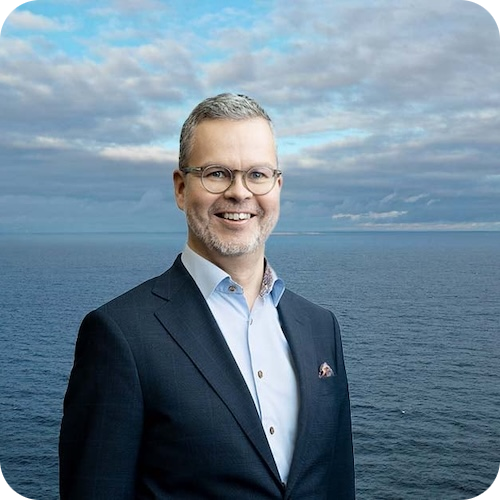
Mikki Koskinen has been elected president of European Shipowners | ECSA. His two-year term begins on January 1.
Mikki takes office at a critical time for European shipping, amid geopolitical uncertainty, the urgent need for decarbonisation and growing skills shortages. The European fleet, representing about 35% of the global total, plays a vital role in securing supply chains, enabling European exports, and connecting Europe to the world.
Mikki is currently vice-president of European Shipowners | ECSA, and will become the first Finn to head the organisation. In addition to serving ad managing director for ESL Shipping, he sits on the board of the Finnish Shipowners’ Association, which he chaired between 2021 and 2023. He has also represented Finland on the International Chamber of Shipping board.
Connect with Mikki on LinkedIn