


Bornholm should table its proposed industry estate until Copenhagen decides whether it will go ahead with its plans to build the converter station for two off-shore wind farms that would power the facility, an island council committee says.
A vote will be put before the full council later this month, but Jacob Trøst, the mayor, believes the national government’s decision in January to wait until after the German federal election to make its final decision makes proceeding impractical.
It is hoped that Germany will purchase the majority of the 3 megawatts of electricity the wind farms would produce. The rest is expected to be sent to eastern Denmark, but Bornholm would like some of it to be used to power an industry estate that would act as a crucible for energy start-ups.
Island businesses want work on the industry estate to continue. Questions like where it would be placed and when it would come on-line may be unanswerable at the moment, but, argues Michael Almeborg, the chair of the local chapter of DI, that should not stop the council from lining up the firms who will want to hear the answers when the council finally has them.

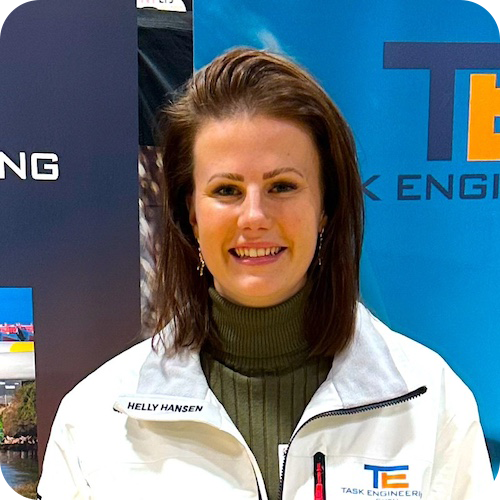
TASK Engineering continues to grow, adding an HR co-ordinator to its Bornholm organisation as its offshore wind activities expand.
Jacqueline’s role will be to optimise TASK Engineering’s HR structure in an effort to ensure that the the firm has a working environment that takes responsibility for its staff. She will help to create a support system for all the topics that matter to TASK Engineering employees.
Connect with Jacqueline on LinkedIn
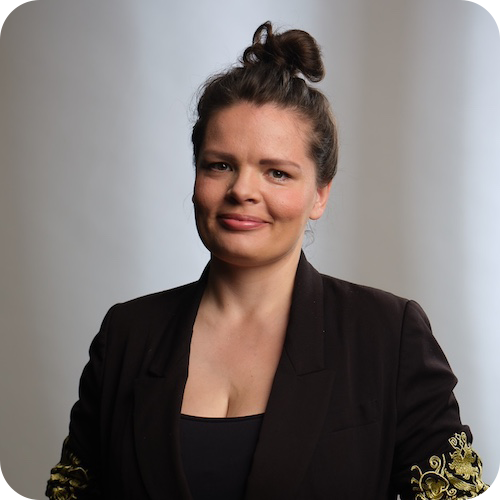
Mintos, the investment platform that enables people to earn regular passive income through diversified investments, has announced the appointment of Kertu-Liina Lehismäe as the latest addition to its senior leadership team.
Kertu-Liina brings a wealth of marketing experience. Most recently, she led all customer acquisition globally at N26, one of Europe’s leading on-line banks. Her proven track record in driving global marketing strategies and delivering growth will be instrumental in advancing Mintos’ mission of democratising investments, highlighting the importance of long-term regular income, and growing its customer base across the European continent.
In her role as CMO, Kertu-Liina will oversee all aspects of Mintos’ marketing and external communications, including customer acquisition, engagement, PR & communications, brand and more. She will be responsible for developing and executing innovative marketing campaigns to further raise awareness around Mintos and strengthen its position in the global investment space.
Connect with Kertu-Liina on LinkedIn
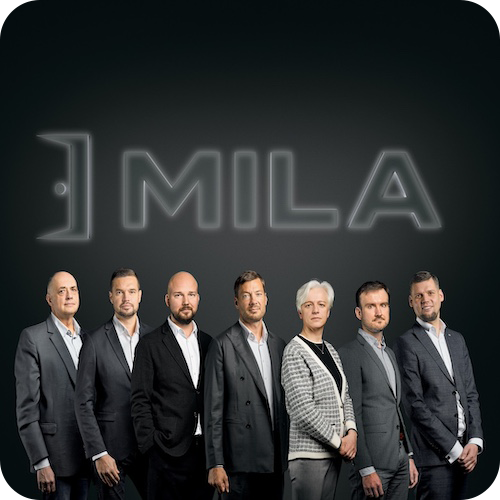
Mila, the Latvian Association of Artificial Intelligence, announces the election of a new board that brings together leaders and experts from various industries with extensive experience in business, innovation and technology development.
The board’s goal is to provide strategic support to the association’s activities and promote the development and integration of artificial intelligence in Latvian business and society.
The board includes six industry experts:
- Armands Broks, founder and CEO of fintech company Twino
- Oksana Sivokobilska, Financial sector digitalisation strategist
- Dmitrijs Jemeljanovs, Machine Learning expert and head of Forward IT Consulting
- Gatis Romanovskis, CEO of Hansab
- Kristaps Siliņš, brand strategist and leading partner of McCann
- Guntis Kalniņš, technology industry leader
- Dmitrijs Ņititins, board member and Chief Technology Officer at SIA TET
Latvian Association of Artificial Intelligence
Read full announcement (external link)
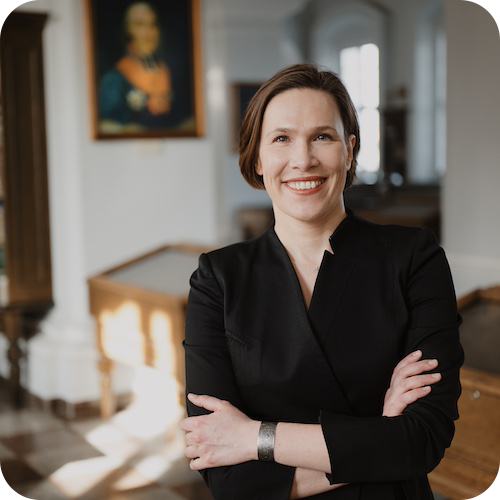
Professor Urtė Neniškytė, a distinguished researcher at the Vilnius University Life Sciences Centre and the European Molecular Biology Laboratory Partnership Institute, has been awarded the prestigious European Research Council Consolidator Grant.
This highly competitive grant supports outstanding mid-career researchers and provides funding for groundbreaking scientific discoveries.
The grant will fund research into the role of the glycocalyx—a unique cellular identifier that helps the body distinguish between healthy and damaged cells—in brain function and neurological diseases.
The research is expected to open new pathways for diagnosing and treating brain disorders, potentially leading to significant advancements in neuroscience and medicine.
Vilnius University Life Sciences Centre
One of the ironies of Bornholm’s power grid is that, even though most of the island’s electricity is generated on the island, it is not until the undersea cable linking it to Sweden cuts out that Beof, the local power company, goes into island mode. Sadly for the environment, this means decoupling the wind turbines that give the island most of its energy and firing up four diesel-powered generators. The thinking is that green ambitions are good, but the 25 megawatts of stable energy the generators can deliver are critical for keeping the grid stable.
In 2026, however, Beof will flip the switch on a 10 megawatt battery that will help maintain grid stability, and not just in the event of an emergency. Developed with Hitachi Energy, the battery addresses the fundamental challenge that arises when relying on unpredictable renewable energy to meet predictable demand. Since no-one is talking about going back to oil or coal, the only supply-side option is to come up with a way balance the two. The Bornholm battery will accomplish this by absorbing excess electricity when the wind is blowing, or the sun is shining, and then deliver it back when it is needed.
The battery’s importance extends beyond local energy needs. Energinet, the national grid operator, views such technologies as essential for future energy systems, and Bornholm could provide a model. In a world that is going green, island mode may soon become the new black.
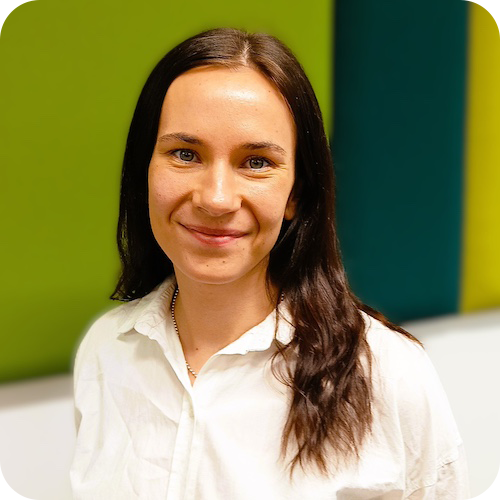
Viola Mickos has joined the Interreg Central Baltic secretariat as its programme manager responsible for ensuring the effective capitalisation of project and programme results.
Viola is a former national Interreg contact point for Finland and has already contributed to its work.
She will be responsible for consulting project applicants and supporting projects at all stages.
Her new position will allow her to draw on her background in communication and project advisory and to promote the Baltic Sea region through cross-border co-operation.
Interreg Central Baltic Programme
Connect with Viola on LinkedIn
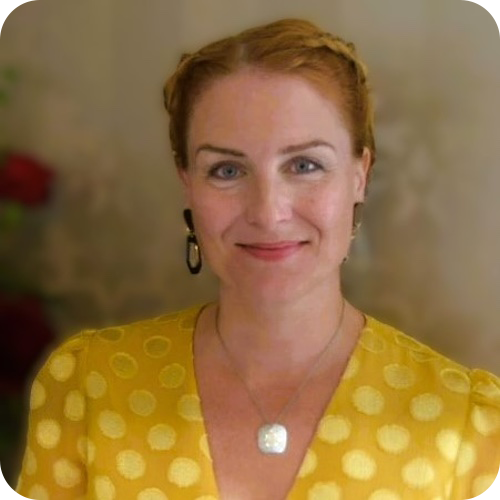
Johanna Puhtila has joined the Interreg Central Baltic secretariat as its programme manager for the circular economy.
Johanna will be responsible for consulting project applicants and supporting projects at all stages.
Her new position will allow her to draw on her experience designing and leading international projects aimed at improving the competitiveness of firms interested in doing business in global environment.
Interreg Central Baltic Programme
Connect with Johanna on LinkedIn
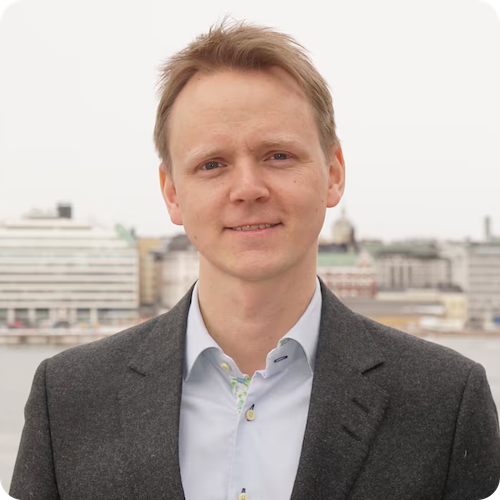
Markus Helavuori has been appointed deputy director general of the CBSS Secretariat.
He has 20 years of experience in policy and regulation at national and international levels. He has been with Helcom since 2018, and is currently the deputy executive-secretary and professional secretary, responsible for matters related to sea-based activities.
In addition working for the IMO, Markus help positions in the Finnish administration for more than seven years, contributing to legislative and policy development and representing Helsinki in international negotiations within the IMO, the EU and Helcom.
Markus holds a master’s degree in environmental and marine biology from Åbo Akademi University.
Marcus begins his new position on 1 April.
Connect with Markus on LinkedIn
Germany and its Baltic allies have flatly rejected suggestions that delivery of Russian gas via the Nord Stream 2 pipeline may resume. Rumours that such a plan are afoot emerged on Sunday, when the Financial Times, a news outlet, reported that a former boss of Gazprom, the Russian firm that operated the pipeline, was working to revive the €11 billion project.
To its boosters, the pipeline running along the floor of the Baltic Sea was a sign that Russia was securely tethered to Europe and the west. Its detractors, both those who remained unconvinced that Moscow was indeed an ally, as well as greens agitating for lower, greener energy consumption, were never sold on the first Nord Stream, let alone its sequel.
But when both were damaged by sabotage in September 2022 (by whom remains unknown), European countries, and Germany in particular, rushed to break their energy ties to Russia: today, Norway is Germany’s primary gas supplier, and, on 8 February, Estonia, Latvia and Lithuania broke a power connection to Russia that dates back to the Soviet Union when they connected themselves to the EU grid.
Nothing suggests anyone is interested going back. “Independence from Russian gas is of strategic importance,” the German economy ministry insisted in its denial that Berlin was talking to Moscow about re-opening Nord Stream 2. With Europeans now looking to secure their future, it would appear that the era of Russian gas has passed.