


Experienced technology executive to head Finnish innovation fund
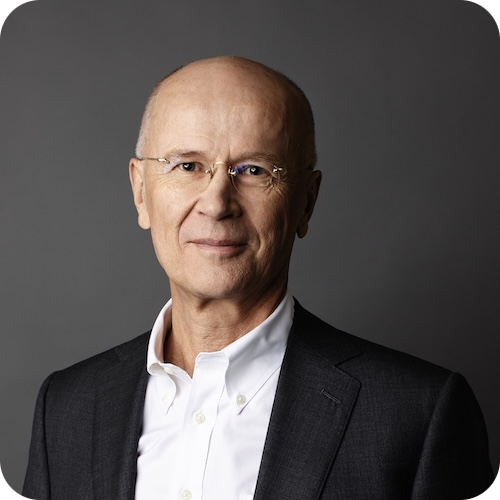
Pekka Ala-Pietilä, who has had a long career in technology companies, has been elected as chair of the board of Sitra.
Pekka currently serves as chair of the board of Sanoma and of the supervisory board of SAP SE. He has previously chaired the boards of Huhtamaki and Solidium, among others.
He also served as chair of the European Commission’s high-level expert group on artificial intelligence. From 2017 to 2019, Ala-Pietilä was a member of Sitra’s international expert panel.

Proposed adjustments to the public-service-media landscape in Denmark could cost Bornholm its sole TV station. Three recommendations handed down by an expert panel on Tuesday for the future of the eight regional TV stations all include eliminating TV2 Bornholm as an independent outlet.
The recommendations are hardly a surprise: part of the brief given the panel by the culture ministry was to find a way to rectify a situation in which all TV regions receive the same funding. TV2 Bornholm, the smallest TV region, serves 40,000 people, yet gets the same 71.8 million kroner (€9.34 million) each year as TV 2 Kosmopol, which serves the 1.9 people living in Greater Copenhagen.
Two of the experts’ recommendations would redraw the map entirely, either by combining funding for TV and radio production or by creating 30 semi-independent local news outlets.
The last calls for the creation of a third TV region in eastern Denmark, and to include Bornholm as part of the coverage area for one of them. This may be the one scenario the other regions can accept, since they generally would remain intact, and, in fact, is something they long have hinted would be fair. In its report, the panel seemed to suggest it agreed. “To ensure that Denmark as a whole is covered uniformly, it is necessary to take money away from TV2 Bornholm.”
The author is a member of the TV2 Bornholm board of directors.
The concept behind an energy island is easy enough to understand: connect offshore windfarms to a converter station that can transform the electricity they generate to high‑voltage direct current and export it to markets where it is needed.
Indeed, in the case of Energy Island Bornholm, the matter should be even simpler: the converter station can be built on the island of Bornholm, about halfway between northern Germany and eastern Denmark—two markets that have said they want to buy the three gigawatts of electricity (enough to power as many as 4.5 million homes) the windfarms would produce.
READ MORE
What has not been so simple has been getting lawmakers to find the money for a project that has nearly doubled in cost since it was proposed in 2020 and now stands at 31.5 billion kroner (€4.15 billion). Uncertainty about whether Germany would still support the project after its federal elections this past February led to negotiations being suspended until May, but now it appears Berlin is eager for them to draw to a close.
Stefan Rouenhoff, a spokesperson for the German government, told an industry get-together on Bornholm on Monday that his country was willing to shoulder the larger share of the bill, and that he hoped a deal could be reached in time for it be announced on 26 January, when Germany hosts a wind-energy gathering of its own.
His comments echo earlier remarks from EU and Danish officials that an agreement is close. Other developments—from the EU’s pledge of €645 million as part of its wider energy‑security programme to the opening of public consultation in Denmark and Germany—suggest they are not exaggerating.
The industry appears to share their outlook. The meeting on Bornholm was the third of its kind, and, say the Danish hosts, the best attended, with representatives from all the key firms and agencies needed to bring Energy Island Bornholm on-line by 2030.
Also on hand were those looking for proof of concept for energy islands of their own, including one linking Åland, Gotland and Estonia’s Saaremaa. The real question, then, may be neither if nor when, but where.
Saab, a Swedish industrial group, has been chosen to deliver three submarines to the Polish navy. The deal will see the first sub delivered as part of the 10 billion zloty (€2.3 billion) Orka programme in 2030.
Even before Moscow’s unprovoked war on Ukraine, in 2022, Poland was one of Europe’s biggest military spenders. Since then, it has expanded investments in its armed forces further, and today its military spending amounts to 4.48% of its gross domestic product, the highest in Nato.
The Orka programme makes up a big chunk of that increase, and, say proponents, the subs are necessary for Poland to protect maritime infrastructure. Currently, Poland has one operational submarine, the ORP Orzeł. Built in the Soviet Union in 1985, it has a reputation of spending more time in repair than at sea.
Saab’s offer was chosen over five other bids, in part, because its model is specifically developed to operate in the Baltic. “The Swedish offer is the only one that met all the expectations of the navy,” Wladyslaw Kosiniak-Kamysz, Poland’s defence minister, said. Nothing under the sea apparently comes close either.
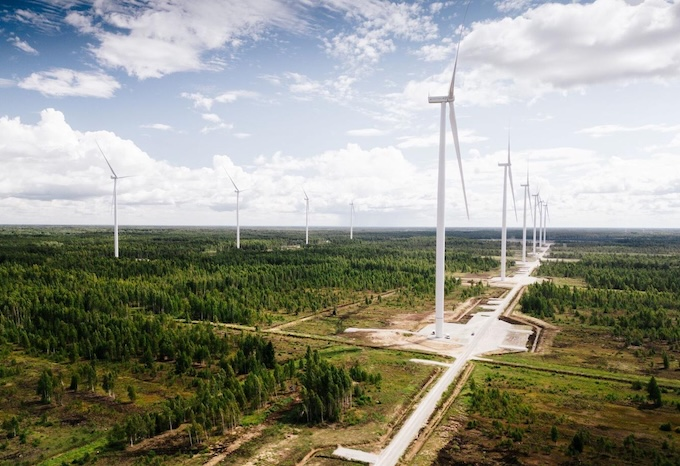
Europe needs to stop seeing the climate and defence as mutually exclusive challenges

Move over Nordic film, here comes something even more unsettling

Latvian is first to hold senior position with association of European chambers of commerce
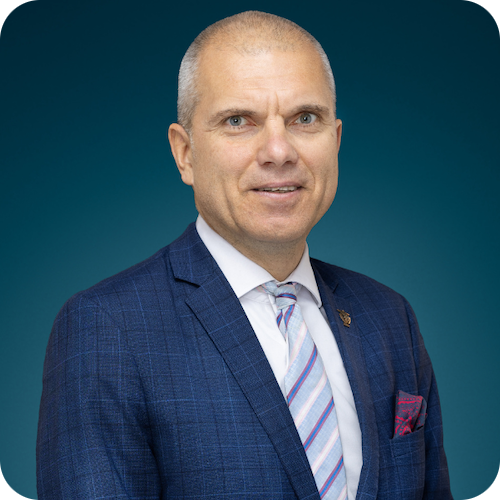
Aigars Rostovskis has been re-elected as vice-president of Eurochambres, the association of european chambers of commerce and industry. Aigars is the president of LTRK, the Latvian chamber of commerce. His re-election helps the organistion to maintain a powerful voice among European business representatives.
Eurochambres acts as the voice of the business community at the EU level, representing more than 20 million companies. It is an important player in the European business environment, driving significant initiatives and supporting entrepreneurs to ensure a sustainable and competitive European economy.
Aigars is the first Latvian representative to hold a senior Eurochambres office.
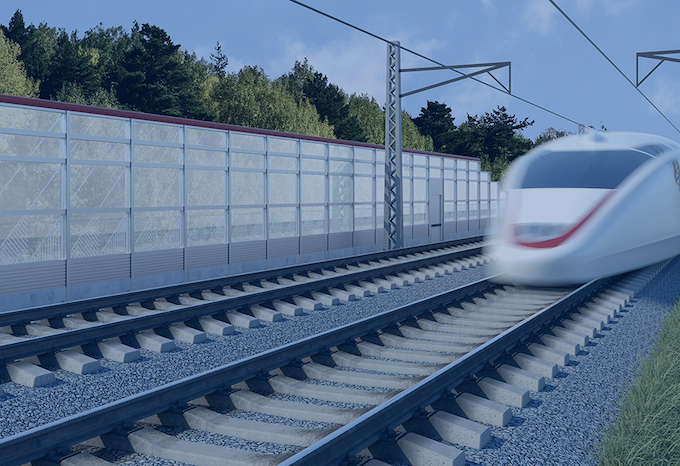
The economic case for Rail Baltica can be found in examples of other major infrastructure projects that were initially deemed too big not to fail
For someone from Denmark, the idea of accessing digital services or personal documents on-line is rather old-fashioned. The country is on version 2.0 of its national eID, and some 97% of residents over 15 use it to access all manner of public services. The private sector can also be partly thanked for the uptake: many firms have adopted the system as the login for their services as well.
Denmark stands out when it comes to eID, but it is not alone. All of the countries of the NB8, the club of eight Nordic and Baltic countries, can be found near the top the UN’s rankings of public services available on-line. Facilitating this requires giving residents reliable ways of verifying themselves—and forcing them to use it. The latter is an irritation in the start, but familiarity, as the Danish case shows, breeds content.
That should make the next goal something of a tip-in: this week, the countries’ digitalisation ministers agreed to pool their experience in order to be among the first EU members to roll out an eID that can be used in the entire bloc.
Brussels has stipulated that, by the end of next year, all members must offer at least one form of eID. Being a first-mover, the thinking amongst the NB8 goes, will allow the countries’ software developers to stay ahead of the pack, making their systems attractive to countries that will not have an eID solution of their own ready by the deadline. When it comes to identification technology, the biggest selling point may be reputation.
It is a business opportunity