


Posts Tagged ‘Bornholm Energy Island’
Nuclear option Danish opposition frontrunner casts doubt on energy project
The leading opposition party standing in Denmark’s general election on 24 March is suggesting that the 61 billion kroner (€816 million) in subsidies pledged by the Danish state last month to build Bornholm Energy Island would be better spent supporting the development of atomic power.
The proposal, put forward by Alex Vanopslagh, the leader of the Liberal Alliance, calls for taking a total of 120 billion kroner in subsidies for renewable-power projects and using the money fund construction of as many as eight atomic-energy plants over the next 15 years.
READ MORE
Though Bornholm Energy Island, which encompasses two offshore windfarms and an onshore power converter, is a Danish project, Germany is its biggest benefactor: in exchange for footing 70% of the bill it will get most of the power the windfarms generate.
The setup is one that the Danes worked hard to sell to Berlin, and would make it hard for Mr Vanopslagh to make good on his proposal without Denmark losing face. This is something he is well aware of, suggesting the purpose of making it has more to do with promoting his party’s position that Denmark should overturn its ban on atomic energy than it does with sinking an energy island.
Final Agreement on the Bornholm Energy Island
At the North Sea Summit on January 26, Denmark and Germany took the final steps toward realizing the Bornholm Energy Island. At Baltic Energy Island, we are grateful and more than ready to move forward.
Denmark and Germany have agreed to share the costs of the support needed for offshore wind. The cost distribution reflects a fair balance between the benefits of the project and the expected allocation of green power.
Read full announcement (external link)
Originally published on 27 Jan
Read MoreGreen land Denmark and Germany agree financing for Bornholm Energy Island
Denmark and Germany say they are ready to split the cost of any public funding needed to make sure that Bornholm Energy Island becomes a reality. Essentially a set of offshore windfarms that would double Denmark’s offshore wind capacity, the project, if completed, would send power to 4.5 million Danish and German consumers via its namesake island. More than that, say boosters, it provides a model for other mega energy projects that lawmakers are more keen on than investors.
Locally, the news has been well received. Even the healthiest of economies would find it hard to be unhappy about being the focal point of a multinational project whose final tab is expected to be over €4 billion. Bornholm, meanwhile, is still striken from the implosion of its fishing industry in the 1980s. But while a project of this sort will be good for its budding offshore industry, particularly if an associated industry estate comes to fruition, local lawmakers are still treading carefully: energy firms have yet to deem the project worth putting money into, while those living near the 111 hectare converter station will need be placated (read as: compensated). . Beyond that, there is irony of spoiling a chunk of pristine coastline of Denmark’s most popular tourism destination in the name of clean energy. If being a Danish island is a challenge these days, being a green one is doubly so.
Read MoreAgreement on the Bornholm Energy Island project: “Strong european signal in geopolitically difficult times.”

The agreement on the wind farms for the Bornholm Energy Island project is the decisive building block for the realisation of this particular German-Danish infrastructure undertaking.
Stefan Kapferer, CEO of 50Hertz: “The agreement be-tween Germany and Denmark has an impact on the offshore industry across Europe, extending far beyond the Baltic Sea project Bornholm Energy Island. It is furthermore a strong european signal in geopolitically difficult times. Both countries are breaking new regulatory ground and are therefore pio-neering the way forward. 50Hertz and Energinet will jointly contribute their expertise and experience and, as those responsible for the electricity hub on Bornholm and for the direct current connections to Denmark and Germany, will play their part in the success of the project overall.”
Read full announcement (external link)
Originally published on 26 Jan
Read MorePeter Weinreich-Jensen to sit on Baltic Energy Island board
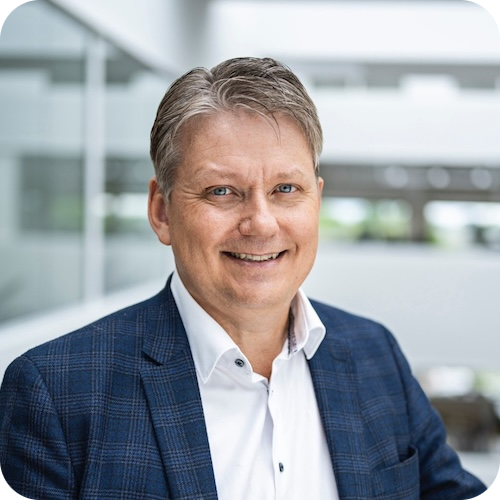
Experienced executive will contribute international perspective and extensive knowledge of the energy sector to offshore wind project
Peter Weinreich-Jensen has been chosen to sit on the board of Baltic Energy Island.
Peter is senior director for business development with Siemens Energy and has more than 30 years of experience in electrification and energy-system development. In addition to being well versed in the technical aspects of Bornholm Energy Island, he possesses specialised expertise in power-to-X, cable connections for large offshore wind projects and sector coupling.
Connect with Peter on LinkedIn
Read MorePlenty to go round Foreign labour on Bornholm
A frequent topic of discussion on Bornholm is the island’s declining population. Despite efforts to attract new residents, more islanders die or move off the island each year than can be replaced by birth or in-migration. One bright spot has been the number of foreigners coming to the island to work. One in eight jobs is held by a non-Dane; in 2008, it was one in 30. That is the largest per-capita increase in Denmark in the period, and it was enough to help the island keep its workforce stable.
The typical foreigner still works in hospitality or agriculture—where they have all but become indispensable for firms—but the shrinking workforce means there are a growing number of opportunities for them in a broader range of fields. There may be soon be new jobs where their labour will be needed: Energy Island Bornholm, a power-converter for offshore wind energy, is expected to create some 1,500 temporary construction jobs, and then perhaps 1,000 permanent jobs running, maintaining and serving the facility. As yet, the energy island is only a proposal, but the workforce it will need is already charging up.
Read MorePower play The EU’s energy upgrade
The European Commission has released its set of proposals for helping EU members to move some of the union’s most important energy projects forward. The measures were first aired in September by Ursula von der Leyen, the commission’s president, as a way to speed up projects that can make Europe’s energy net more resilient and—consumers will like this—its power cheaper.
In addition to cutting paperwork, the European Grids Package and the Energy Highways initiative will increase the amount of funding Brussels is willing to make available to big energy projects five-fold, to €30 billion. Ms von der Leyen had already identified the Harmony Link, connecting the Baltic states to Poland, and Energy Island Bornholm, an energy project that could serve as blue-print for hugely ambitious energy projects, as two of her eight highways towards the union’s power needs. Yesterday, she put the pedal to the metal.
Read MoreStillstrom and Port of Roenne collaborate to unlock large-scale maritime electrification at Energy Island Bornholm

Stillstrom by Maersk and Port of Roenne have initiated a joint white paper to explore how Energy Island Bornholm could serve as a blueprint for integrating offshore wind energy with maritime electrification.
The new study, Energy Island Bornholm Powering Maritime Electrification, examines how renewable power production and future grid capacity can support charging solutions for electric ferries, cargo vessels and offshore service vessels – important steps to help shipowners invest in battery-powered fleets and advance the decarbonisation of European transport beyond road electrification.
Conventional cargo vessels passing Bornholm consume considerable amounts of fossil fuel every year. As battery technology continues to mature, battery-driven vessels are becoming increasingly viable. Stillstrom by Maersk, a marine technology leader delivering offshore power and charging solutions estimates that electrifying this segment would require around 17 TWh of new electricity consumption charging the battery-powered vessels replacing annually – in the range of – 3 million MT of marine gas oil (MGO) and roughly save €2 billion in oil imports.
Read full announcement (external link)
Originally published on 2 Dec
Read MoreWhen, not if Bornholm Energy Island
The concept behind an energy island is easy enough to understand: connect offshore windfarms to a converter station that can transform the electricity they generate to high‑voltage direct current and export it to markets where it is needed.
Indeed, in the case of Energy Island Bornholm, the matter should be even simpler: the converter station can be built on the island of Bornholm, about halfway between northern Germany and eastern Denmark—two markets that have said they want to buy the three gigawatts of electricity (enough to power as many as 4.5 million homes) the windfarms would produce.
READ MORE
What has not been so simple has been getting lawmakers to find the money for a project that has nearly doubled in cost since it was proposed in 2020 and now stands at 31.5 billion kroner (€4.15 billion). Uncertainty about whether Germany would still support the project after its federal elections this past February led to negotiations being suspended until May, but now it appears Berlin is eager for them to draw to a close.
Stefan Rouenhoff, a spokesperson for the German government, told an industry get-together on Bornholm on Monday that his country was willing to shoulder the larger share of the bill, and that he hoped a deal could be reached in time for it be announced on 26 January, when Germany hosts a wind-energy gathering of its own.
His comments echo earlier remarks from EU and Danish officials that an agreement is close. Other developments—from the EU’s pledge of €645 million as part of its wider energy‑security programme to the opening of public consultation in Denmark and Germany—suggest they are not exaggerating.
The industry appears to share their outlook. The meeting on Bornholm was the third of its kind, and, say the Danish hosts, the best attended, with representatives from all the key firms and agencies needed to bring Energy Island Bornholm on-line by 2030.
Also on hand were those looking for proof of concept for energy islands of their own, including one linking Åland, Gotland and Estonia’s Saaremaa. The real question, then, may be neither if nor when, but where.
CEF Energy supports landmark Bornholm Energy Island interconnector between Denmark and Germany
CINEA has signed a grant agreement worth €645.2 million under the CEF Energy programme to support the Danish side of the Bornholm Energy Island (BEI) Hybrid Offshore Interconnector – one of Europe’s most ambitious and strategic energy infrastructure projects.
The grant signature ceremony took place on 4 September 2025 in Copenhagen, during the Informal meeting of energy ministers, marking a significant step towards a more resilient, interconnected, and sustainable European energy system.
Connecting offshore wind to millions of consumers
Led by Energinet (Denmark) and 50Hertz (Germany), this innovative and visionary project will connect multiple wind farms together via a single offshore energy hub on the Danish island of Bornholm in the Baltic Sea. From there, 3 GW of offshore green electricity will be brought onshore and distributed through Denmark and Germany, helping to power millions of homes and businesses with clean electricity.
To make this possible, CEF Energy is funding the construction of two new converter stations (one on Bornholm and one in Zealand), and the installation of an extensive submarine cable system of around 200 kilometres, complemented by a 17-kilometre onshore connection, between Zealand and Bornholm. This infrastructure will serve as a crucial bridge between offshore generation and consumers, enabling electricity to flow flexibly where it is needed most. This innovative setup supports energy security, price stability, and the integration of renewable energy on a much larger scale than before.
Read full announcement (external link)
Originally published on 4 Sep
Read More