


Posts Tagged ‘Lithuania’
Double feature Baltic film in New York and London

Move over Nordic film, here comes something even more unsettling
Read MoreOpinon Beyond profitability

The economic case for Rail Baltica can be found in examples of other major infrastructure projects that were initially deemed too big not to fail
Read MoreKilo Health Turns Kilo™ – a bigger vision and more investment in startups

Kilo Health, a healthtech creator and investor, is expanding beyond health as it transforms into Kilo – marking a new ambition to accelerate startup growth through increased investment and its internal business development ecosystem, Kiloverse.
Žygimantas Surintas, who joined the company a year and a half ago, remains the head of the Kilo group of companies. According to him, Kilo and Kiloverse will separate investment activities from day-to-day operations – a natural step that reflects the company’s growing maturity and long-term strategy for sustainable growth.
“Over the past twelve years, we have created numerous health and wellness solutions – from digital apps to physical products that help millions of consumers around the world live healthier, better quality lives. We are also developing products in other areas including beauty and personal development. Now our goal is not only to create ourselves, but also to invest more actively in startups, helping them to develop global businesses better and faster,” says the CEO of Kilo.
Read full announcement (external link)
Originally published on 10 Nov
Read MoreLithuanian Lasers Power Space and Quantum Projects

The first Lithuanian laser in space, contributions to Mars atmosphere missions, and joint projects with the European Space Agency (ESA) in quantum technologies – these are among the achievements of Integrated Optics, a Lithuanian laser company. Its compact lasers have opened doors to space, supported by the Innovation Agency.
Compactness and proven reliability led a University of Vienna mission to choose an Integrated Optics laser.
“When we talk about space technologies, every extra gram of a device significantly increases costs, so extremely efficient and compact solutions are required. The same applies in the field of quantum computing – one of the barriers there is the size of optical instruments. Our laser, which is the smallest on the market, is perfectly suited for quantum computation experiments in space. In the future, if everything goes according to plan, another of our lasers will head to Mars to study its atmosphere using a special LiDAR instrument,” says Evaldas Pabrėža, CEO of Integrated Optics.
Read full announcement (external link)
Originally published on 6 Nov
Read MoreConstruction of the Rheinmetall ammunition plant in Baisogala launched with an official ceremony
The joint German-Lithuanian 155-mm artillery ammunition plant near Baisogala is scheduled to commence operations by the end of 2026. This strategic facility will bolster Lithuania’s defence industry capabilities and contribute to ensuring national security. Today, 4 November, Minister of Energy Žygimantas Vaičiūnas took part in the symbolic ceremony marking the commencement of construction of the plant.
During the ceremonial launch, President of the Republic of Lithuania Gitanas Nausėda, Prime Minister Inga Ruginienė, Minister of Economy and Innovation Edvinas Grikšas, Minister of Energy Žygimantas Vaičiūnas, EPSO-G Group CEO Mindaugas Keizeris, and Rheinmetall CEO Armin Papperger symbolically marked the start of construction work on the facility.
“Energy goes beyond the boundaries of this sector. Today, energy security and national security are two inextricably linked areas. The EPSO-G Group has demonstrated its leadership by implementing strategic energy projects, such as the synchronisation with the continental European network, and is now doing so again by participating in a project of significance for both Lithuania’s and Europe’s security, while also integrating renewable energy,” says Minister of Energy Žygimantas Vaičiūnas.
Read full announcement (external link)
Originally published on 4 Nov
Read MoreLithuania secures €300 million EIB loan to boost defence on EU’s eastern border
In yet another major step to reinforce European security, the European Investment Bank (EIB) is providing €300 million to the Lithuanian government for investments in military infrastructure. The loan marks a strategic milestone in reinforcing the EU’s eastern border, where Lithuania plays a key role in NATO’s collective defence and rapid-response capabilities.
The financing will help Lithuania strengthen its defence capabilities through investments in key areas: harbour boats for piloting and towing, medical transport and equipment, and new infrastructure for residential, administrative, training, transport and logistics needs. The upgrades will support the Lithuanian Armed Forces and help meet North Atlantic Treaty Organization commitments.
The signed loan is part of a broader €500 million investment package approved by the EIB for this operation. It complements a €540 million loan approved earlier this year for the NATO military base in Rūdninkai, along with advisory support. Together, this brings EIB Group support for Lithuania’s defence to over €1 billion in 2025.
Read full announcement (external link)
Originally published on 7 Nov
Read MoreFrom Vilnius to Europe: How Fleet Digitalization Is Shaping the Future of Mobility
The strength of modern mobility and logistics lies in its ability to efficiently move goods, services, and data. Europe’s competitiveness relies on this kind of innovation, but it currently faces the challenges of fragmented technology, rising operational expenses, and a shrinking workforce.
Modern transport and logistics operations, from supply chains to digital platforms, are drowning in data. Yet integration remains limited, leaving many systems and teams working in isolation. Fleet digitalization — the transformation of traditional, manual fleet management into a connected, data-driven system through technologies like telematics, software, and AI — is becoming a key process for restoring control and efficiency by connecting data, systems, and people into one coordinated ecosystem.
Lithuania is leading this charge as one of the fastest-moving hubs for logistics and telematics. Many of these pain points were echoed at the Telematics & Connected Mobility Conference 2025 in Vilnius, hosted by Gurtam, where international industry leaders and engineers explored how smarter integration of devices, software, and data strategies can enhance Europe’s competitiveness.
Read full announcement (external link)
Originally published on 5 Nov
Read MoreInvestment Highway takes effect: Lithuania opens Europe’s fastest development track

Lithuania is transforming the timelines for strategic investment development in Europe. The country’s Investment Highway initiative, entering into force on November 1, 2025, enables large-scale projects to progress from initial decision to active construction in as little as three months, thus positioning Lithuania as one of Europe’s most agile investment destinations.
Accelerating pre-construction timelines
The Investment Highway removes traditional bureaucratic bottlenecks in territorial planning and construction permitting processes. Qualifying investors can begin building immediately after publishing a construction notice, while permitting proceeds in the background. The framework also enables phased construction, allowing work to commence on completed sections of the technical project while other components remain in design. These changes deliver substantial time savings compared to previous timelines, where the journey from site selection to construction could stretch up to three years.
In practice, this means pre-construction timelines shrink by up to 50% for all large-scale projects – from 36 months down to around 19 months. Projects establishing operations in Lithuania’s seven Free Economic Zones, where territorial planning is already complete, can break ground even faster, reducing timelines from 24 months to just 9 months. Defence sector projects benefit from the most dramatic acceleration: timelines compress from 36 months to just 3 months in non-urbanised areas and from 36 months to 10 months in urbanised locations.
Read full announcement (external link)
Originally published on 3 Nov
Read MoreThe Baltic states must move towards a unified economic and political identity

On Thursday, October 30, Latvian Prime Minister Evika Siliņa and Lithuanian Prime Minister Inga Ruginiene met with representatives of the Latvian Chamber of Commerce and Industry (LCCI) and the Lithuanian Chamber of Commerce, Industry and Crafts (ALCCIC), as well as representatives of entrepreneurs from both countries, focusing on the conclusions of the study “Baltic Tiger” and the idea of a joint global brand for the Baltic States.
During the meeting, the main conclusions of the study “Baltic Tiger” conducted by the Latvian Institute for Strategic and Economic Studies “LaSer” were presented. The author of the study, Professor Daunis Auers, pointed out that in order for the Baltic countries to maintain their growth rate and security stability, deeper integration is needed in four areas: defense, diplomacy, functional cooperation, and joint branding. The study shows that the potential of the Baltic region increases when the countries act as a single player rather than three separate economies. Closer integration and a shared economic vision can become the main drivers of growth in the region. The author also emphasized the importance of the Nordic countries’ experience—close cooperation and joint solutions have helped to strengthen economic and political stability.
“The economies of Latvia and Lithuania are closely linked, and we have ample opportunities to deepen cooperation, especially in the defense industry and the digital sector. With a more favorable environment for entrepreneurs, closer economic cooperation, and fewer bureaucratic obstacles, we can increase the international competitiveness of the Baltic region,” said Latvian Prime Minister Evika Siliņa.
Read full announcement (external link)
Originally published on 30 Oct
Read MoreAlfonso Faubel re-elected as Ignitis grupė supervisory board chair
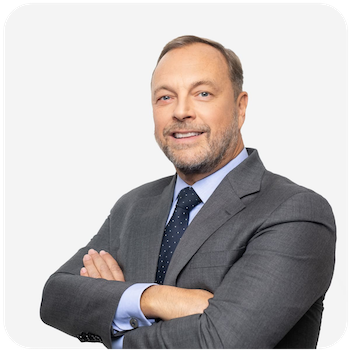
Second term as the chair for experienced executive and board member

Alfonso Faubel has been elected to a second term as chair of the Ignitis grupė supervisory board.
Alfonso brings 36 years of experience in the energy and automotive industries and digitalisation to the position. He is valued for his skills in business turnaround, improving operations and working with teams in various cultural environments on assignments worldwide.
He has spent the past decade gathering experience in the energy sector, focusing in particular on wind energy, while working at the leading global players in the market.
Alfonso has held executive responsibilities at Siemens Gamesa and Alstom/GE, where he was senior vice-president responsible for launching in 16 new markets.
Connect with Alfonso on LinkedIn
Read More